
Strengthening Your Retail Supply Chain For The Next Era Of E-Commerce
By Kawal Preet | First published: February 10, 2022 Updated: May 27, 2026
As e-commerce evolves, businesses need retail supply chains that can keep pace with changing customer expectations. From smarter delivery solutions to greater supply chain visibility, here’s how retailers can build the resilience needed for future growth.
- A future-ready retail supply chain is becoming increasingly critical as new e-commerce technologies emerge, customer expectations rise, and retailers expand into new markets.
- Integrated delivery services and last-mile optimization can help e-tailers offer faster, more flexible, and more convenient customer experiences.
- Technologies such as AI, AR/VR, and real-time logistics insights can improve supply chain visibility, streamline returns management, and strengthen retail supply chain resilience.
As we move further into 2026, it’s tempting to predict what lies ahead for retail supply chains. Although forecasting remains challenging amid today’s geopolitical climate, I’m reminded of what American writer William Gibson once said: “The future is already here – it’s just not evenly distributed.”
New trends and technologies are changing how retailers engage with consumers. From social commerce to the rise of direct-to-consumer (D2C) models, the modern retail experience has evolved dramatically. Of course, some businesses are followers, while others are leaders and trendsetters. Quite often, what sets them apart is their digital capabilities and appetite for innovation.

As e-tailers expand their digital offerings, one commonly overlooked area is the retail supply chain. Yet this forms the backbone of the e-commerce ecosystem. An agile, resilient, and efficient supply chain is critical to delivering seamless customer experiences. As consumer expectations continue to shift, three emerging megatrends are helping e-tailers modernize their retail supply chains and gain a competitive edge.
1. Providing integrated delivery services for time-starved consumers
Today, consumers are increasingly willing to outsource everyday tasks to save time. On-demand services for food delivery, grocery shopping, and even home cleaning are rising in popularity. This on-demand economy is valued at USD 216 billion in 2026 and is projected to reach USD 346 billion by 2035.
To improve customer experience and service delivery, on-demand businesses such as Uber now integrate intelligent automation into their operations. Closer to home, leading Southeast Asian superapp Grab has transformed from a ride-hailing platform into a multi-service ecosystem spanning transportation, food delivery, and grocery services. Today, the company uses AI to address a variety of user needs, from improving navigation and translating local menus to making ride booking more accessible.
As consumer demand for convenience grows, businesses need to think more holistically about providing value-added services that save customers time. That includes delivery solutions that offer speed, flexibility, and end-to-end visibility.
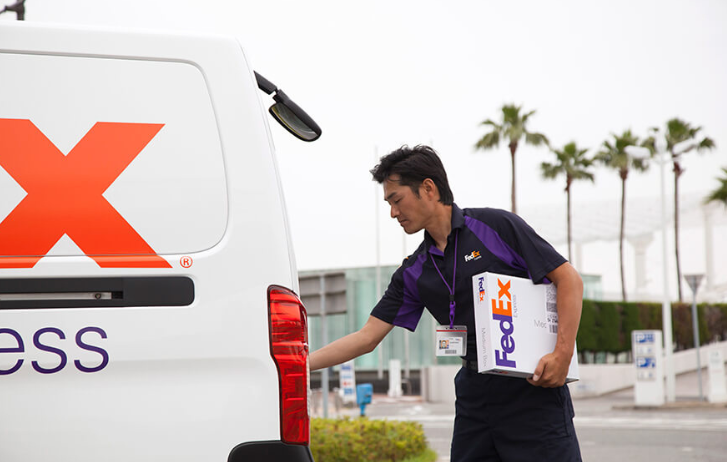
For small businesses with limited resources, however, building integrated, on-demand delivery services from scratch isn’t always realistic or cost-effective. So how can e-tailers capitalize on the growing demand for convenience while serving customers more effectively?
A practical solution is to integrate smart shipping tools directly into their e-commerce platforms through partnerships with established logistics providers. By integrating logistics services into their backend systems, e-tailers can easily process bulk orders through a single automated platform, streamline fulfillment workflows, synchronize shipment tracking, and provide customers with seamless delivery updates. Logistics providers can also leverage expanded partner networks to build stronger, more connected supply chains.
2. Using AI and AR/VR technologies to improve shopping experiences, returns management, and last-mile delivery optimization
Selling products online today involves far more than simply uploading a product catalog to a website. Consumers living increasingly digital-first lifestyles expect seamless, engaging experiences throughout the customer journey.
Take the example of Chinese e-commerce giant JD.com. The company has aggressively transformed its e-commerce model to deliver a more immersive, 3D-enabled shopping experience. Through its VR Shopping Galaxy app and JD Dream app, shoppers can use augmented and virtual reality (AR/VR) technologies to browse products or preview how a piece of furniture might look in their own homes.
With the help of AI, JD has further enhanced its virtual try-on features. In 2026, the retailer launched an AI-powered virtual try-on feature that allows shoppers to upload a photo and see how clothing items might fit their body types before purchase.

Indeed, retailers have moved beyond treating AR/VR technologies as novelties and now view them as powerful conversion tools. In fact, 58% of consumers say they’ve made purchases after using AR features, such as virtual try-ons and room visualization tools. The shift from “what you see is what you get” to “what you experience is what you get” presents new opportunities for e-commerce businesses.
Beyond improving conversion rates, these technologies can also strengthen returns management. When shoppers can accurately visualize how a product looks, fits, or functions before making a purchase, retailers have a better chance of reducing avoidable returns, which helps protect margins while boosting customer confidence.
AR/VR technologies can also help transform delivery services by addressing last-mile inefficiencies. While it represents the final stage of the shipping journey, last-mile delivery can account for as much as 53% of total shipping costs.
AR/VR-enabled tools and wearable devices, such as smart glasses and mobile applications, can help couriers locate parcels and navigate delivery routes more efficiently. This can lower the risk of manual errors and shorten transit times, ultimately helping retailers to optimize last-mile delivery operations and improve customer satisfaction.
3. Developing retail supply chain resilience in untapped markets
Consumers in remote and underserved areas crave convenient and seamless e-commerce experiences. Such demand has only intensified with the rise of the middle class in tier-two and tier-three cities, as well as expanding access to advanced digital infrastructure. Countries in the Asia Pacific (APAC) region, including Indonesia and Vietnam, are leading this growth.
Indonesia, for example, is home to around 180 tier-two and tier-three cities, including Denpasar and Bandung. These secondary cities are becoming important engines of growth, accounting for about 30% to 50% of the country’s digital economy, thanks to e-commerce, lending, digital payments, and other technology-driven services.
To put this into perspective, Indonesia has the largest digital economy in Southeast Asia, with gross merchandise value (GMV) reaching USD 99 billion in 2025 – ahead of Vietnam, Malaysia, and the Philippines.
As more businesses recognize the potential of lower-tier markets, competition will intensify. To stay ahead, retailers can lean on established logistics providers to reach more customers in remote cities while improving overall supply chain efficiency.
However, expansion into lower-tier cities and remote markets can also introduce greater supply chain complexity and greater risk in the retail supply chain. Longer delivery routes, fragmented infrastructure, customs requirements, and fluctuating demand can make it harder for retailers to deliver consistently. Against this backdrop, retail supply chain resilience becomes increasingly crucial to sustaining long-term growth.
At FedEx, we’re continuously expanding our logistics network to better connect APAC’s second-tier cities with global markets. In Vietnam, for instance, we adopted a direct-serve operating model and added an outbound flight from Hanoi, so that shipments can reach destinations across Asia and Europe one day faster. In Indonesia, we launched a gateway facility in Denpasar to streamline customs clearance and improve delivery times for businesses operating in Bali.

Future-proofing the retail supply chain with smarter logistics
Technology continues to power the rapid evolution of e-commerce. In response, logistics players are banking on innovative solutions that strengthen the retail supply chain and help businesses deliver faster, more personalized customer experiences at scale, even in remote areas.
With over 5,000 facilities, 690 aircraft, and 200,000 motorized vehicles across our global network, FedEx connects people and possibilities in 220 countries and territories. We continue to harness technology to build a more agile, intelligent, and future-ready network that evolves alongside customer expectations.
For example, digital tools like FedEx Ship Manager allow businesses to connect their e-commerce store to FedEx, offering a more seamless experience. Meanwhile, our partnership with QuikBot Technologies leverages autonomous delivery robots to help optimize last-mile delivery in Singapore’s urban centers.
Truly, the future is now. The winners will be those who have the foresight to build an enhanced e-commerce experience and a retail supply chain that can keep up. Are you ready to take the leap?
SHARE THIS STORY



Trending Topics
Most Popular
- 85% Of APAC Businesses Plan To Expand Into Europe, According To New FedEx Report
- Generative AI: A New Frontier
- How To Ship A Giant Panda
- The Rise Of Intra-Asia Trade: Opportunities In The China-Southeast Asia Corridor
- Where Do Old Planes Go When They Retire?
- What’s So Dangerous About Coconuts? Your Guide To Dangerous Goods Logistics

Sign up now and save on your shipping rates!
Sign up now and earn discounts by shipping instantly with FedEx Ship ManagerTM at fedex.com.
Recommended For You

6 Trends Shaping The Future Of E-Commerce
APAC e-tailers can take advantage of megatrends to drive growth and improve customer experience. Download our e-commerce white paper.
Read More
Managing Healthcare Supply Chain Risk In A World Of Constant Disruption
From extreme weather to geopolitical events, healthcare firms face an evolving set of supply chain risks. Here's how you can get ahead of them.
Read More
The Future Of Healthcare Supply Chains: Resilience, Innovation And Trust
Discover how you can reduce logistics risk and build a resilient, reliable healthcare supply chain in Asia Pacific..
Read More