How Kloe Ng Is Making Early Education Accessible – One Box At A Time
By FedEx | January 7, 2026
Kloe Ng is the co-founder of Out Of The Box, a Singapore-based social impact start-up that’s transforming early childhood education. Here’s how she’s bringing affordable and personalized learning to preschool children – in one compact box.
Did you know that 90% of a child’s brain develops by age five? During these crucial years of growth, the right learning environment can create lifelong benefits. When children from disadvantaged backgrounds have access to high-quality early education, they do better in school and go on to earn higher qualifications and incomes.
But not every child is lucky enough to receive quality preschool education. In Asia Pacific (APAC) alone, 27 million children and adolescents remain illiterate. These children urgently need innovative solutions to make education accessible yet affordable.
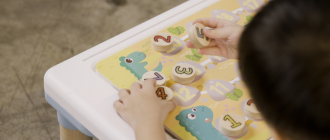
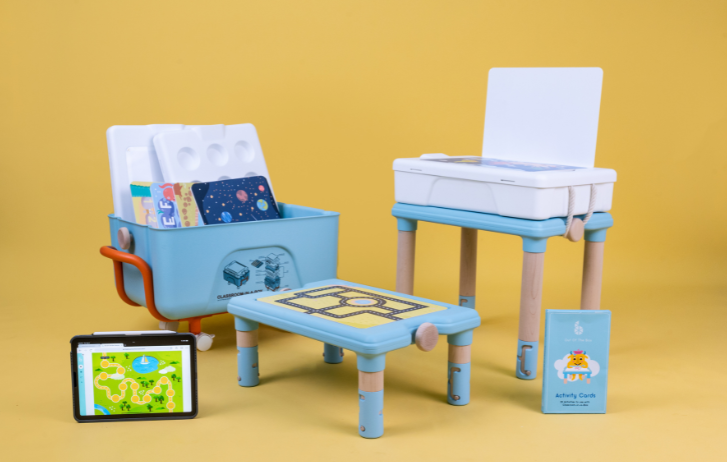
Education start-up founder Kloe Ng developed an out-of-the-box solution to this – literally. Founded in 2019, Out Of The Box is the world’s first classroom-in-a-box: a modular learn-and-play system that fits neatly into one large suitcase-sized box. It integrates physical components, such as a whiteboard and activity cards, with digital content tailored to each child’s learning needs.
This trailblazing concept has captured global attention. Out Of The Box won the Audience Choice Award at the World Bank Youth Summit, and was selected to join the Massachusetts Institute of Technology’s (MIT) Design X accelerator program. Most recently, Kloe was invited to be a judge for the 2025 FedEx/JA International Trade Challenge Asia Pacific finals, where she drew on her entrepreneurial expertise to mentor students in real-world problem-solving.
We spoke to Kloe to learn more about the inspiration behind Out Of The Box and the biggest lessons she’s gained from her start-up journey.
What inspired you and your co-founder to create Out Of The Box?
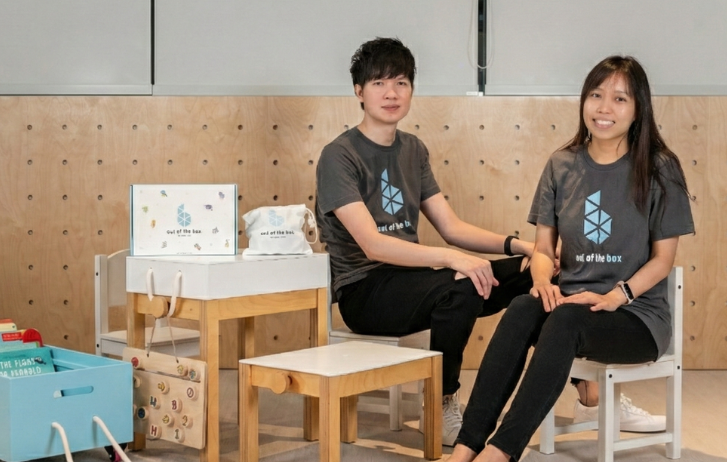
Kloe Ng: Our inspiration for Out Of The Box is twofold. It began with our years of hands-on experience volunteering with children, which led to our 2018 World Bank Youth Summit concept for a ‘classroom in a box’. The initial mission was to make learning environments accessible and affordable in developing regions by radically reducing infrastructure costs.
As we developed this mobile and modular solution, we discovered a powerful second application. We realized that in busy, cosmopolitan cities, parents face a different kind of scarcity: space. Our compact, multi-functional design perfectly addresses this urban gap, offering families a high-quality, ‘pop-up’ learning environment that supports their child's development without sacrificing valuable living space.
Since launching in 2019, how much has Out of the Box grown?
We’ve gone through the journey of transforming a mission-driven idea into a real, tangible product. From a simple sketch, we went through rounds of intense iteration to bring the ‘classroom in a box’ from concept to manufacturing.
This process culminated in a successful Kickstarter program, which validated our product with real-world customers. Our growth is not just in scale, but in our proven ability to execute a complex hardware and software vision.
You’ve founded two profitable companies. Can you share more about these ventures?
The first was also an education start-up that focused on providing creative, hands-on STEAM (Science, Technology, Engineering, Arts, and Math) programs for preschool-aged children. We reached profitability primarily through a business-to-consumer (B2C) model, offering high-quality workshops, holiday camps, and programs that were in strong demand from parents.
Looking back, it was a wonderful experience that allowed us to serve over a thousand children and gave us our first deep insights into the early education market. This business reached profitability by keeping overhead low, focusing on service contracts and recurring engagements rather than heavy inventory and incurring rent.
The second was a very different venture that grew out of my passion for urbanism and design. It was a B2C e-commerce business selling beautifully designed city map prints. We reached profitability by being a very lean operation. We had unique designs that appealed to a clear niche, and we leveraged an efficient e-commerce model, as well as on-demand or small-batch production to maintain high profit margins.
What’s one belief you hold that other business leaders might disagree with?
One belief I hold, which runs counter to a lot of start-up advice, is that I don't believe raising money is a founder's most important job. There’s a very common mantra, especially in the start-up world, that the CEO's number one priority is to fundraise and ensure the company never runs out of cash.
I disagree. I believe the founder’s most important job is to build a product that customers genuinely need and to focus relentlessly on creating a sustainable business model. Fundraising is a tool – it's the fuel, but not the destination. If you build a great company that provides real value, fundraising becomes a byproduct of that success rather than the primary objective.
Can you share a business failure that taught you something valuable?
One of the biggest lessons has been navigating the gap between the promise of global e-commerce and the reality of international logistics. While the world is incredibly connected, delivering physical products to certain parts of it remains a huge challenge. Initially, we were ambitious and tried to ship to anywhere in the world, driven by our mission to get our products to anyone who needed them.
We learned the hard way that there are still significant hurdles to be crossed. Every region presents its own set of complexities, from customs and regulations to last-mile delivery issues. It has taught us that we must be far more strategic and deliberate in our global rollout than we first imagined.
What’s next for Out Of The Box?
We’ve been working hard on the software component of our product – an adaptive learning platform that uses AI to personalize each learner’s experience, identify their learning preferences, and dynamically adjust content and difficulty to match their pace and interests. We’re also working to expand our ecosystem by partnering with other educators and providers to enhance learning content on the platform.
How do you envision the future of consumer education products evolving with e-commerce?
I think that standalone items will become less popular, and people will increasingly demand an integrated subscription with both digital and physical components embedded into the product. E-commerce will no longer be just a channel for selling a single item; it will be the gateway to a continuous, adaptive learning experience. Learning for children will not be purely physical or digital, but a hybrid of both.
SHARE THIS STORY



Trending Topics
Most Popular
- 85% Of APAC Businesses Plan To Expand Into Europe, According To New FedEx Report
- Generative AI: A New Frontier
- How To Ship A Giant Panda
- The Rise Of Intra-Asia Trade: Opportunities In The China-Southeast Asia Corridor
- Where Do Old Planes Go When They Retire?
- What’s So Dangerous About Coconuts? Your Guide To Dangerous Goods Logistics

Sign up now and save on your shipping rates!
Sign up now and earn discounts by shipping instantly with FedEx Ship ManagerTM at fedex.com.
Recommended For You
Scaling For Success: How This CEO Built An Empire With Content
Roshni Mahtani Cheung talks about her unique business model, the challenges she faced expanding the company, and her advice for aspiring CEOs.
Read More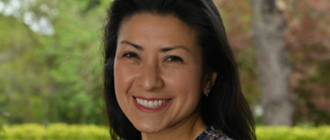
Plinkit’s CEO Is On A Mission To Make Parenting Simpler
Charmaine Pattinson is the CEO of Plinkit, a leading online child development resource for intentional parents and educators.
Read More
Empowering Young Entrepreneurs In Asia Pacific: Opportunities And Growth
Discover strategies that empower young entrepreneurs in Asia Pacific, fostering innovation, growth, and sustainable business practices.
Read More