
5 Practical Tips To Minimize Supply Chain Disruption In Severe Weather
By FedEx | March 10, 2026
Extreme weather events in APAC are testing supply chain resilience across the region. Here’s how your business can take proactive steps to maintain supply chain continuity during a crisis.
- With extreme weather events becoming more frequent, APAC businesses face greater risk of supply chain disruption.
- Weather-related delays not only impact business operations, but also create ripple effects on costs, customer confidence, and revenue growth.
- Proactive measures, such as supplier diversification, inventory buffers, and predictive visibility tools, can help reduce exposure to disruption.
In recent months, Asia Pacific (APAC) has been hit by a series of extreme weather events. In Australia, for example, searing summer heatwaves sparked bushfires, caused power outages, and disrupted air and road logistics operations. The super typhoon Ragasa swept through the Philippines, Taiwan, Hong Kong, and southern China, triggering factory shutdowns and shipping bottlenecks. In Japan, unusually heavy snowfall brought transport services to a standstill, while wild storms in New Zealand flooded roads and grounded flights.
If your business has suppliers or operations in the region, these weather disruptions are likely to have impacted your supply chain. And when shipments are delayed, the fallout often goes beyond missed delivery windows. It can erode revenue, weaken customer confidence, and impair sales growth.
As climate change accelerates, such disruptions will become increasingly common. But when exact extreme weather events can generally only be predicted with reasonable accuracy up to a few weeks in advance, how can businesses act fast to keep operations on track? Here are five practical steps to minimize the impact of supply chain disruption before they occur.
1. Diversify your suppliers
Relying on one supplier – or even multiple suppliers concentrated in the same geographical area – creates vulnerabilities in supply chains. If extreme weather disrupts production in that area, your business may face raw material shortages or product stockouts.
Build a safety net by establishing backup suppliers in diverse regions. Start by identifying high-risk items – materials or goods that are in high demand, but currently sourced from only one supplier. Next, consider local or regional suppliers, offering shorter shipping times and lower logistics costs. To speed up the process of vetting, don’t be afraid to ask industry peers, customers, or even current suppliers for recommendations.
Once you’ve selected alternative vendors, ensuring alignment is critical. Define service expectations, establish clear activation triggers, and ensure contracts allow for rapid scale-up during disruptions. By creating flexible procurement agreements and checking in regularly with key suppliers, you can shorten response times to sudden disruptions.
2. Optimize inventory levels strategically
Lean inventory models are cost-efficient, especially for smaller businesses. However, overly tight stock levels can leave you vulnerable during a prolonged supply chain crisis. For instance, typhoons can last for weeks, creating logistics bottlenecks that may persist even after the storm.
For a more balanced approach, consider maintaining buffer stock for items that are high-demand, high-value, or require long lead times. Rather than increasing inventory broadly, identify mission-critical components and adjust buffer levels based on seasonality and risk.
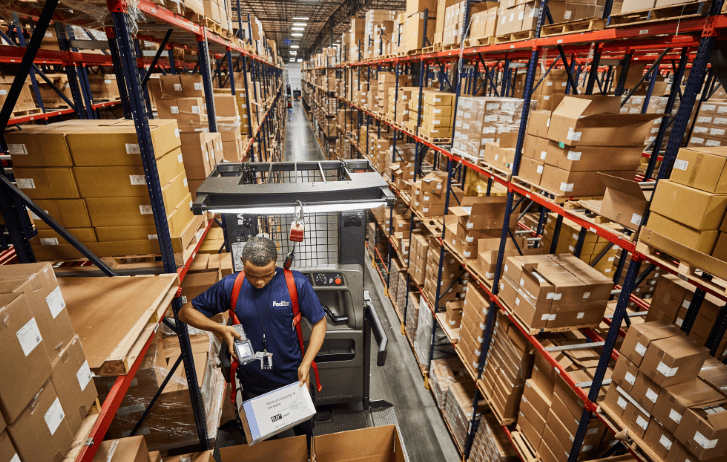
When it comes to last-mile delivery, you can proactively prevent disruptions by distributing stock across multiple fulfillment points. Even if one facility becomes inaccessible due to flooding, road closures, or power outages, you can continue fulfilling orders from another location. It’s best to choose warehouses or distribution centers near high-demand customer areas.
3. Invest in real-time visibility and predictive capabilities
During extreme weather events, timing is everything. The earlier your team identifies a potential supply chain disruption, the more time you have to reroute shipments, optimize inventory, and provide customers with timely updates.
Today, businesses can tap sophisticated digital solutions to stay one step ahead in fast-changing conditions. Near-real-time shipment monitoring provides visibility into where goods are in transit and when delays may occur. Predictive intelligence goes a step further, alerting teams to emerging risks before they escalate.
FedEx Surround is one solution that combines near-real-time tracking with AI-powered analytics. This monitoring and intervention suite, which includes predictive delay and weather alerts, is designed to help companies manage shipments, anticipate disruptions, and request for recovery and intervention. For critical packages, businesses can opt for a service tier with SenseAware ID – a sensor-based technology that transmits precise location data every two seconds.
If weather disruptions occur unexpectedly, this enhanced visibility allows you to make informed decisions and activate contingency plans early. By sharing timely delivery updates with customers, your business can also build trust and foster long-term loyalty.
4. Keep logistics on track with alternative route planning
When extreme weather forces road or port closures, alternative routes can help keep your supply chain running smoothly. Businesses can reduce risk by incorporating flexible routing into their logistics strategy.
A good starting point is to partner with logistics providers that offer the infrastructure and digital capabilities to pivot quickly. Work with them to map out multiple alternative routes, ranging from secondary airports to cross-border hubs and inland transit points. Pre-approved protocols enable faster decision-making during active disruptions.
Established logistics providers like FedEx offer extensive APAC and global network coverage, giving businesses greater flexibility and reliability when planning shipments. FedEx also leverages smart capabilities such as AI and machine learning to optimize delivery routes and perform dynamic rerouting, helping to preserve timelines for critical deliveries.

5. Explore multimodal logistics solutions
When storms and floods strike, supply chains in APAC can quickly grind to a halt. In APAC, flooding in coastal areas often disrupts port operations and causes shipping delays. Even when ports reopen, it may take several weeks to repair damaged infrastructure, clear cargo backlogs, and restore normal operations.
In such situations, multimodal logistics can be a critical resilience strategy for your business. For example, shifting urgent or high-value goods from ocean freight to air freight can help bypass congested ports, preventing supply chain disruptions from impacting your operations. Alternatively, combining sea-air or road-air solutions may shorten transit times while balancing speed and cost.
Identify your most time-sensitive or critical shipments ahead of disruptions and discuss flexible agreements with logistics providers, so you can quickly scale shipping capacity and switch between transport modes as needed.
Weather the storm of supply chain disruption
Even with seasonal patterns, extreme weather events remain unpredictable. Fortunately, their effects on supply chains can increasingly be anticipated. With the right operational measures, businesses can respond decisively to weather disruptions and maintain customer confidence when it matters most.
In the long run, the most successful companies will be those that have integrated climate risk management across core business functions. Ready to move from operational tactics to lasting resilience? Check out our strategic playbook to future-proof your supply chain and lay the foundation for sustainable business growth.
SHARE THIS STORY



Trending Topics
Most Popular
- 85% Of APAC Businesses Plan To Expand Into Europe, According To New FedEx Report
- Generative AI: A New Frontier
- How To Ship A Giant Panda
- The Rise Of Intra-Asia Trade: Opportunities In The China-Southeast Asia Corridor
- Where Do Old Planes Go When They Retire?
- What’s So Dangerous About Coconuts? Your Guide To Dangerous Goods Logistics

Sign up now and save on your shipping rates!
Sign up now and earn discounts by shipping instantly with FedEx Ship ManagerTM at fedex.com.
Recommended For You

3 Strategies To Achieve Supply Chain Resilience Amid Uncertainty
Unprecedented disruptions in global trade have made supply chain resilience more critical. Here’s how businesses can build lasting resilience.
Read More
Building Resilient And Sustainable Supply Chains For A Greener Future
Sustainable supply chains help businesses stay resilient and competitive. Learn how FedEx drives efficiency, innovation, and carbon-neutral logistics.
Read More
Supply Chain Diversification: How To Build Resilience Without Slowing Down
Explore practical strategies to build supply chain resilience through diversification, leveraging AI-powered risk management to stay flexible.
Read More