
How APAC Can Sharpen Its Edge In The Global Semiconductor Supply Chain
By Salil Chari | May 8, 2026
APAC is at the heart of the global chip boom, fueled by AI, data centers, and EV demand. To support future growth, the region’s semiconductor supply chains require smart logistics to keep high-value components moving with speed and precision.
- APAC is solidifying its role at the center of global semiconductor supply chains, powered by leading hubs across Taiwan, China, South Korea, and Southeast Asia.
- AI, data centers, and EVs are driving the industry’s next growth cycle, pushing global semiconductor sales to USD 791.7 billion in 2025.
- As supply chains become more specialized and time-sensitive, semiconductor logistics and supply chain resilience are critical to keep high-value components moving across borders.
Artificial intelligence (AI) is transforming the semiconductor supply chain in ways businesses can no longer ignore. According to International Data Corporation’s Worldwide Semiconductor Technology Supply Chain Intelligence report, AI and high-performance computing are among the fastest-growing drivers.
AI accelerators account for roughly 20% of the total semiconductor market in 2024 – a share that’s expected to keep rising. At the same time, the expansion of data center infrastructure and continued growth in electric vehicles (EVs) are shifting demand beyond chips to the broader systems and supply chains that support them.
Asia Pacific (APAC) sits at the center of this shift. The region remains the heart of the global semiconductor supply engine, combining manufacturing depth with specialized hubs and tightly connected trade flows.
As the industry grows more complex and time-sensitive, APAC’s regional strength will depend not only on producing semiconductors at scale, but also on strengthening supply chain resilience and moving high-value components across borders with speed, care, and precision.
What’s driving APAC’s rise as a semiconductor powerhouse?
APAC currently holds a commanding position in the global chip economy. The region has been the world’s largest semiconductor market since 2001, reaching USD 333.4 billion in 2024. Today, 75% of global semiconductor production capacity and supplies of key materials are concentrated in Asia, while nearly all fabrication capacity for sub-10-nanometer chips – the chips required to execute advanced AI functions – is located in the region.
This is a great position to be in as global demand rises. Global semiconductor sales reached USD 791.7 billion in 2025, up 25.6% year over year, and are projected to approach USD 1 trillion in 2026. APAC was the fastest-growing regional market in 2025, with sales soaring by 45.4% year over year. This rise is tied to demand for AI systems, advanced logic, and data center infrastructure.

AI is the clearest force behind this acceleration. The market for generative AI (genAI) chips was worth over USD 125 billion in 2024 – accounting for over 20% of total chip sales that year – while the total addressable market for AI accelerator chips is estimated to reach USD 500 billion in 2028. While AI has generated explosive growth in semiconductors, the gains are becoming highly concentrated among a small set of companies and technologies.
APAC’s competitive edge remains durable because the region doesn’t rely on a single market or use case. For example, Hsinchu remains central to the Taiwan semiconductor industry due to its leading-edge manufacturing, while Seoul continues to anchor the memory chip industry from South Korea.
Shanghai, Shenzhen, and Suzhou in China are also making advances in research, fabrication, and downstream demand, backed by state initiatives such as the “Big Fund” and “Made in China 2025”.
Beyond these hubs, Southeast Asia semiconductor ecosystems are deepening their roles in assembly, testing, packaging, and specialized manufacturing. For example, Malaysia’s integrated circuit exports rose by 145% between 2016 and 2024. With initiatives such as the National Semiconductor Strategy (NSS), Malaysia is setting its sights higher up the supply chain, most notably in chip design.
Apart from scale, what gives these APAC hubs staying power is the density of digital ecosystems around them. APAC is already at the heart of semiconductor demand, with AI innovation, cloud expansion, EV adoption, and new infrastructure investment all reinforcing the need for chips.
For instance, 11.3 million EVs were sold in China in 2024, up 40% year over year. This adds another massive source of demand for both advanced and mature node chips.
Amid APAC’s chip momentum, logistics decides who wins
Maintaining APAC’s competitive edge takes much more than manufacturing power. These small chips mean big business. While physically compact and highly fragile, they’re also high-value and often face tight delivery windows.
The chip manufacturing supply chain is now part of the industry’s competitive core. Across industries, companies with more mature supply chains are 23% more profitable than their peers. In semiconductors, this gap in supply chain maturity can make or break a fabrication facility.
Without resilience, delayed shipments can slow production lines, cause qualification windows to be missed, or leave expensive equipment waiting for a single missing component. As semiconductor production becomes more distributed, supply chain resilience, traceability, and secure cross-border movement between localized hubs will be critical.
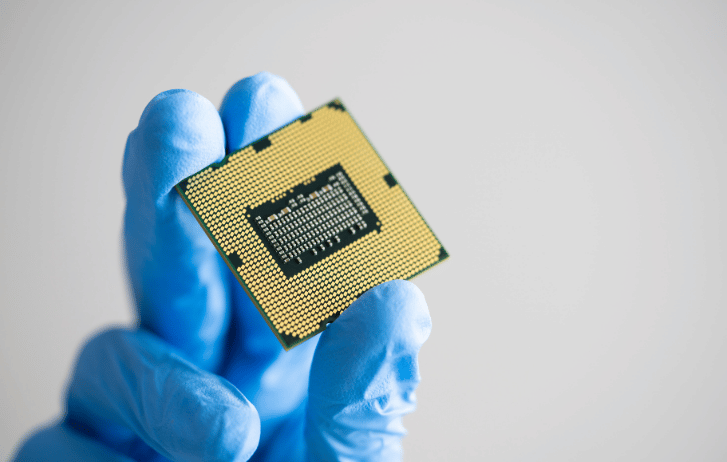
Meeting the demands of semiconductor logistics requires smarter handling of sensitive cargo, better routing across trade lanes, near-real-time monitoring of high-value shipments, and the ability to respond quickly as conditions change. It also requires building infrastructure in the right places, close to the clusters where high-tech trade is already accelerating.
Ultimately, the next phase of APAC’s semiconductor rise will be shaped by logistics as much as manufacturing. Companies that can produce at scale while building visible and adaptive supply chains engineered for precision will likely be well-positioned in an increasingly complex production environment.
Where APAC’s chip momentum is headed
Recent developments in Taiwan point to where this momentum is heading. In March 2026, FedEx opened its expanded transshipment center at Taoyuan International Airport, which will support high-tech, semiconductor, and e-commerce sectors across the region.
This strategic investment reflects the underlying dynamics of APAC’s semiconductor future: as trade corridors evolve, logistics infrastructure has to evolve with them.
Across markets such as Malaysia, Singapore, Japan, and South Korea, broader trends point to continued investment in AI-assisted chip design, cloud infrastructure, and talent acquisition.
Globally, there’s a need for one million new semiconductor talent by 2030, while retaining the existing workforce. This talent shortage is an acute problem in APAC that may hinder the region’s semiconductor leadership. For example, Japan needs 43,000 engineers by 2030, and Taiwan has struggled to fill engineer positions for the past three years.
Looking ahead, the semiconductor market for servers and networks is expected to grow rapidly at an annual rate of 11.6%, due to the boom in genAI services. A close second is the automotive chips sector, which is expected to grow at an annual rate of 10.7%, thanks to advancements in EVs and autonomous driving technologies.
Sharpening APAC’s semiconductor edge
While APAC is currently the “semiconductor capital of the world”, it can’t hold on to this title on the strength of manufacturing alone. To reinforce its leading position in the global semiconductor supply chain, the region must connect fabrication facilities to suppliers, suppliers to customers, and innovation to execution.
In semiconductors, tiny components carry outsized economic weight. And the region that can move them with the most confidence will shape the next era of technological growth.
SHARE THIS STORY



Trending Topics
Most Popular
- 85% Of APAC Businesses Plan To Expand Into Europe, According To New FedEx Report
- Generative AI: A New Frontier
- How To Ship A Giant Panda
- The Rise Of Intra-Asia Trade: Opportunities In The China-Southeast Asia Corridor
- Where Do Old Planes Go When They Retire?
- What’s So Dangerous About Coconuts? Your Guide To Dangerous Goods Logistics

Sign up now and save on your shipping rates!
Sign up now and earn discounts by shipping instantly with FedEx Ship ManagerTM at fedex.com.
Recommended For You

How Semiconductor Supply Chains Are Strengthening Resilience
Multi-hub production networks, integrated security, and ecosystem collaboration – we unpack the latest trends reshaping semiconductor supply chains.
Read More