How to Reduce Shipping Costs: 6 Ways to Ship More Efficiently
Published: October 2026
In this customer-driven market, shipping is no longer just about transporting packages, but a strategic lever for growth and providing a winning customer experience. To stay competitive, businesses must eliminate inefficiencies in their shipping processes and control costs.
What are the most effective ways to reduce shipping costs?
Cost-effective shipping starts with choosing the right packaging to avoid excess dimensional weight charges, matching service levels to actual delivery needs, and digitizing shipping processes to reduce costly errors. Partnering with carriers that offer last-minute or volume-based discounts and, where possible, avoiding peak season surcharges can further reduce shipping costs.
How Can You Ship More Efficiently? Practical Cost-Saving Tips
Tip 1: Compare shipping options

Take the time to research and explore different carriers and services, including ancillary offerings such as digital tools for managing shipments and customs clearance. Choose the best option by matching service levels to your actual delivery needs. For example, if you are shipping urgent documents or pharmaceuticals, you may require time-definite delivery. However, if cost matters more than speed, an economy solution may be more ideal.
The bottom line? Choose a shipping service that meets customers’ expectations while avoiding unnecessary charges for speed or other services they don't need.

Need to ship a package internationally?
No single shipping service can meet every shipping need. The most suitable service option depends on the priorities for each shipment, whether these may be speed, affordability, specialized service, or export support. FedEx offers a wide range of international shipping services, including FedEx® International Connect Plus, which combines competitive speed with attractive prices for e-commerce businesses.
Tip 2: Check for last-minute rates
Carriers often offer dynamic discounts based on available cargo space on key global routes. Checking for these last-minute rates is a highly effective way to reduce costs on heavy international shipments.
With FedEx last-minute rates, you may qualify for savings of up to 80% if your shipment weighs 21 kg or more. Use our rate tool and check the terms and conditions to see if your heavy cargo qualifies for this one-off discount.
Tip 3: Choose the right packaging
Not sure what DIM weight is? You’re not alone. A great way to save time and money is to learn about what you’re paying for when you send a shipment. DIM is short for ‘dimensional’ and it means the amount of space a package occupies compared to its actual weight. Carriers typically charge based on whichever is greater, actual weight or DIM weight.
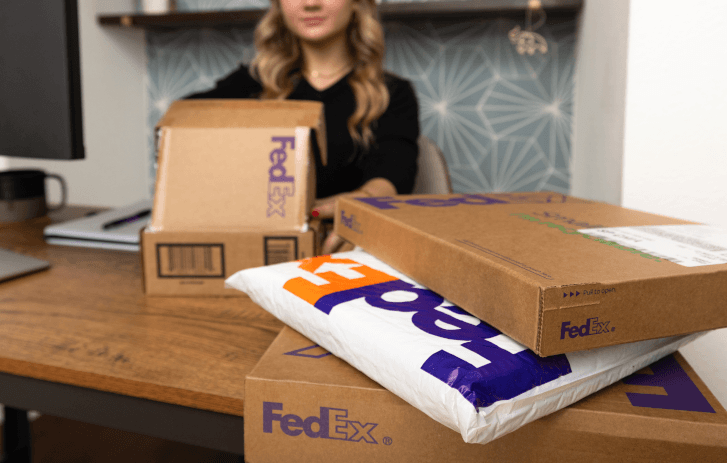
The most direct way to minimize DIM weight is by right-sizing your packaging, so you're not paying for empty space you don't need. For more predictable pricing, FedEx flat-rate boxes are available for shipments up to 10 kg and 25 kg, offering fixed pricing within those weight limits. For lighter shipments, FedEx Reusable Paks are also worth considering, as they're typically priced more competitively than custom packaging for smaller, lighter items.
Tip 4: Digitize shipping processes to cut errors and avoidable fees
Manual processes and data entry are common sources of avoidable costs and inconveniences. For example, a mistyped address can trigger a correction fee, and a missing document can delay customs clearance or result in the package being returned and needing to be shipped again.
Digitizing your workflow reduces these risks. FedEx offers a number of tools to help, including:
-
FedEx Ship Manager™ at FedEx.com – an online tool that provides easy access to tracking, billing, and other helpful FedEx resources
-
FedEx Ship Manager for e-commerce – a solution that connects seamlessly to some of the world’s largest e-commerce platforms to import orders, prefill shipment details, and allow you to create labels for hundreds of shipments in one click
-
FedEx® Electronic Trade Documents – digital documents you can complete and upload electronically, helping you pre-clear shipments and reduce the risk of customs delays
-
FedEx Global Trade Manager – online tool that lets you carry out tasks like looking up HS codes and estimating duties and taxes
Tip 5: Avoid peak season surcharges and delays
Many carriers apply peak season shipping surcharges during their busiest periods to manage surging demand. While it’s not always possible to predict, plan for, or avoid these peak periods, , you can take steps to reduce their impact.
-
Ship early or delay where possible: Ship before typical peak surcharges take effect, or wait until the window has passed to avoid these demand-driven surcharges.
-
Optimize packaging: Many peak surcharges are tied to package weight with fees applied per shipment kilogram, so right-sized packaging helps minimize costs.
-
Plan ahead: If shipping at peak periods is unavoidable, forecast shipping needs, estimate costs, and allocate additional budget based on historical data and current economic conditions.
Tip 6: Get discounted shipping rates

Shipping frequently can qualify your business for discounted shipping rates. Many carriers offer discounted pricing based on your shipping volume or through a single-carrier commitment. For example, with our Ship More, Save More program, you can enjoy great discounts on your international shipments and save more every time you ship.
Rewards programs are also worth exploring: with FedEx Rewards, you can earn points for every qualifying dollar you spend with FedEx and choose from thousands of rewards options, including gift cards, electronics, office supplies, appliances, and more.

Learn why small businesses choose FedEx and find out more about our Ship More, Safe More program using our FedEx Smart Shipper online training platform.
Frequently asked questions
Businesses in New Zealand can reduce shipping costs by right-sizing packaging to avoid excess dimensional weight charges and partnering with a carrier that offers last-minute rates or volume-based discounts. Digitizing shipping processes and understanding duty and tariff obligations can also help businesses manage costs related to cross-border shipping.
The easiest ways for small businesses to save on shipping are choosing the right packaging to avoid dimensional weight charges, comparing service levels instead of defaulting to the fastest option, and digitizing shipping processes to reduce costly errors. Partnering with a single carrier can also help small businesses unlock volume-based discounts.
E-commerce businesses can reduce shipping costs by choosing a shipping service, such as FedEx® International Connect Plus (FICP), designed for e-commerce orders. Businesses can also increase efficiency and save costs by integrating shipping software with their online store to automate tasks such as order entry and label generation. Providing clear return labels and instructions can further help to manage costs by preventing misrouted returns that can trigger address-correction fees or re-delivery.
Per-package shipping costs can be reduced by using packaging that closely matches your product's size, since carriers charge based on whichever is greater — actual weight or dimensional weight.
Choosing flat-rate boxes or packaging, avoiding unnecessary surcharges, and shipping in volume with one carrier to access discounts can also lower the average cost per package.
More from Small Business Center

Identify Unanticipated Shipping Charges: Understanding Surcharges and Their Impact
Examine the different types of shipping surcharges and how costs are calculated.

Landed Cost: A 4-Step Guide for Growing Businesses
Learn how to calculate your true international shipping costs, manage Incoterms, and protect your profit margins.