From Data To Business Intelligence: How This CEO Is Helping Leaders Make More Effective Decisions
By FedEx | First published: March 5, 2024 Updated: October 28, 2026
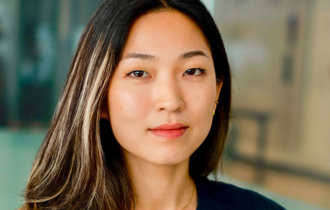
In a world flooded with data, AI-native platform Human Managed helps businesses generate intelligence, make timely decisions, and operate more efficiently. In this Confessions of a CEO column, CEO Karen Kim shares how the bootstrapped company broke even in just eight months.
It’s no overstatement to say that data is the center of the modern business world. In the digital age, data has become essential for streamlining operations, automating tasks, monitoring compliance, identifying threats, and much more.
But for many organizations, the challenge isn’t collecting data – it’s dealing with data overload. With real-time data pouring in faster than teams can process it, leaders need better tools to extract critical insights and make informed, data-driven decisions.
It’s no wonder that the global business intelligence industry is expanding rapidly, with Asia Pacific (APAC) emerging as the fastest-growing regional market. Today, AI-powered tools are transforming business intelligence by scanning complex datasets at lightning speed and producing automated insights.
Karen Kim is one leader at the forefront of this transformation. As the CEO of Human Managed, an AI-native service operator, she helps businesses make faster and smarter cyber, risk, and operational decisions with the support of round-the-clock AI agents. Headquartered in Singapore, the company operates across eight markets, including the US, the Philippines, and Hong Kong.
Karen’s business intelligence journey has been a remarkable one, from helping Human Managed break even in eight months to building a platform that processes five billion events a day. Here, she shares learnings from her biggest business wins and failures, her approach to startup bootstrapping, and her advice for female leaders.
How did your business intelligence journey begin? And as a first-time CEO, how did you adjust to running a startup after 8 years in the corporate world?
Karen Kim: My first conversation with Human Managed’s founder, Saleem, left an unshakable impression on me.
He shared his vision of building a future where decisions and actions are driven by intelligence and unbiased algorithms. Although I didn't know much about working with data, AI, or platforms, something immediately clicked. I knew I had to be part of the journey somehow.
I started off part-time when the company launched in 2018, while still working at my corporate job. I made the jump to go full-time in mid-2020. I wanted to work toward a purpose that is so much bigger than myself, with ideas, technologies, and people that inspire me.
My mindset was that of a beginner: eager, scared, and without preconceptions. I still have a beginner's mindset today, as so much of what we do has never been attempted before. This mindset has become a baseline mode of operations for us at Human Managed.
The journey leading up to the launch of a new business can be a tough hustle. How did you work as a team to launch this startup?
2019 was our first year of operations. It was also the year of COVID-19 and lockdowns. We had to build a company from scratch in highly volatile and unpredictable conditions.
The pandemic lockdowns meant that we were behind screens, planning and launching our business remotely. It took endless hours of Zoom calls to lay the foundations for Human Managed.
We asked each other complex questions. "What is intelligence? What is value? What is digital? What is a platform?" We tackled the big ideas head-on. Product and service development came later.
A significant output of this period was “Purpose to Every Task (PET)” – a set of frameworks that align our purpose with strategies, activities, and tasks. We formulated our identity and brand in this way, and we apply PET to our strategies and operations to this day.

How did you grow your startup to become profitable?
Human Managed was bootstrapped from Day 1. When we first started, we didn't have any platform or product. All we had was our vision, a small team, and our combined experience. Our vision was – and still is – to be a self-sufficient company that solves many complex problems through a multi-sided platform.
Our first few clients were our engine. As a new entrant, it was critical to prove our credibility and build trust with customers who took a risk on us. We worked upfront and only got paid when the customer was satisfied with our output. We focused on differentiating ourselves by delivering value with speed, agility, and flexibility.

We broke even in our first 8 months.
As we understood our customers’ challenges and context better, we were able to create more value with increasingly relevant and personalized outputs. We broke even in our first eight months.
Describe the greatest business failure that you treasure the most.
In the early days, before we established trust with our first clients and had a working platform, we signed contracts with flexible payment terms for customers, such as payment upon delivery, milestone payments, and extended payment due dates.
In hindsight, we were too eager to prove our value without considering the risks thoroughly. We needed to be more confident in asking for payment to cover operating costs, especially when we had proven our capabilities.
Our cash flow was affected by scenarios such as retroactive payments, disagreements on output, and extended proof of concepts without contract. We did more work than intended for free without proper measurements and processes.
While flexible payment terms were necessary to generate revenue, we should have acted faster to correct new contracts with terms to decrease business risk.
What was the biggest investment you’ve made in the company that has led to the greatest ROI?
We made a significant investment in late 2022 by participating in GovWare, a regional cybersecurity conference in Singapore. We put up a large booth alongside industry giants, secured speaking slots, and joined partner demo sessions. It was a bold launch of the Human Managed brand and our Intelligence, Decision, Execution, and Action (I.D.E.A.) framework.

The ROI was so priceless that we now talk about Human Managed in terms of pre-GovWare vs. post-GovWare. Externally, we gained new customers and partners, and established a feedback loop for product development. Internally, we gained a tremendous amount of confidence, speed, and agility. We haven't slowed down or looked back since this pivotal event.
Have you faced any challenges as a female CEO, and how have you overcome them?
The challenges I face are mostly passive and systemic, arising from gender-based prejudices and biases in our society.
While it is categorically true that I am a female CEO, it doesn't govern who I am and what I stand for. I focus on tuning into all the attributes beyond my gender that define me, and leading with all of them. This means leaning into my curiosity about the world, connecting with people and ideas, and deepening my self-awareness and self-acceptance.
While it is categorically true that I am a female CEO, it doesn't govern who I am and what I stand for. I focus on tuning into all the attributes beyond my gender that define me, and leading with all of them.
This helps me break out of the "I am a female CEO in a prejudiced world" mindset and just operate with all the other qualities I have to offer.
What advice do you have for women aspiring to become leaders, especially in male-dominated areas?
Gender is one of many attributes that form your personhood and identity. If you operate thinking that the odds are stacked against you, you will always be on the back foot.
One simple and effective method is to shift and widen your perspective. To view yourself as a minority in a "male-dominated" environment is binary and could feel alienating and hostile. Instead, you can reframe it as having stakeholders that are primarily male, mostly from X industry, some with Y interests, and a few with Z experiences.

Understanding your environment this way is much more fruitful and interesting, and you are much more likely to find different ways to connect.
Lastly, check your own thoughts and behaviors. Catch yourself when you behave in ways that could perpetuate the very stereotype you’re up against. You belong here and have something "uniquely you" to offer.
Is there a female leader or CEO that you look up to, and why?
Lately, I've been following Christina Cacioppo, the CEO of security compliance automation platform Vanta. I admire Christina's journey as a problem-solver and builder.
With no prior experience in security or compliance, she observed firsthand the challenges around regulatory compliance that organizations face. After crystallizing the problem, she decided to build software to automate the auditing process.
Christina's journey and the continued success of Vanta are living examples of what a clear vision, solution-focused product, and service-obsessed mindset can achieve.
What is one belief you hold that other business leaders might disagree with?
A standard piece of advice given to businesses, particularly startups, is to focus on doing one thing well. While I don't disagree, this approach could narrow your value and hurt your ability to pivot in VUCA (volatility, uncertainty, complexity, and ambiguity) conditions.
In the early days, when I shared Human Managed’s ambition to build a data-agnostic platform for cyber, risk, and digital use cases without a product, I often got looks of confusion and questions like, "Aren’t you trying to do too much? Why not focus on one area, like cybersecurity, and then expand to others after establishing market credibility?"
In the face of such recommendations, I had my fair share of doubt: perhaps our vision was too much, and we would only confuse the market.
But we persevered because we had a firm conviction in our ability to empower data-driven decision-making for not just one use case, but any use case. All we needed was one customer, one partner, one employee who saw something in our vision.
Today, we’ve built an AI-native, data-agnostic, and modular platform that runs cyber, risk, and digital operations for a wide range of organizations, from banks to utilities.

As someone guided by the philosophy of “trying new things”, what is the newest thing you’ve learned as a CEO and business leader?
Last year, we experimented with a "failing fast, correcting fast" approach. We decided to have a product release or update every week for three months. This decision was not met with enthusiasm from the team.
We were working in two to three-week release cycles before, so weekly deadlines really turned up the heat! But we stuck with the decision, and wow, did we deliver! The weekly releases produced some of the most high-impact and high-quality work for our web app to date.
While this sort of urgency in product development or any goal setting is not sustainable continuously, a planned sprint now and then – over a limited time with clear goals – is very valuable in pushing yourself and your organization to the next level.
Today, the Human Managed platform manages about five billion events per day and processes more than 50 terabytes of data monthly, with operations across eight markets. I am proud of the culture of creativity, innovation, and problem-solving that we are building at Human Managed. And I’m excited for our future.
***
Our Confessions of a CEO column quizzes Asia Pacific leaders on business insights that aspiring entrepreneurs can learn from. To discover more entrepreneurship stories like Karen’s, subscribe to our monthly newsletter and stay tuned for the next edition.
SHARE THIS STORY



Trending Topics
Most Popular
- 85% Of APAC Businesses Plan To Expand Into Europe, According To New FedEx Report
- Generative AI: A New Frontier
- How To Ship A Giant Panda
- The Rise Of Intra-Asia Trade: Opportunities In The China-Southeast Asia Corridor
- Where Do Old Planes Go When They Retire?
- What’s So Dangerous About Coconuts? Your Guide To Dangerous Goods Logistics

Sign up now and save on your shipping rates!
Sign up now and earn discounts by shipping instantly with FedEx Ship ManagerTM at fedex.com.
Recommended For You

New Energy Investments: The Next Big Thing? The CEO With Data To Help You Decide
HySights CEO Greg Mittman, who provides companies with new energy project ratings, shares insights on entrepreneurship in the sustainability space.
Read More
How Louken’s CEO Helps APAC Brands Transform Digitally And Go Global
Lee Haoming is the CEO of Louken, a Singaporean venture builder delivering digital transformation and more for SMEs and large enterprises.
Read More
How Big Data Is Delivering The Future
As supply chains become smarter, our APAC president Kawal Preet examines how big data is transforming supply chain management and logistics.
Read More