
Through Rural Entrepreneurship, This CEO Is Helping Indonesia’s Remotest Communities To Thrive
By FedEx | First published: August 13, 2024 Updated: September 16, 2026
Ryan Manafe is the founder and CEO of Dagangan, a wholesale e-commerce platform in Indonesia that provides rural communities with affordable access to daily necessities. In this edition of Confessions of a CEO, we explore how Ryan is breaking down barriers to rural entrepreneurship and fostering growth for local economies.
Imagine living more than 10km from your nearest grocery shop or wet market. In some of Indonesia’s most remote villages, many people struggle to access everyday supplies without making a long journey to the nearest city.
Sometimes, all it takes is a small disruption to cut a community member off from daily necessities: falling ill and being unable to drive, the family motorbike breaking down, or a roadblock caused by monsoon weather.
Ryan Manafe was determined to fill this critical gap in Indonesia’s retail supply chain. Formerly the founder and CEO of leading solar project developer SUN Energy, he founded Dagangan in 2019 with the goal of making daily necessities more accessible and affordable for rural businesses and communities.

By connecting large producers with rural retailers through an innovative hub-and-spoke model, Dagangan is reducing distribution costs and driving growth for thousands of local businesses. We spoke to Ryan to find out how he has navigated the challenges of rural entrepreneurship and built a scalable business model.
Looking back on your start-up journey, what would you do differently? Was there ever a time when you thought you might not make it?
Ryan Manafe: When we started out, the focus for many venture-backed start-ups was growth at all costs. I regret getting caught up in this trend instead of staying true to my belief in sustainable, gradual growth.
Today, the definition of growth for venture-backed companies has shifted from a relentless pursuit of scale to a focus on profitability. Instead of scaling rapidly, we’ve built a strong infrastructure that has helped us achieve positive cash flow.

Failure taught us the importance of perseverance and continuous improvement.
We still face challenges. The past few years have been tough for fundraising, especially during the tech winter – a period between 2022 and 2024 when start-up funding and investor confidence declined. Enthusiasm for the B2B commerce sector has also waned. Despite this, Dagangan has continued to grow sustainably and create value for our stakeholders.
How did you find your first 100 customers when you first launched Dagangan?
We started off with a lean, bootstrapped, product-focused team. We spent a lot of time in the field, getting to know different types of customers and understanding their needs. We aimed to serve a very specific target market: consumers within a certain income bracket who lived at least 10km from their local wet market.
We studied their purchasing behavior and experimented with our initial business model, including our marketing approach, technical architecture, and sustainable monetization strategy. After much trial and error, we started to realize that our product was genuinely adding value to the daily lives of individuals in rural areas.
Local influencers started using the platform. Some even became our partners or employees. Our customers started earning more as well. This helped validate our proof of concept, and manufacturers began appointing us for exclusive distribution.
How do you overcome the barriers to establishing commerce and distribution networks in rural areas?
At Dagangan, we face several operational challenges.
Limited logistics infrastructure is the biggest one. Our consumers live on average 10km from the nearest wet market. They need to travel back and forth, carrying what they can on their motorbikes, sometimes every day. This results in inefficient logistics and higher costs for round trips to the city.
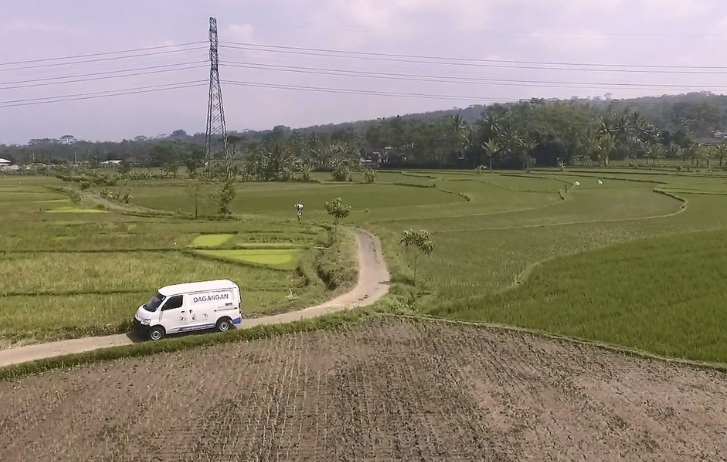
Our solution was to establish a hub-and-spoke operating model. This enables consumers to buy basic necessities more easily while allowing suppliers to reach areas that were previously difficult to serve. We now have more than 50 hubs spread across rural areas. As a result, essential goods can be delivered to consumers faster and at lower logistics costs.
Rural customers can be skeptical of new products and services.
Another challenge is the low adoption of technology in rural communities. Rural customers can be skeptical of new products and services. They often have specific needs and questions that require personalized attention. Our job is to encourage them to learn about and adapt to digital services.
We also face the challenge of building trust among close-knit local communities. The close relationships that exist there can be hard to penetrate. We work hard to liaise with community leaders, local entrepreneurs, and MSMEs, who play an important role in engaging with residents.
Through B2B partnerships, you enable growth for small businesses in rural areas and empower grassroots entrepreneurship. Is there a success story you’re particularly proud of?
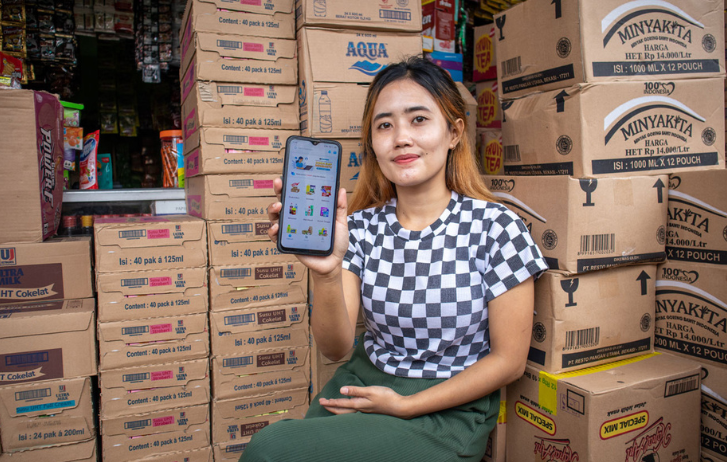
We offer high-quality goods at affordable prices for Indonesia’s micro-stores. Instead of making long trips to urban suppliers, rural business owners can use our app to order in bulk, get lower prices, and maintain reliable inventory.
One of our users, Yuliati, stands out for her story of resilience and growth. Yuliati runs a micro-store near the Merapi mountain, about 25km from the city center of Yogyakarta. Her business took off after she signed up to the Dagangan app.
With the help of our platform, Yuliati saw her daily earnings increase from IDR 500,000 to IDR 2 million. The additional income allowed her to expand her small business, attract more customers, and become a center of commerce in her local community.
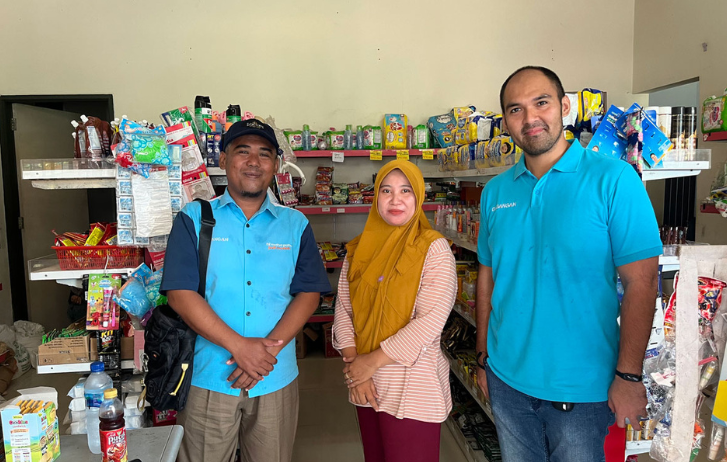
Yuliati not only prospered, but also passed on the savings to her loyal customers through fairer prices. Her success story is just one example of Dagangan's mission to support local businesses and drive the rural economy. Our B2B partnerships also create value for our business partners. For example, Coca-Cola Europacific Partners Indonesia achieved remarkable growth, with an 82% increase in GMV year over year.
What investment has led to the biggest ROI so far?
Our greatest investment has been in our local talent. We employ over 500 individuals who serve rural communities. Dagangan’s technology, operations, and sales teams, as well as our founders, are all locals who truly understand the market – either because they live in these areas or come from rural backgrounds.
This investment has paid off tremendously. Our team’s deep understanding of and connection to the rural market has given us a unique advantage, leading to substantial returns on our investment.
Despite the challenges of rural entrepreneurship, our teams are willing to learn, develop their skills, and undergo training, which has significantly contributed to the company’s growth. Our employees’ sense of community and commitment to self-sustainability are not only crucial to our success, but also help create positive change in their villages.
Your business was established to meet the unique needs of rural Indonesian consumers. Have you thought about scaling your business model in similar markets?
Indonesia is our domestic market, and we have built deep area penetration in rural tier-three and tier-four areas. We aim to scale faster by unlocking new markets, both geographically and through new businesses. We plan to expand our operational footprint across Java Island. In parallel, we want to launch new businesses within our existing areas of coverage.
Dagangan believes rural areas offer tremendous business growth potential, but are often overlooked. Any advice for small businesses who want to tap this customer segment?
Living in a developing country has its advantages. Despite the challenges, there are many opportunities to make a difference.
My advice is to start by looking at your surroundings. Pay attention to the real problems people are facing. Instead of looking far away for issues to solve, look closer to home. Then, try to come up with solid solutions.
Make sure these solutions build on your unique strengths – the things that give you an edge. Turn what you're naturally good at into a superpower to fix things around you.
What is one belief you hold that other business leaders might disagree with?
I believe in applying the same rigor to developing people and culture as we do to tracking numbers and performance metrics. This idea, highlighted in McKinsey's book "CEO Excellence", presents "soft" topics like talent, culture, and organization design as equally important as "hard" topics.
We focus on building a positive culture by encouraging feedback from everyone in our ecosystem. This allows us to develop processes and make decisions that truly reflect the needs and ideas of our people.
Finally, describe the greatest business failure that you treasure the most.
Initially, we operated in a market with challenging profitability. Our margins were lower than desired, which significantly impacted our operational costs and limited our ability to innovate and grow.
Despite this, we believed in the potential of our business. We undertook significant operational improvements and doubled our margins as a result.
Failure taught us the importance of perseverance and continuous improvement. It pushed us to optimize our operations, explore innovative revenue streams, and ultimately strengthen our business model. Today, we are more resilient and better positioned for long-term success.
***
In our Confessions of a CEO column, Asia Pacific’s entrepreneurs and business leaders share insights for SMEs across the region. To discover more entrepreneurship stories like Ryan’s, subscribe to our monthly newsletter and stay tuned for the next edition.
SHARE THIS STORY



Trending Topics
Most Popular
- 85% Of APAC Businesses Plan To Expand Into Europe, According To New FedEx Report
- Generative AI: A New Frontier
- How To Ship A Giant Panda
- The Rise Of Intra-Asia Trade: Opportunities In The China-Southeast Asia Corridor
- Where Do Old Planes Go When They Retire?
- What’s So Dangerous About Coconuts? Your Guide To Dangerous Goods Logistics

Sign up now and save on your shipping rates!
Sign up now and earn discounts by shipping instantly with FedEx Ship ManagerTM at fedex.com.
Recommended For You

How This CEO Helped Transform Vietnam’s Inefficient Food Supply Chain
Kamereo is modernizing Vietnam’s food supply chain with a one-stop B2B sourcing platform. Discover CEO Taku Tanaka’s insights on scaling efficiently.
Read More
From Rural To Global: Empowering Australia’s SMEs With Efficient E-Commerce Shipping
Reaching new customers can be tough for remote businesses. Learn how two SMEs have overcome hurdles to e-commerce shipping with FedEx’s support.
Read More