
Hong Kong Business Growth: Building Resilient Supply Chains In 2026
By FedEx | March 20, 2026
Hong Kong businesses are expanding beyond traditional US routes toward Europe and intra-Asia. Here’s how stronger supply chain resilience and cross-border logistics can support sustainable growth in 2026 and beyond.
- Hong Kong exports are forecast to grow 8-9% in 2026, driven by demand for AI and electronics, as well as stronger trade flows to Europe and ASEAN.
- Asia-Europe and intra-Asia routes are gaining momentum as local businesses prioritize supply chain resilience and diversification.
- Flexible cross-border logistics, near-real-time visibility, and efficient import processes are helping Hong Kong businesses expand into new markets with confidence.
Hong Kong business leaders are rewriting their trade playbooks. For decades, the US was the default growth market for many Hong Kong exporters. Today, local companies are expanding their focus.
In 2026, Hong Kong exports are projected to grow by 8-9% on the back of strong demand for AI-related products and tech electronics. As export growth accelerates, more businesses are looking toward Europe and ASEAN markets for new opportunities.
This mirrors a larger trend across Asia Pacific (APAC). A FedEx survey of APAC businesses reveals that over 40% plan to shift their cross-border trade priorities toward Intra-Asia (22%) and Europe (21%) in the next 12 months.
In today’s complex trade environment, this strategic shift enables Hong Kong businesses to build greater supply chain resilience into their operations. Flexible cross-border logistics solutions are also making it easier for small businesses to diversify into new markets with lower risk and greater efficiency.
Europe’s steady demand creates new momentum for Hong Kong exports
Europe remains one of the world’s largest consumer regions. The European Union (EU) is home to almost 450 million people, accounting for 5.5% of the global population. For many Hong Kong exporters, the region offers stable demand, strong purchasing power, and an appetite for high-value electronics and technology solutions.
Hong Kong’s air cargo infrastructure facilitates seamless cross-border flows with Europe and helps meet demand at scale. Hong Kong International Airport (HKIA) has, in fact, been named the world’s busiest cargo airport, handling 462,000 metric tons of cargo in December 2025 – up 3.6% year over year.
This momentum matters to Hong Kong businesses that are strengthening exports to the European market. Given the long transit distance, companies need reliable cross-border logistics infrastructure and services to compete effectively in Europe while delivering a smooth customer experience.
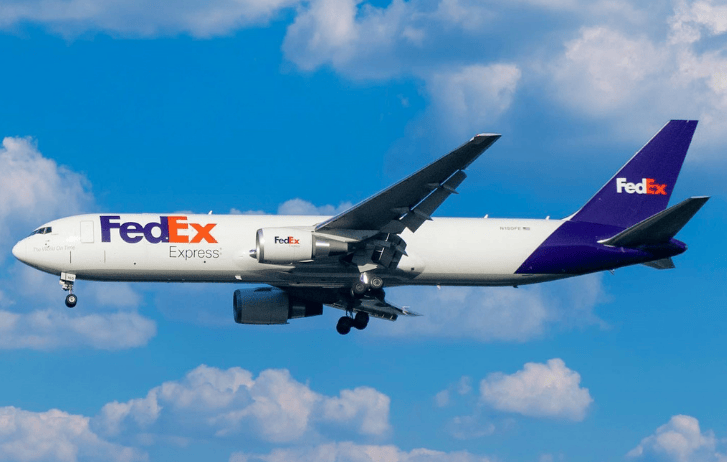
To strengthen service reliability between Asia and Europe, FedEx introduced five additional weekly flights in 2025. This enhanced connectivity links our hubs in Guangzhou and Shanghai with Paris Charles de Gaulle Airport. Today, we operate a total of 26 weekly flights between APAC and Europe, enabling businesses to deliver express shipments to European customers in as little as 48 hours.
For Hong Kong companies, this translates to greater routing flexibility and more consistent service when entering the European market.

ASEAN and intra-Asia routes reshape regional trade
While Europe anchors westbound growth, Southeast Asia is powering regional expansion.
Hong Kong’s merchandise exports reached a record HKD 5,240.3 billion in 2025, rising 15.4% from the previous year. A significant share of this growth came from ASEAN economies, reflecting deeper economic integration and expanding consumer demand.
For local companies, intra-Asia routes now play a critical role in balancing global portfolios. Given Hong Kong’s proximity to Southeast Asian markets, businesses benefit from shorter transit times, as well as strong cultural and supply chain links. Furthermore, digital commerce adoption continues to accelerate across the region, unlocking opportunities for Hong Kong e-commerce sellers.
Direct-to-consumer (D2C) models are also growing, particularly in the categories of electronics, lifestyle goods, and specialty products. Among Hong Kong-sourced products, consumer electronics are the most sought after, with 70% of consumers favoring them, followed by fashion and personal care products. These businesses need fast and reliable cross-border shipping services that can scale during peak periods.
To strengthen regional connectivity, FedEx has introduced new nonstop cargo flights between Guangzhou and Penang, improving import timelines into Southeast Asia. Hong Kong importers also benefit from enhanced customs clearance processes under the Cross-boundary Express Cargo Clearance Facilitation Arrangement (CEFA), which streamlines inbound shipments from mainland China, APAC, and Europe. For businesses, smoother import handling supports better inventory planning and faster fulfillment.
Building supply chain resilience in a complex environment
While diversification brings opportunity, it also adds a layer of complexity.
Businesses that are expanding into the European market while strengthening ASEAN trade must juggle many moving parts. Regulations differ, customer expectations vary, and demand patterns shift quickly. This is where cross-border logistics becomes a strategic function rather than an operational afterthought.
Resilient supply chains typically share three traits:
1. Flexible routing options. When businesses can ship through multiple hubs and routes, they reduce exposure to single-lane disruptions.
2. Near-real-time visibility. Tools such as FedEx Surround offer proactive monitoring and predictive insights during shipping. For selected service tiers, SenseAware ID can transmit location updates every two seconds, enabling rapid intervention if a shipment is at risk. This level of visibility helps businesses protect time-sensitive and high-value goods, such as electronics.
3. Smarter documentation and import processes. At FedEx, our FedEx Ship Manager tool includes AI-powered shipment documentation assistance and HTS code lookup functions, helping customers with providing clearer item descriptions and selecting the appropriate HTS codes. This enables smoother customs clearance and reduces the likelihood of delays caused by incomplete shipment information.
For Hong Kong businesses managing exports across Asia and Europe, these capabilities make cross-border operations more agile and efficient.
Mapping new paths to growth
As an international hub, Hong Kong’s strength has always been connectivity. Today, that connectivity is broader than ever – spanning Europe, Southeast Asia, and key intra-Asia corridors.
By leveraging scalable cross-border logistics solutions and tools, companies can test new markets and build inventory models that support multi-region fulfillment. Looking ahead, Hong Kong businesses won’t need to choose between Europe and ASEAN to thrive – they can pursue growth in both regions.
SHARE THIS STORY



Trending Topics
Most Popular
- 85% Of APAC Businesses Plan To Expand Into Europe, According To New FedEx Report
- Generative AI: A New Frontier
- How To Ship A Giant Panda
- The Rise Of Intra-Asia Trade: Opportunities In The China-Southeast Asia Corridor
- Where Do Old Planes Go When They Retire?
- What’s So Dangerous About Coconuts? Your Guide To Dangerous Goods Logistics

Sign up now and save on your shipping rates!
Sign up now and earn discounts by shipping instantly with FedEx Ship ManagerTM at fedex.com.
Recommended For You

3 Essential Supply Chain Tips For Hong Kong Businesses In 2025
Against a backdrop of global uncertainty, Hong Kong businesses can take advantage of 3 key supply chain tips to foster economic growth and stability.
Read More
85% Of APAC Businesses Plan To Expand Into Europe, According To New FedEx Report
Download FedEx’s new Asia-Europe Trade Report to uncover the latest market trends and opportunities shaping cross-border growth.
Read More
3 Emerging Cross-Border Business Trends For Hong Kong Businesses
From intra-Asia to the world, cross-border e-commerce is evolving. Hong Kong businesses can take advantage of three key trends for 2025 growth.
Read More