
How FedEx Is Moving Businesses Forward With Sustainable Logistics
By Kawal Preet | First published: September 14, 2021 Updated: June 23, 2026
From electric delivery vehicles to emissions visibility and carbon capture research, FedEx is working towards sustainable logistics through a three-pronged strategy: decarbonizing what’s possible, co-creating with purpose, and neutralizing what’s left.
- To advance sustainable logistics, FedEx is working to achieve carbon-neutral operations globally by 2040 through a three-part strategy: decarbonizing what’s possible, co-creating with purpose, and neutralizing what’s left.
- The company is cutting emissions across its global network by modernizing its aircraft fleet, deploying more electric delivery vehicles, and improving efficiency across facilities and operations.
- With tools like FedEx Sustainability Insights, businesses can track their shipping emissions as well and make more informed decisions to support eco-friendly shipping goals.
Climate change is here – bringing intense floods, heatwaves, wildfires, and droughts.
Extreme heat was a defining feature across much of Asia in 2025, with Japan, China, and South Korea all experiencing their hottest summer on record. In 2026, these above-normal temperatures are set to return. Parts of Australia are seeing their warmest start to winter on record, while experts warn that this year’s World Cup could be the hottest ever. The latest IPCC report has been impossible to ignore, stating that climate extremes are already affecting every region across the globe.
For individuals, governments, small businesses, and corporations alike, climate change is a pressing issue that calls for collective thought and action. So, what are we doing to address this at FedEx? And how do we think about sustainable logistics?
Sustainability is key to our purpose of connecting the world responsibly and resourcefully. The growth of commerce is certainly essential to our collective future, as is keeping supply chains open and running. But we must also continue to unlock the potential of sustainability as commerce grows exponentially. That means adopting sustainability not just in principle but in practice across every aspect of our business.
At FedEx, we’re working towards achieving carbon-neutral operations globally by 2040 – a decade ahead of the goals set by the Paris Agreement. Today, our sustainability roadmap follows a three-part strategy: decarbonize what’s possible, co-create with purpose, and neutralize what’s left. Here’s how we practice these principles throughout our operations.
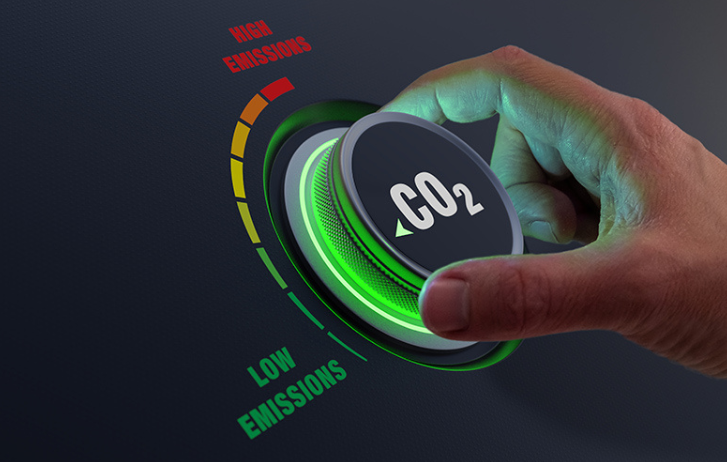
Decarbonizing what’s possible
Logistics is a major contributor to global greenhouse gas (GHG) emissions. Freight transportation alone makes up 8% of global GHG emissions, and this can rise to 11% once we factor in warehouses and ports. If the industry continues with business as usual, freight is set to double its emissions by 2050 and become the highest emitting sector.
At FedEx, decarbonization starts with reducing emissions where our technologies allow it. As a logistics provider with a global network covering more than 220 countries and territories, our business relies heavily on aircraft, vehicles, facilities, and data systems working together. Currently, our network has close to 700 aircraft, 5,000 facilities, and 200,000 motorized vehicles.
Our owned aircraft fleet is the largest contributor to our emissions footprint. To address this, we deploy proven technologies that reduce emissions while continuing our long-standing efficiency programs. These include conserving fuel, modernizing our air fleet, and sourcing sustainable aviation fuel (SAF). Our automated fuel-tracking system, which replaces paper fuel slips and streamlines our fueling process, helps us reduce waste and drive fuel savings as well.
Thanks to these combined efforts, we’ve reduced our overall aircraft emissions intensity by 31% compared to our 2005 baseline. In FY24, our aircraft modernization initiatives also helped us save 130 million gallons of jet fuel and prevent over 1.2 million metric tons of CO2e emissions.
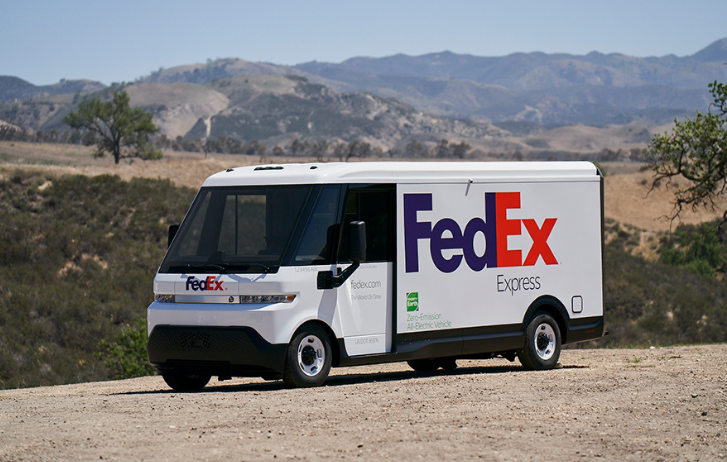
We’ve also been busy testing and deploying zero-tailpipe emission electric delivery vehicles across Asia Pacific (APAC) and beyond. To date, FedEx has deployed more than 8,000 on- and off-road electric vehicles (EVs) across the world’s busiest cities, in line with our phased approach to vehicle electrification. Our goal is for our entire pickup and delivery fleet to be all-electric by 2040, including owned and contracted vehicles.
In addition to lowering our own emissions, we’re helping our customers better understand their carbon footprint through FedEx Sustainability Insights. This tool tracks and estimates shipping emissions at the package and account levels, allowing customers to create emissions reports based on service type, transport mode, weight, and more. Using these insights, businesses can then make more informed and eco-friendly shipping decisions.
Co-creating with purpose
At FedEx, we recognize that no single company can solve every sustainability challenge. There are still significant gaps in the technologies needed to address climate change effectively. As such, we’re working with multiple stakeholders – including government agencies, nonprofits, industry partners, and technology innovators – to co-create and scale the most promising climate solutions.
For example, FedEx collaborates closely with local utility companies and regulators to strategically plan for and meet the energy demands associated with vehicle electrification. Since 2021, FedEx has supported the RMI in developing GridUp, a public grid planning tool designed to help policymakers, utilities, and regulators forecast energy and power demand from vehicle electrification, enabling proactive grid investments to support the charging needs of EV fleets.
We also help accelerate research into scalable carbon sequestration solutions by supporting the Yale Center for Natural Carbon Capture. The Center draws inspiration from Earth’s natural processes – such as carbon cycles in forests, rocks, oceans, and other natural systems – to capture carbon from the atmosphere and store it. Through our support of Yale’s research, we hope to make high-quality natural carbon removal strategies available at scale.
Neutralizing what’s left
Despite our best efforts to prioritize emissions reductions, we recognize that it may not be enough to reach our goal of carbon-neutral operations. Even with better vehicles, sustainable shipping solutions, and more efficient operations, some emissions cannot be fully eliminated.
That’s why our strategy includes sourcing high-quality, durable carbon credits to offset our remaining emissions in the latter part of the next decade. Our partnership with Yale supports this strategy by supporting research on nature-based carbon dioxide removal (CDR) solutions.
One promising solution we’ve seen is enhanced weathering, a scalable and low-cost carbon removal method with significant agricultural benefits. It involves spreading finely ground alkaline materials, such as basalt rock, over agricultural fields to help draw carbon out of the atmosphere and store it in rocks. Aside from carbon capture, enhanced weathering also reduces soil acidification, increases crop yields, and creates livelihoods for farmers around the world.
Yale scientists are exploring how enhanced weathering can be integrated into industrial and agricultural processes, such as wastewater treatment and irrigation systems.

Bolstering our commitment to sustainable logistics
At FedEx, achieving carbon-neutral operations by 2040 makes strong business sense. It’s part of our long-standing commitment to sustainability and aligns with our goal of empowering our customers to do good as well. It’s not just the right thing to do. It’s what current and future generations of customers expect, and what our world depends on.
***
Learn more about FedEx Sustainability Insights, where you can view your estimated shipping emissions.
SHARE THIS STORY



Trending Topics
Most Popular
- Where Do Old Planes Go When They Retire?
- What’s So Dangerous About Coconuts? Your Guide To Dangerous Goods Logistics
- How To Ship A Giant Panda
- 85% Of APAC Businesses Plan To Expand Into Europe, According To New FedEx Report
- The Rise Of Intra-Asia Trade: Opportunities In The China-Southeast Asia Corridor
- Generative AI: A New Frontier

Sign up now and save on your shipping rates!
Sign up now and earn discounts by shipping instantly with FedEx Ship ManagerTM at fedex.com.
Recommended For You

4 Ways SMEs Can Build More Sustainable Communities
Small businesses play a vital role in driving growth and innovation throughout Asia Pacific and globally. Here’s how they can contribute.
Read More
How To Build A Sustainable E-Commerce Platform: Lessons From Kindlife
Learn how Radhika Ghai, the founder and CEO of Kindlife, built a sustainable e-commerce platform that puts the planet and people first.
Read More
Small Business, Big Impact: Building A Sustainable Supply Chain
Build a sustainable supply chain with practical tips on recyclable packaging, reverse logistics, and greener shipping options. Get started today.
Read More