
Unlocking Opportunities In China-Latin America Trade With Air Freight
By Poh-Yian Koh | July 10, 2026
Chilean cherries are a familiar sight in China’s markets today, while Chinese electronics are gaining popularity among Latin American users. Powering these fast-growing trade flows is a new era of air connectivity, which has unlocked supply chain resilience and market opportunities for businesses in both regions.
- Multilateral cooperation and free trade agreements (FTAs) have paved the way for steady trade growth between China and Latin America.
- As Chinese businesses capture e-commerce opportunities and expand their manufacturing presence in Latin America, fast cross-border logistics has emerged as a key competitive advantage.
- International air freight will power the continued growth of trade between the two regions, backed by enhanced logistics visibility and flexibility.
Did you know that Chile is considered one of China’s antipodes – the point on Earth’s surface that sits diametrically opposite it? Despite being on opposite sides of the globe, the two countries are connected by a dynamic, fast-growing trade corridor. Today, cherries picked in Chilean orchards at dawn can be cooled, packed, and flown across the equator to arrive in China in as fast as a day – still carrying the breath of a Chilean spring morning.
For over a decade, the China-CELAC Forum has provided a platform for cooperation between China and Latin America and the Caribbean, steadily deepening economic and trade ties between member nations. In 2025, trade between China and Latin America reached over USD 565 billion, a year-over-year increase of 6.5%. China is now the region’s second-largest trading partner, with particularly strong ties to markets such as Brazil, Chile, Peru, and Uruguay.
The strength of this relationship lies in economic complementarity. Latin America supplies agricultural products and energy resources that diversify China’s imports, while China delivers technology, consumer goods, industrial equipment, and new energy solutions that drive the region’s modernization.
The result has been a profound two-decade transformation: Latin America and the Caribbean’s exports to China surged from just 1% in 2000 to 14% in 2023, while imports from China rose from 2.3% to 20% during the same period.
This expanding relationship is reshaping global supply chains. The question is no longer whether China-Latin America trade will grow, but at what scale, speed, and scope. Logistics is the critical enabler – compressing distances, aligning with demand cycles, and strengthening resilience in a volatile global environment.
How policy paved the way to free trade
For years, China-Latin America trade revolved around bulk commodities: Brazilian soybeans and Peruvian copper flowed east, while Chinese machinery headed west. The partnership was deep but moved at the pace of container ships.
That began to shift in 2015, when Beijing hosted the first ministerial meeting of the China-CELAC Forum. Foundational blueprints such as the China-CELAC Cooperation Plan (2015-2019) laid the groundwork for deeper cooperation. Over the past decade, that groundwork has delivered steady progress in policy dialogue, trade, cultural exchange, and multilateral cooperation.
Momentum has accelerated as China and Latin America expand their network of free trade agreements (FTAs). China currently has FTAs in force with five Latin American markets: Chile, Peru, Costa Rica, Ecuador, and Nicaragua. These FTAs reduce tariffs, streamline customs procedures, and ease regulatory challenges for businesses, laying the groundwork for broader China-Latin America trade networks and opportunities.

At the same time, Latin America’s major economies have strengthened their investment environments to lower trade barriers and reduce business costs. Brazil has launched a digital single-window system to streamline foreign investment, Peru has implemented investment-friendly legal protections and tax incentives, and Argentina is exploring plans to legalize “non-human corporations” operated by AI agents. Reinforced by FTAs, these measures have positioned the region as an increasingly attractive hub for efficient, high-value trade.
Latin American e-commerce unlocks new waves of demand
With lower tariffs, streamlined customs processes, and clearer trade rules in place, the stage was set for demand to surge. Latin America, often called the world’s “last blue ocean” for e-commerce, offers a massive consumer base of over 670 million people, supported by widespread smartphone adoption and a young, digitally savvy population. The region’s e-commerce market volume is projected to surpass USD 1 trillion by 2027.
Established marketplaces such as Amazon and Mercado Libre compete fiercely for market share, but Chinese players – including SHEIN, AliExpress, Temu, and TikTok Shop – are rapidly gaining ground. Brazil, for instance, is SHEIN’s second-largest market after the US.
Fast, reliable delivery is central to these retailers’ competitive edge, creating a virtuous cycle that drives logistics innovation. Hybrid sea-air solutions, for example, can reduce delivery times by more than 50% compared with sea freight alone. Such innovative logistics strategies balance cost-efficiency with reliability, enabling cross-border e-commerce businesses to streamline operations and meet consumer expectations.
Beyond consumer goods, a broader shift in manufacturing is under way. Chinese automotive and electronics firms are setting up factories in Brazil and other countries, generating steady demand for just-in-time shipments of parts, components, and CKD (completely knocked-down) kits. Supporting this just-in-time manufacturing requires agile and efficient supply chains, with air connectivity as a key enabler to move goods under tight timelines.
For international air freight in particular, these new demand patterns are proving transformative. Air freight, once seen as prohibitively costly, now offers clear strategic advantages, helping businesses ship high-value or time-sensitive goods swiftly into new markets.
Delivering speed and agility with international air freight
As consumer appetite intensifies and industrial supply chains demand speed, efficient logistics has become the decisive factor in business success – turning air networks into the new engines of cross-border trade. Over the past five years, air shipping between China and Latin America has quickly moved from experiment to routine, linking Chinese manufacturing and e-commerce hubs directly to Latin American gateways.
The first direct cargo route from Wuhan to Mexico City in 2021 carried e-commerce parcels, medical supplies, and electronics. Within a few years, several other cities – Chengdu, Shenzhen, Hefei, Xiamen, Wuxi – had launched cargo flight routes to Latin America.
By 2025, the Santiago-Shanghai route had become mainland China’s longest direct cargo link, delivering Chilean cherries to Chinese markets in 24 hours. Today, flights from Zhengzhou to Mexico City operate six times a week, dispatching e-commerce shipments and returning with seafood and other perishables.
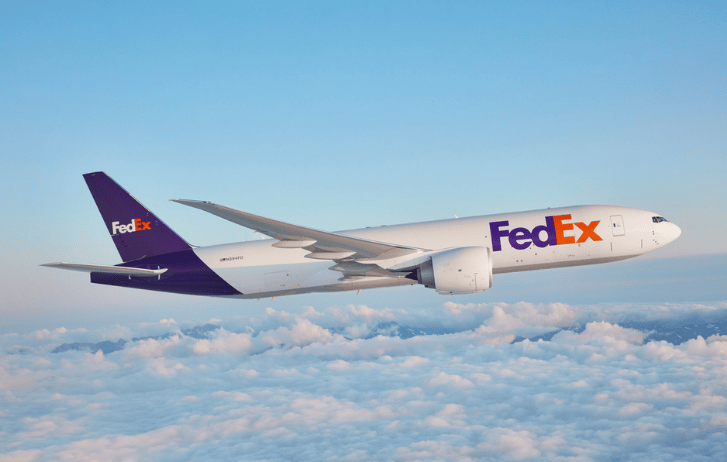
What began as scattered flights has matured into a busy network of air shipping routes, reflecting how surging demand is reshaping logistics. Temperature-sensitive perishables such as Chilean cherries, Peruvian blueberries, Ecuadorian shrimp, and Argentine beef – once limited by the challenges of maritime cold chains – are now reaching Chinese consumers at peak freshness through cold chain air freight.
These developments represent more than a shift in transport modes – they mark a structural shift in China-Latin America trade. At this pivotal moment, logistics leaders like FedEx play a critical role in strengthening global supply chain resilience and bridging the gap between demand and delivery.
A future written in the skies
As Latin America’s “blue ocean” e-commerce markets converge with Asia’s manufacturing strength, air connectivity between the two regions is powering a new phase of growth. Connecting over two billion people, China-Latin America air routes are emerging as key bridges to business opportunities.
At FedEx, we’re well-positioned to help businesses capture this growth by delivering integrated, end-to-end international air freight services. Our strategy is built on three imperatives: speed, visibility, and flexibility.
Speed: Air freight is redefining international supply chain management. What once took weeks by sea now takes hours by air, enabling responsive supply chains that match the pace of consumer demand. FedEx supports this capability with a global fleet of nearly 700 aircraft and a robust air and road network across Latin America. In key markets such as Mexico, Brazil, and Argentina, our weekly international flights connect Latin America to Asia Pacific (APAC) with speed and reliability.
Visibility: Digitalization and AI are transforming supply chains into intelligence-driven systems enhanced by near-real-time visibility, predictive analytics, and automated customs clearance. FedEx has developed advanced digital tools such as FedEx Surround and FedEx Ship Manager to streamline the complex cross-border logistics process, giving businesses seamless control over everything from shipment documentation to delivery tracking.
Flexibility: China-Latin America trade is rapidly expanding across diverse product categories, from industrial goods to seasonal perishables. In response, logistics providers must offer versatile and scalable solutions that support the demands of different sectors. FedEx’s wide range of international shipping services allows businesses to choose the best fit for their needs and scale efficiently as order volumes grow.
Together, these capabilities signal a new era of logistics written in the skies. As China and Latin America deepen their economic ties, logistics providers will play a decisive role in facilitating the future of trade between the two regions. Beyond moving goods, stronger logistics support can help unlock prosperity, integration, and opportunity across hemispheres.
SHARE THIS STORY



Trending Topics
Most Popular
- 85% Of APAC Businesses Plan To Expand Into Europe, According To New FedEx Report
- Generative AI: A New Frontier
- How To Ship A Giant Panda
- The Rise Of Intra-Asia Trade: Opportunities In The China-Southeast Asia Corridor
- Where Do Old Planes Go When They Retire?
- What’s So Dangerous About Coconuts? Your Guide To Dangerous Goods Logistics

Sign up now and save on your shipping rates!
Sign up now and earn discounts by shipping instantly with FedEx Ship ManagerTM at fedex.com.
Recommended For You

The Rise Of Intra-Asia Trade: Opportunities In The China-Southeast Asia Corridor
Emerging trade lanes in Asia present possibilities for businesses of all sizes, particularly APAC SMEs looking for international trade opportunities.
Read More