
Last-Mile Delivery: How APAC E-Commerce Sellers Can Get It Right
By FedEx | First published: June 30, 2025 Updated: November 24, 2026
Getting a package to a customer’s doorstep requires more than speed. Discover how last-mile delivery works across Asia Pacific, the shipping options available to e-commerce businesses, and how to choose a logistics provider that can help you deliver a better customer experience.
- Last-mile delivery – the final stage of the shipping journey – is a major cost consideration, accounting for 50% to 60% of total shipping costs.
- No single last-mile delivery model works for every business. Home delivery, pickup points, postal services, on-demand couriers, and outsourced fulfillment all offer distinct benefits, depending on customer preferences, delivery locations, and order volumes.
- When choosing a logistics provider, e-commerce businesses must evaluate geographic coverage, delivery reliability, total shipping costs, tracking capabilities, returns management, and technology integrations.
On a rainy weekday in Manila, a customer places an urgent order for a phone charger from a local e-commerce store. The site promises same-day delivery, but the package arrives two days late, soaked and untracked. The customer doesn’t just lose trust in the courier; they lose confidence in the brand.
Stories like this are common across Asia Pacific (APAC), where last-mile delivery isn’t just a logistics issue. Rather, it’s a business-critical experience that shapes customer trust, loyalty, and brand reputation. For SMEs across the region, it’s no longer enough to offer competitive pricing and a seamless online shopping experience. The delivery experience must be fast, transparent, and dependable as well.
What is last-mile delivery in logistics?
Last-mile delivery refers to the final stage of the shipping journey, when a package moves from a local distribution hub to the customer’s doorstep or chosen pickup location. For e-commerce businesses, last-mile delivery is critical and can influence customer satisfaction, repeat purchases, and profitability. According to a FedEx survey, 55% of APAC consumers cite delayed deliveries as a key pain point during festive shopping seasons.
While the last mile might be the shortest distance in the supply chain, it’s often the most expensive. In fact, last-mile delivery can account for an estimated 50% to 60% of total shipping costs. As couriers serve more residential routes with just one to two parcels per stop, the travel time between stops increases and fixed costs are spread across fewer packages.
Why the last-mile delivery experience differs across APAC
APAC is home to some of the world’s most complex logistics environments. From the hyper-dense cities of Jakarta, Bangkok, and Manila to the rural highlands of Vietnam and the island networks of Indonesia and the Philippines, delivery infrastructure is anything but uniform.
Urban congestion remains a key obstacle. Cities across Southeast Asia suffer from traffic jams, warehouse shortages, and limited road access, pushing businesses to adopt creative solutions like bike couriers, electric scooters, and micro-fulfillment centers.
Meanwhile, in rural or remote areas such as Indonesia’s outer islands or agricultural provinces in the Philippines, roads may be unpaved, inaccessible during monsoon seasons, or underserved by courier networks. Delivery times stretch longer, costs climb higher, and logistics options are limited.

Consumer expectations further complicate the landscape. In APAC, speed now outweighs price as the deciding factor in online shopping, with same-day delivery shifting from a premium feature to a basic expectation. In pharmaceuticals, electronics, and luxury categories, shipping speed even influences up to half of final cart abandonment decisions.
While digitally savvy shoppers in Singapore, Seoul, Shanghai, and Tokyo often expect near-real-time delivery tracking, consumers in rural Cambodia may simply prioritize affordability and reliability. This digital divide means SMEs must tailor delivery offerings based on customer profiles.
Payment behaviors also shape delivery execution. In markets like Vietnam, Indonesia, and the Philippines, where cash-on-delivery remains dominant in rural areas, failed deliveries due to customer no-shows or address errors are common. This adds risk and cost to each transaction, especially for SMEs operating on thin margins.
Cross-border e-commerce in APAC, another growing trend, comes with its own hurdles. In 2025, the region accounted for 28.95% of global cross-border e-commerce revenue, with a compound annual growth rate (CAGR) of 19.39% through 2033. While e-commerce platforms make it easy for SMEs to access buyers across borders, fulfillment varies drastically by market due to inconsistent customs procedures, unclear returns processes, and fragmented regulatory frameworks.
Which last-mile delivery model fits your business?
There’s no one-size-fits-all approach to last-mile delivery. Some businesses may prioritize speed, while others may need wider geographic coverage or lower delivery costs. E-commerce sellers often combine several last-mile delivery solutions to serve different groups of customers.
To help you decide, here’s a breakdown of key last-mile delivery models that e-commerce sellers in APAC often use. Each has distinct advantages depending on geography, volume, and customer needs.
Self-pickup and collection points
Self-pickup methods are increasingly popular among cost-conscious or convenience-driven consumers. These include:
- Buy online, pick up in-store (BOPIS): Customers place orders online and collect them at a physical store. This is ideal for omnichannel retailers that operate both online and offline.
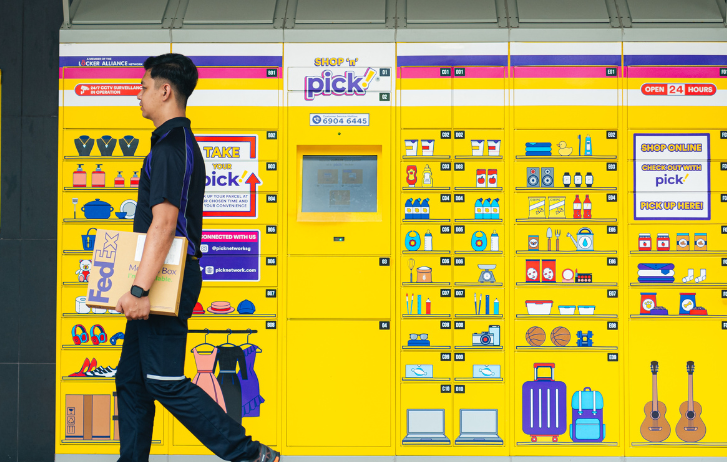
- Pickup points and smart lockers: Goods are sent to smart lockers or designated locations where customers can retrieve them at their convenience. Common in metro APAC cities, these options reduce delivery costs and increase flexibility.
Self-pickup methods help reduce repeated delivery attempts and consolidate shipments at fewer locations. With FedEx Delivery Manager, for example, sellers can allow eligible customers to customize their delivery date or location at no extra cost, including collection at a pickup point where available.
However, self-pickup options rely on customer effort and availability, which can reduce the overall convenience promised by e-commerce. For SMEs, missed pickups can lead to stock and refund complications.
Best suited for: Omnichannel retailers, urban customers, and businesses looking to provide flexible collection options.
What to consider: Pickup locations must be convenient for customers. Businesses should also clarify collection deadlines and procedures for unclaimed packages.
Postal and national courier services
National postal services play a key role in last-mile delivery, especially in rural or less digitally connected communities. Their extensive networks and affordability make them suitable for lower-value or non-urgent deliveries. SMEs offering products like books, accessories, or long-shelf-life goods may find postal solutions cost-effective.
The downside? Postal services often lack the sophistication of real-time tracking, flexible delivery slots, or integrated returns – features that modern e-commerce customers increasingly expect.
Best suited for: Businesses shipping lower-value or non-urgent products to a broad range of domestic destinations.
What to consider: Compare delivery commitments, tracking coverage, parcel restrictions, and returns handling instead of assuming all postal services offer the same capabilities.
Courier aggregators and delivery platforms
These technology platforms connect SMEs to a network of logistics providers, enabling real-time rate comparisons and flexible service selection. They are ideal for small businesses experimenting across markets or managing fluctuating order volumes.
Aggregators can help optimize cost and convenience, particularly for SMEs that want to avoid managing multiple provider contracts. However, they may not offer full control over service quality or customer experience, and relying on algorithms can lead to suboptimal delivery pairings in less-serviced areas.
Best suited for: SMEs testing different delivery services, managing fluctuating order volumes, or looking for more shipping flexibility.
What to consider: Ask who will handle customer inquiries, failed deliveries, claims, and refunds when several last-mile delivery companies are involved.
On-demand and same-day delivery services
These services are tailored for immediacy, especially within dense urban centers. Often powered by gig economy models or two-wheeler fleets, they cater to high-urgency categories like food, flowers, groceries, and fashion.
Their biggest strength lies in speed and customer convenience. However, they come with constraints: limited geographic reach, higher per-order costs, and logistical challenges during peak hours or in adverse weather conditions.
Best suited for: Hyperlocal businesses, time-sensitive products, and retailers offering premium delivery options.
What to consider: Same-day delivery may not make financial sense for every order. Consider offering it as a paid option rather than making it your default service.
Third-party logistics (3PL) providers
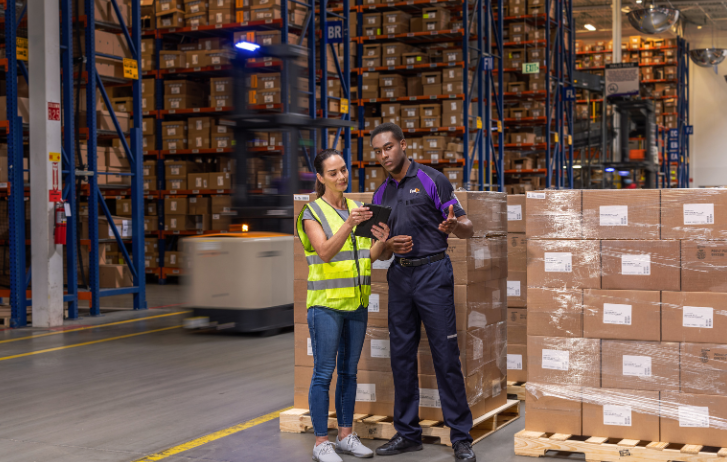
Third-party logistics allows SMEs to outsource fulfillment, warehousing, and delivery. This is particularly useful for businesses that have outgrown manual fulfillment or need regional warehousing to reduce delivery times. 3PL providers can also offer better rates due to economies of scale, and many include value-added services like returns handling and API integration.
For SMEs eyeing regional expansion, working with a 3PL provider that understands local customs procedures, duties, and cross-border nuances can be invaluable. FedEx, for example, offers scalable and flexible solutions for growing e-commerce brands, with integrated logistics and technology-driven services that range from warehousing to final delivery.
Best suited for: Businesses handling growing order volumes, expanding internationally, or seeking to streamline fulfillment operations.
What to consider: Not every 3PL provider offers the same capabilities. Check which services will be included, where inventory will be stored, and how the provider coordinates with delivery networks.
In-house delivery fleets
Some SMEs, particularly those in high-volume, hyperlocal businesses such as food delivery or flower shops, choose to manage their own delivery operations. This option offers full control over the delivery experience. However, it can be costly and requires route planning software, driver management, and continuous performance monitoring to scale efficiently.
Best suited for: High-volume businesses that serve specific geographic areas or require more control over delivery execution.
What to consider: Calculate whether the operating costs justify the additional control, especially during slower sales periods.
How to choose the right last-mile delivery provider
Selecting the right last-mile delivery provider requires SMEs to look beyond pricing and evaluate a provider’s ability to meet today’s e-commerce demands. Here are six factors to consider when assessing a last-mile delivery company.
1. Geographic reach and service coverage
Start with a simple question: Can this provider reach all my customers reliably?
Check whether its network covers your current and target markets. For example, a provider with strong coverage in urban Singapore might not offer the same delivery options in remote parts of Indonesia or the Philippines.
When comparing last-mile delivery services:
- Check delivery availability by destination and postal code.
- Compare service coverage in major cities and regional areas.
- Ask how international shipments are handled after customs clearance.
- Confirm delivery restrictions, remote-area charges, and available service commitments.
Think beyond your immediate shipping requirements as well. If your business plans to expand internationally, choose a provider with the cross-border experience and network coverage to support those plans.
For SMEs exploring new markets, FedEx International Connect Plus (FICP) offers a day-definite shipping service designed for business-to-consumer (B2C) e-commerce shipments. Packages shipped via FICP can typically reach customers worldwide within two to three business days, with end-to-end tracking provided.
2. Delivery speed and reliability
Can the provider deliver within a timeframe that aligns with your customer promise?
Speed matters, but consistency is just as important. A three-day delivery completed as promised can create a better customer experience than a next-day promise that isn’t consistently met.
Evaluate providers based on:
- Transit times: How long does it typically take to deliver to your key destinations?
- On-time performance: What percentage of shipments arrive within the agreed timeframe?
- Service-level agreements (SLAs): What delivery commitments and remedies apply?
- Exception handling: How are delays communicated and resolved?
Consider whether different shipping speeds would work for different customer needs. For example, customers buying everyday accessories may prefer affordable standard delivery, while those purchasing gifts for special occasions may be willing to pay more for faster shipping. Offering customers a choice can help you balance delivery costs with convenience.
3. Transparent pricing and total shipping costs
A competitive base rate may look attractive, but how much does each completed delivery actually cost your business?
A low advertised rate doesn’t always mean the lowest overall shipping expense. Additional charges can affect your margins, particularly when you’re shipping internationally or handling large volumes.
When evaluating last-mile delivery solutions, compare:
- Base shipping rates and applicable fuel or peak-season surcharges.
- Remote-area, residential, or oversized-package charges.
- Costs associated with failed delivery attempts and returns.
- Any applicable customs duties, taxes, and clearance-related charges.
Look for straightforward pricing that helps you forecast expenses and set suitable delivery fees at checkout. For example, FICP offers a simple rate structure regardless of package type and zero residential delivery surcharges, helping e-commerce sellers plan shipping expenses more easily.
It’s also worth evaluating how delivery costs affect your product margins. A shipping option that works for a high-value electronics order may not be economical for a low-priced accessory. Understanding your cost per delivered order can help you decide when to offer free shipping, subsidized delivery, or premium shipping options.
4. Tracking and customer communication
In an age of “track everything,” customers expect visibility at all times. Can customers easily find out where their packages are?
Customers want clear updates, especially when shipments are traveling internationally. Effective tracking can also help businesses identify potential delivery issues before customers contact support.
Look for providers that offer:
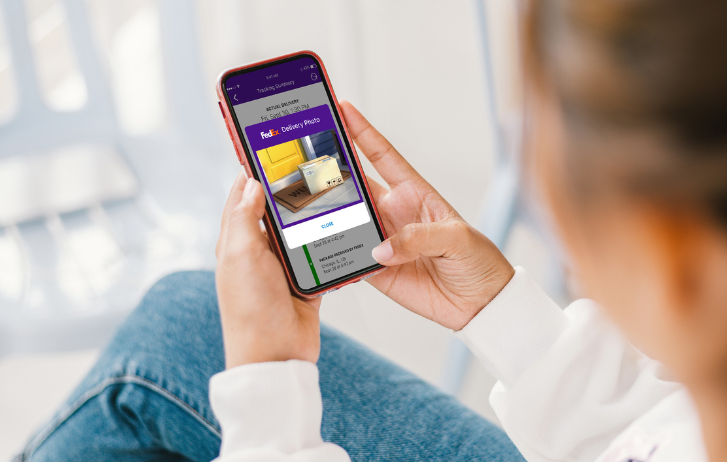
- Near-real-time tracking: Status updates as packages progress through the delivery network.
- Proactive notifications: Updates about shipment milestones, attempted deliveries, and exceptions.
- Customer delivery options: The ability to change delivery dates or locations where supported.
- Business visibility: Tracking information that is easily accessible through an online dashboard or integrated system.
FedEx, for example, offers end-to-end parcel tracking that helps customers monitor their packages throughout the shipping journey, with notifications sent via SMS, email, or the mobile app.
5. Returns handling and failed deliveries
Returns are a vital part of the e-commerce experience, especially for businesses selling clothing, footwear, and electronics. They can also influence purchasing decisions, as 75% of consumers say an easy returns process makes them more likely to shop with a retailer again.
Before choosing a last-mile delivery provider, ask:
- Can customers arrange return pickups or use convenient drop-off locations?
- Are return labels and instructions easy to prepare and follow?
- Can the business track returned packages?
- How are unsuccessful delivery attempts handled?
- What happens if a recipient is unavailable or a package is returned to the sender?
For international e-commerce businesses, returns can involve additional shipping documentation and customs considerations. FedEx Global Returns simplifies this process by letting businesses create return labels that are linked to their original outbound shipments for easier tracking. Businesses can choose from different return label options, including printed, emailed, and editable labels.
For more ways to strengthen your returns process, explore these reverse logistics strategies for e-commerce businesses.
6. Technology integration and business support
Manually preparing labels, copying customer addresses, and updating tracking numbers might work when you’re processing only a handful of orders. But as your business grows, these tasks can consume valuable time and increase the likelihood of errors. Can your shipping operations keep up as order volumes increase?
Look for last-mile delivery providers that offer:
- E-commerce integrations that import customer and order information.
- Automated shipping label creation and tracking updates.
- Application programming interfaces (APIs) that connect shipping processes with existing business systems.
- Responsive support when you need assistance with shipments.
As an example, FedEx Ship Manager connects with major e-commerce platforms, including Shopify, WooCommerce, and BigCommerce. This allows businesses to sync orders, use prefilled shipping information, and share tracking numbers with customers, all of which helps reduce repetitive administrative work.
Turning last-mile delivery into a competitive edge
Today’s consumers are more discerning and empowered than ever. If a business can’t meet expectations, customers will likely shop elsewhere.
As digital shopping accelerates and infrastructure improves, SMEs that work with experienced logistics providers like FedEx can gain a significant edge. With deep regional expertise, cross-border capabilities, and customer-centric innovations such as near-real-time last-mile delivery tracking, FedEx helps SMEs transform the last mile into a true brand differentiator.
SHARE THIS STORY


Trending Topics
Most Popular
- 85% Of APAC Businesses Plan To Expand Into Europe, According To New FedEx Report
- Generative AI: A New Frontier
- How To Ship A Giant Panda
- The Rise Of Intra-Asia Trade: Opportunities In The China-Southeast Asia Corridor
- Where Do Old Planes Go When They Retire?
- What’s So Dangerous About Coconuts? Your Guide To Dangerous Goods Logistics

Sign up now and save on your shipping rates!
Sign up now and earn discounts by shipping instantly with FedEx Ship ManagerTM at fedex.com.
Recommended For You

5 Tips For SMEs To Offer Free Shipping
E-tailers offering free shipping can reduce cart abandonment and increase sales. We deep dive into strategies for offering customers free delivery.
Read More
Why Last-Mile Delivery Is Critical For Supply Chains In APAC
Learn how innovative last-mile delivery solutions reduce delays, improve customer satisfaction, and fuel business growth amid APAC’s e-commerce boom.
Read More
Supply Chain Trends: How Smarter Logistics Is Helping Businesses Move Faster
Discover five supply chain trends shaping smarter logistics, from AI-powered visibility and fulfillment to sustainable logistics and digital tools.
Read More