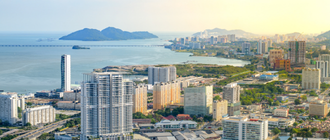
Southeast Asia’s Second-Tier Cities Are Becoming Serious Growth Markets
By FedEx | May 6, 2026
Second-tier cities in Southeast Asia are rapidly gaining attention from companies looking to expand beyond the region’s capitals. These emerging economic hubs are creating new business opportunities and influencing where growth happens next.
- Second-tier cities are gaining momentum as business opportunities in Southeast Asia extend beyond major capitals.
- Emerging economic hubs such as Bandung, Da Nang, Cebu, and Penang are strengthening their positions in tech, manufacturing, and electronics.
- For businesses that prioritize supply chain diversification, these secondary cities offer lower operating costs, specialized ecosystems, and improved regional connectivity.
Big cities in Southeast Asia tend to attract most of the headlines. Bustling capitals such as Jakarta, Bangkok, and Manila remain the region’s best-known commercial hubs. But if you’re looking for the next growth markets in Asia, this focus may be limiting.
Southeast Asia’s second-tier cities are starting to step into the spotlight. These secondary cities serve as economic hubs supporting national capitals, with populations ranging from 500,000 to 5 million. Aside from being lower-cost alternatives to capital cities, they are becoming important engines for regional growth, where manufacturing, digital services, and consumer demand are gathering speed.
Second-tier cities matter for businesses expanding across borders – especially if you’re rethinking where to source, sell, or serve customers within Asia. And broader business sentiment reflects this shift: According to a Deloitte survey, 50% of leaders in Southeast Asia plan to broaden or diversify their supply chains within the next year, while 75% are optimistic about their own company’s outlook.
Spotlighting Southeast Asia’s second-tier cities
Southeast Asia’s growth is spreading out. Private consumption across the region’s six largest economies – namely Indonesia, Malaysia, the Philippines, Singapore, Thailand, and Vietnam – is set to grow at an annual rate of 8%, reaching nearly USD 5 trillion by 2035, driven by rising affluence and urbanization.
As physical and digital infrastructure improves across emerging economies, tier-two and tier-three cities in Indonesia and Vietnam are becoming hubs for innovation, manufacturing, and digital growth. Southeast Asia’s second-tier cities aren’t just “next in line” to capital cities – they’re quickly growing into specialized commercial nodes with distinct economic strengths of their own.
Take Bandung, for example. It’s become Indonesia’s creative and digital capital, backed by institutions such as Bandung Techno Park and Telkom University. Bandung’s startup ecosystem now ranks as the second strongest in Indonesia behind Jakarta, and ranks eighth overall in Southeast Asia. It’s attracting founders who want access to talent and investor networks without the capital’s higher costs and congestion.
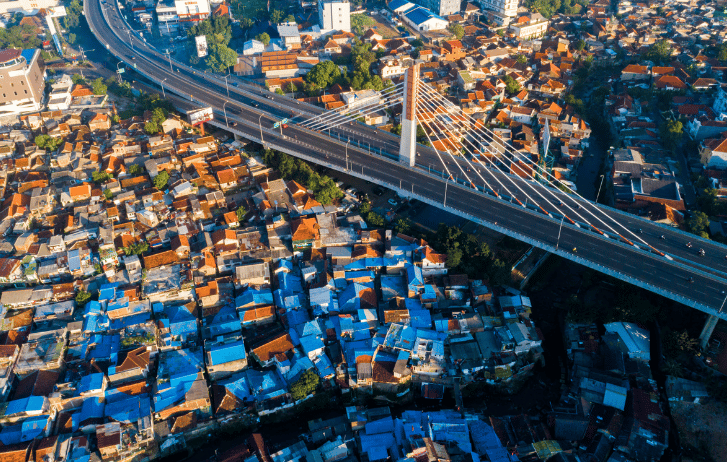
Batam and Bintan, a pair of second-tier cities in Indonesia, are also gaining attention for more industrial reasons. Their Free Trade Zone status, tax incentives, and relatively streamlined import-export procedures are attracting manufacturers and investors seeking a base close to Singapore but with lower operating costs.
Next is Da Nang, which is transforming into one of Vietnam’s fastest-growing tech cities. It has climbed sharply in startup ecosystem rankings as a result of infrastructure investment, pro-business policies, and a growing pool of returning tech talent. The coastal city currently has the third strongest startup ecosystem in Vietnam.
In the Philippines, Cebu has long been a strong business process outsourcing (BPO) base, but it is also evolving into a startup hub in its own right. With Cebu IT Park, a young English-speaking workforce, and strong regional connectivity, Cebu is attracting both local startups and global tech firms. Currently, it has the second strongest startup ecosystem in the Philippines.
Finally, Penang, a second-tier city in Malaysia, stands out for its electronics and advanced manufacturing industries, as well as its semiconductor value chain. Thanks to its established electrical and electronics (E&E) ecosystem, it has been dubbed “the Silicon Valley of the East”. As of July 2025, the number of integrated circuit (IC) design companies in Penang had more than doubled to over 45 – up from 20 the previous year – making it Malaysia’s largest and fastest-growing IC design cluster.
How businesses can benefit from second-tier cities
For regional businesses and e-commerce brands, the appeal of second-tier cities is largely practical.
First, they can lower the cost of growth. Second-tier cities often offer more affordable land, labor, and operating expenses than capital cities. The same cost dynamics are driving edge data centers to move into tier-two cities across Asia, especially near industrial and logistics corridors.
Second, they often come with greater specialization, which enables businesses to choose locations based on fit rather than size alone. For example, Penang has a strong electronics and semiconductor base, while Cebu offers deep talent in business services. Da Nang, on the other hand, is gaining traction in digital services, while Batam and Bintan are attracting manufacturers and export-oriented firms.
Lastly, tier-two cities can help businesses tap into the next wave of demand. After all, consumer growth in Southeast Asia won’t be limited to capital cities. As urbanization spreads, more demand will come from households and enterprises outside the biggest metro areas. This makes tier-two cities attractive both as sourcing locations and as direct-to-consumer (D2C) and business-to-business (B2B) markets.

Linking second-tier cities to the rest of the world
As supply chains diversify, second-tier cities need reliable connectivity to regional and global networks. At FedEx, we’re continuously expanding our logistics network to connect Southeast Asia’s second-tier cities with the rest of the world.
In Thailand, for instance, we have expanded our Laem Chabang facility to support exporters and importers in the Eastern Economic Corridor (EEC). Our enhanced facility offers extended export cut-off times for key industrial areas, along with convenient door-to-door parcel and freight pick-up and delivery services.
We have also launched a gateway facility in Denpasar, which has improved delivery times and streamlined customs clearance for businesses in Bali, Indonesia. More recently, we enhanced our dangerous goods (DG) shipping capabilities in Indonesia to support growing exports of EV batteries and pharmaceuticals.
At the same time, we’re taking steps to strengthen connectivity in Vietnam. In 2025, we transitioned to a direct-serve operating model and introduced an additional outbound flight from Hanoi, enabling shipments from Northern Vietnam to reach Asia and Europe one day faster. We’ve also recently partnered with Viettel Post, which will serve as the National Network Provider for FedEx in Vietnam, to improve network efficiency, operational flexibility, and service quality.
Southeast Asia’s second-tier cities deserve a second look
For businesses diversifying supply chains or seeking new sources of demand, it’s time to take a closer look at Southeast Asia’s second-tier cities. They offer room to scale, access to specialized talent and industry clusters, and a more agile base for building cross-border growth than traditional capital cities.
In a region where supply chains are being rebalanced and consumption is spreading outward, second-tier cities can provide businesses with a meaningful competitive edge.
SHARE THIS STORY



Trending Topics
Most Popular
- 85% Of APAC Businesses Plan To Expand Into Europe, According To New FedEx Report
- Generative AI: A New Frontier
- How To Ship A Giant Panda
- The Rise Of Intra-Asia Trade: Opportunities In The China-Southeast Asia Corridor
- Where Do Old Planes Go When They Retire?
- What’s So Dangerous About Coconuts? Your Guide To Dangerous Goods Logistics

Sign up now and save on your shipping rates!
Sign up now and earn discounts by shipping instantly with FedEx Ship ManagerTM at fedex.com.
Recommended For You

No Weak Links: Tackling Semiconductor Challenges In Automotive Supply Chains
Semiconductors are the backbone of Asia’s automotive supply chain and its weakest link. Learn how reliable logistics can help automakers manage risk.
Read More