
How To Pitch To Investors: Ficus Capital Co-Founder Rina Neoh Shares Her Insider Insights
By FedEx | October 5, 2026
How can startup founders craft a winning pitch to investors? Rina Neoh, co-founder of Ficus Capital, shares her insider insights on what makes a pitch memorable and the red flags she looks out for.
Venture capital (VC) is the engine that fuels many of the world’s fastest-growing startups. While VC backing isn’t for every business, the startup funding, mentorship, and connections it unlocks can be a game-changer. But with so many bright ideas vying for investor attention, how can founders show that theirs is worth thousands – or even millions – of dollars in funding?
With over two decades of experience in startup venture capital and entrepreneurship under her belt, Rina Neoh has honed a keen eye for what makes a business worth investing in. As the co-founder and managing partner of Malaysia-based venture capital firm Ficus Capital, she has invested in some of Southeast Asia’s most ambitious startups, including augmented reality platform Assemblr and electric vehicle company Eclimo Motors.
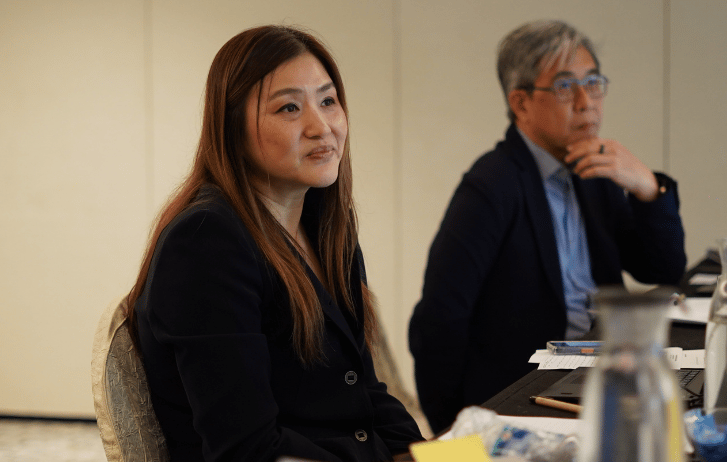
Ficus Capital itself is no stranger to innovation, as the world’s first ESG-Islamic venture capital management company. Blending Islamic finance principles with ESG frameworks, Rina and her team are championing a Quadruple Bottom Line approach to responsible investing: people, planet, profit, and principle. She recently brought this unique perspective on sustainable innovation to the 2026 FedEx/JA International Trade Challenge Asia Pacific finals, where she served as a judge and evaluated student-led business pitches.
Here, she reveals her first-hand insights on how startups can successfully pitch to investors and what factors take a business from “interesting” to “investment-worthy”.
When an investor looks at a business, what are the first three things they want to understand?
Rina Neoh: Before I even open a pitch deck, I want to understand three things. Firstly, who is this founder, and can he or she lead through hardship? Every company hits a wall, and as an investor, I'm betting on how well the founder will respond when that happens.
Secondly, is the business solving a real problem for real customers, and not a problem that only exists in the founder's head?
And thirdly, does the market have room to grow? Even a brilliant team with a beautiful product can't out-hustle a market that's too small or already saturated. Sometimes you must look at broader trends, such as the e-commerce boom and the logistics networks that help power it.

What are the biggest red flags that can make an investor walk away, even if the business appears to have strong potential?
The number one red flag for me is a founder who can't sit with hard questions and gets defensive instead of curious. That tells me how they'll behave in a board meeting three years from now, when things aren't going well.
I also get wary when the numbers don't add up, or when a founder can't clearly explain who their customer is and why that customer should choose them over their competitors. Increasingly, weak governance, the lack of a clear cap table, and having no separation between personal and company finances are immediate pauses for me as well – even if the idea itself is exciting.

A story without numbers is a nice conversation; numbers without a story are forgettable.
What makes a pitch memorable in a market where investors may see dozens of opportunities?
Our fund invests in seed-stage to Series A startups. In these early stages, we look for real growth and a Minimum Viable Product (MVP) – certainly not a vague AI-generated deck. Clarity is more important than a deck full of wish lists and vague statements.
The founders I remember are the ones who can tell me in two sentences what they do, who it's for, and why now, backed with a story that makes the problem feel real to me rather than abstract. What I don't forget is a founder who knows their numbers inside out and isn't afraid to be honest about what's not working yet. Confidence paired with honesty is rare, and it's what stays with me long after the meeting ends.
How much should entrepreneurs focus on storytelling versus hard numbers when pitching to investors?
I don't think it's an either-or question. A good story is what gets me to lean in, and the hard numbers are what convince me to actually say yes. A story without numbers is a nice conversation; numbers without a story are forgettable.
It also depends on which stage the startup is in. If you’re just pitching an idea, of course focusing on storytelling makes more sense. It’s the equivalent of a Netflix trailer.
My advice is to open with the story, because that's what makes a stranger care about your problem, and then let the numbers carry the weight of the argument. If your unit economics are strong, don't bury them. They should feel like the natural, inevitable conclusion of the story you just told.
For founders who view numbers as a nightmare, my advice is to take basic financial courses first. Business is numbers, and numbers are business, so it’s crucial for founders to understand basic finance.
What should entrepreneurs do if they don’t have impressive revenue numbers yet but believe they have a highly scalable business?
I always tell early-stage founders to show me their growth trajectory – not just what you or your team believe. If your revenue is small but growing every month, and you can explain exactly why it's growing, that tells me more than a big one-off number ever could.
The one thing founders should never do is dress up the numbers. At Ficus Capital, we go through every spreadsheet cell by cell to analyze the assumptions behind it: what are the actuals, what are the forecasts, and whether the founder has the judgment to balance, pivot, and execute when reality doesn't match the plan.
What trends are you seeing in the types of businesses that investors are becoming more interested in?
I'm seeing a real shift toward businesses that can drive both impact and returns. Climate action, sustainable finance, and inclusive fintech are no longer "nice to have". They're now attracting a lot of serious startup venture capital, partly because regulations are catching up and partly because customers are demanding it.
I'm also seeing more interest in businesses built with strong governance from day one, rather than those that only implement governance frameworks later on. Investors have learned the hard way that culture and controls matter as much as growth.
In Southeast Asia specifically, there's a growing appetite for Shariah-compliant and ESG-aligned structures as well, because they open doors to a wider pool of capital. At Ficus Capital, we’re helping to drive this shift through our focus on the 4Ps of a Quadruple Bottom Line (people, planet, profit, and principle).
What’s one common misconception about attracting investors that you wish more entrepreneurs understood?
That investors are looking for a perfect business. We're not, because we know every business has gaps. What we're really evaluating is whether the founder understands their own gaps and has a credible plan to close them. Founders sometimes hide their weaknesses to look polished, but what actually builds trust is naming these weaknesses and showing me you've already planned three steps ahead to fix them.
The other misconception is that investors owe founders support no matter what. We don't. We have choices. The worst thing a founder can do is go silent, which is exactly what tends to happen with angel investors when a startup starts going downhill.
Decency is social credit in this industry. Even if the business doesn't make it and you have to wind it down, do it with integrity and keep your investors informed. How you handle the startup shutdown is often what people remember longest, and that reputation can follow you into your next venture.
If you could give a founder one piece of advice before their first investor meeting, what would it be?
Walk in remembering that you're also interviewing us, because this might become a relationship that you live with for years, through the good times and the very tough ones. The best partnerships I've been part of started with founders who asked hard questions about how we add value beyond the check. Go in prepared, go in with honesty, and don't perform a version of yourself that you can't sustain.
Nothing beats doing your homework, and if you can't motivate yourself on the days no one's watching, entrepreneurship probably isn't for you.
SHARE THIS STORY



Trending Topics
Most Popular
- 85% Of APAC Businesses Plan To Expand Into Europe, According To New FedEx Report
- Generative AI: A New Frontier
- How To Ship A Giant Panda
- The Rise Of Intra-Asia Trade: Opportunities In The China-Southeast Asia Corridor
- Where Do Old Planes Go When They Retire?
- What’s So Dangerous About Coconuts? Your Guide To Dangerous Goods Logistics

Sign up now and save on your shipping rates!
Sign up now and earn discounts by shipping instantly with FedEx Ship ManagerTM at fedex.com.
Recommended For You

New Energy Investments: The Next Big Thing? The CEO With Data To Help You Decide
HySights CEO Greg Mittman, who provides companies with new energy project ratings, shares insights on entrepreneurship in the sustainability space.
Read More
Empowering Young Entrepreneurs In Asia Pacific: Opportunities And Growth
Discover strategies that empower young entrepreneurs in Asia Pacific, fostering innovation, growth, and sustainable business practices.
Read More
13 APAC Leaders Reveal The Biggest Mistakes They’ve Made
What did failure teach these 13 APAC business leaders? Discover the lessons behind their toughest setbacks and how they shaped their success.
Read More