From Korea To Vietnam: Why The AI Supply Chain Is Increasingly Intra-Asian
By FedEx | September 24, 2026
From high-bandwidth memory in South Korea to advanced packaging in Malaysia, Asia’s AI supply chain spans interconnected and specialized hubs. As these links deepen, semiconductor logistics will play a bigger role in delivering speed, reliability, and competitiveness.
- Intra-Asia trade in AI-enabling products nearly doubled from pre-pandemic levels to around USD 2 trillion in 2025, underscoring the region’s growing role in the global AI supply chain.
- Markets across Asia are developing complementary strengths, from high-bandwidth memory in South Korea and semiconductor assembly in Vietnam to advanced packaging in Malaysia and physical AI in Japan.
- As components move between specialized hubs, semiconductor logistics, speed, secure handling, and supply chain visibility are vital to keeping production and deployment on schedule.
Artificial intelligence (AI) may run on the cloud, but the hardware behind it takes a very physical journey. A chip can be fabricated in one market, paired with memory in another, then packaged, tested, and assembled elsewhere.
Today, chances are good that much of this journey happens within Asia – a region that is increasingly central to the global AI boom. Intra-Asia trade in AI-enabling products – including semiconductors, electronic components, and manufacturing equipment – doubled from pre-pandemic levels to nearly USD 2 trillion in 2025. At the same time, AI-linked products now account for 35% of Asia’s exports, up from 19% a decade earlier.
But Asia’s AI supply chain is less a single production line than a relay race. Each market runs a specialized leg, and the region’s competitive edge depends on how smoothly the baton passes between them.
Asia’s AI hubs are becoming more specialized and connected
Mentions of the AI boom today often revolve around model developers or data centers. These applications, however, are supported by a highly distributed semiconductor supply chain.
South Korea, for example, is emerging as a global center for high-bandwidth memory (HBM), the ultra-fast memory used alongside AI processors. Samsung and SK Hynix, both based in South Korea, account for nearly 80% of the global HBM market.
Taiwan remains at the epicenter of leading-edge chip fabrication. Meanwhile, Malaysia is building on decades of assembly and testing experience to move further into advanced packaging, a process that combines processors, memory, and other specialized dies into tightly integrated packages for AI and high-performance computing.
Vietnam is moving quickly up the value chain, with its share of global AI-related equipment trade rising from 1.2% in 2015 to 12.4% in 2025. The country is also a key location for traditional semiconductor packaging, module and board assembly, and system integration and testing.
While Japan remains a major source of semiconductor manufacturing equipment, it’s also investing in physical AI and robotics. In 2026, Japan’s Ministry of Economy, Trade and Industry (METI) launched a program to develop multimodal foundation models for AI robotics, with projects running through 2030.
The journey of an AI component can cross several borders
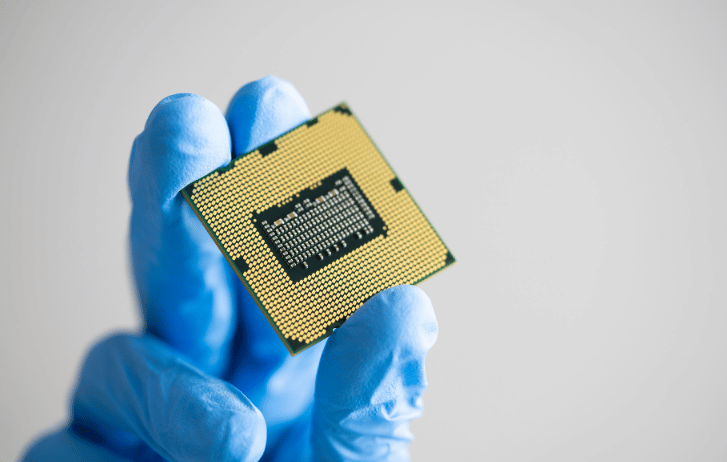
Imagine a simplified journey for an AI semiconductor. Its processor could be fabricated in Taiwan, while its HBM comes from South Korea. These components may then be shipped to Malaysia for advanced packaging, or to Vietnam for assembly and integration. From there, finished hardware might travel to a hyperscale data center in Asia, Europe, or the US.
No single route represents every product, but this example highlights the deeply interconnected nature of Asia’s AI supply chain.
Every component that crosses borders introduces timing, documentation, handling, and security requirements. For AI hardware companies, semiconductor logistics is hence a critical part of production planning.
A delayed component can disrupt the next stages of manufacturing, while poor handling can put high-value and sensitive equipment at risk. This means businesses need to decide early in the product lifecycle where their products should be made and plan how components will move between suppliers, plants, test sites, and customers.
AI is already redrawing Asia’s air cargo flows
As AI hardware becomes a crucial driver of trade growth, air logistics providers are already reorganizing cargo networks in Asia around semiconductor manufacturing hubs.
AI hardware tends to be both high-value and time-sensitive, which makes air freight worth the premium for moving it quickly between regional hubs. According to IATA, AI-related goods represented 53.5% of the global value of goods transported by air in 2025, despite making up only 7% of cargo volume.
To meet the growing demands of Asia’s AI supply chain, logistics providers like FedEx are developing end-to-end services for time-critical AI shipments. From advanced monitoring capabilities to security solutions designed to scale, FedEx is transforming complex AI logistics into a reliable and transparent experience.
3 logistics priorities for the next phase of Asia’s AI boom
With global demand for AI accelerating, Asia’s businesses need to build multi-market AI supply chains that are just as precise and sophisticated as the hardware they move. To move time-sensitive and high-value components efficiently, businesses must focus on three foundational logistics strategies.

1. Match logistics speed to your needs.
A prototype chip, a semiconductor manufacturing tool, and a finished server rack have different urgency levels and handling needs. Tailoring service levels to each shipment can help you meet essential deadlines while managing logistics costs.
Look for a logistics provider that offers a flexible range of air freight solutions. FedEx, for instance, works closely with businesses to meet specific requirements and timelines, from non-urgent shipments to same-day delivery. FedEx Customized Freight, in particular, offers time-specific and temperature-controlled delivery with weekend availability and priority boarding to ensure critical cargo arrives on schedule.
2. Prioritize precision and control.
High-value AI hardware may require specialized packaging, temperature-controlled transport, shock-and-tilt monitoring, secure handling, or dedicated vehicles. At FedEx, we offer advanced capabilities to minimize risk and protect shipments across the AI supply chain, including temperature-controlled transport, priority uplift, and specialized handling.
3. Make supply chain visibility actionable.
Knowing where a shipment is matters, but knowing when a disruption could affect production and taking preventive action is even more valuable.
Logistics solutions such as FedEx Surround offer the advantages of near-real-time shipment visibility and predictive delay alerts, enabling businesses to stay informed about potential disruptions and make contingency plans. Selected service tiers of FedEx Surround also feature proactive intervention and recovery support, helping to minimize damage or delays.
Asia’s AI advantage will depend on what happens between the hubs
Asia’s AI opportunity isn’t concentrated in a single market, as its strength comes from complementary capabilities connected across borders: advanced fabrication, memory, packaging, assembly, equipment, and physical AI.
As those links deepen, the AI supply chain will depend on more than manufacturing capacity. Businesses that treat logistics speed, precision, security, and visibility as part of their operating model will gain a decisive edge over competitors.
The AI race may be powered by computing. But ultimately, how efficiently hardware moves between Asia’s AI hubs will help determine how quickly that computing power reaches the world.
SHARE THIS STORY



Trending Topics
Most Popular
- 85% Of APAC Businesses Plan To Expand Into Europe, According To New FedEx Report
- Generative AI: A New Frontier
- How To Ship A Giant Panda
- The Rise Of Intra-Asia Trade: Opportunities In The China-Southeast Asia Corridor
- Where Do Old Planes Go When They Retire?
- What’s So Dangerous About Coconuts? Your Guide To Dangerous Goods Logistics

Sign up now and save on your shipping rates!
Sign up now and earn discounts by shipping instantly with FedEx Ship ManagerTM at fedex.com.
Recommended For You

How Semiconductor Supply Chains Are Strengthening Resilience
Multi-hub production networks, integrated security, and ecosystem collaboration – we unpack the latest trends reshaping semiconductor supply chains.
Read More
How APAC Can Sharpen Its Edge In The Global Semiconductor Supply Chain
Maintaining APAC’s edge in global semiconductor supply chains takes more than manufacturing power. Here’s what will shape its next phase of growth.
Read More
Powering Asia’s AI Supply Chain: Hong Kong’s “Super Connector” Role And ASEAN’s Manufacturing Capabilities
Discover how Hong Kong and ASEAN are building stronger AI supply chains through smart logistics, customs clearance, and high-value electronics trade.
Read More