
Powering A Resilient Healthcare Technology Supply Chain From Europe To China
By FedEx | July 27, 2026
A global healthcare technology company needed reliable medical device logistics to move shipments from the Netherlands to its production facility in Suzhou, China. Here’s how FedEx helped strengthen its Europe-to-China healthcare supply chain.
- As the world’s second-largest medical device market, China offers significant growth opportunities for global healthcare technology manufacturers.
- FedEx works with one such healthcare technology company to move shipments in the Netherlands to its production facility in Suzhou, leveraging flexible logistics solutions to meet the company’s varied shipment needs.
- To support smoother customs clearance for medical device logistics in China, FedEx offers digital tools and dedicated customs teams, enabling the healthtech company to minimize delays and disruptions.
China has firmly established itself as the world’s second-largest healthcare market, with the medical device sector projected to be worth USD 55.2 billion by 2029. Medical device imports make up a significant share of this market, offering rich growth opportunities for global healthtech businesses.
For global healthcare manufacturers with localized production facilities in China, reliably importing critical medical shipments is essential to keeping operations running smoothly. As medical device shipments move through international freight networks, predictable transit times enable manufacturers to maintain rigorous production schedules and meet customer demand.
For one global healthcare technology leader, dependable cross-border logistics has become a cornerstone of its growth in China. The company imports a steady stream of medical device components from the Netherlands to its Suzhou-based production facility. Each shipment must arrive consistently on time, with accurate documentation and effective exception handling.
To strengthen its Europe-to-China healthcare supply chain, the company works with FedEx to manage transport, customs clearance, and final delivery.
Why medical device logistics needs more than speed
Medical device logistics often involves multiple requirements: time-sensitive delivery, strict production schedules, product-specific documentation, and coordination across time zones.
Not every shipment has the same weight or level of urgency. For example, a replacement part may need priority parcel service, while consolidated components may be better suited to freight shipping. Treating both shipments the same can increase business costs and reduce flexibility.
For healthcare manufacturing companies, supply chain resilience starts with a flexible shipment routing strategy. This means matching each shipment to the most appropriate cross-border logistics solution and defining how exceptions will be handled.
Matching each shipment to the right service
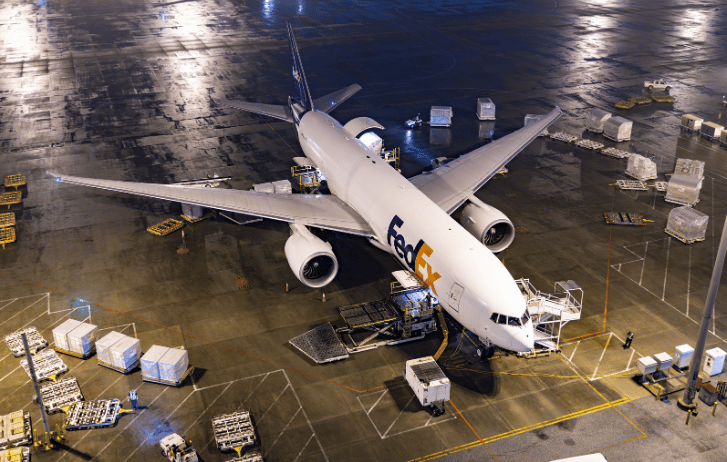
FedEx currently operates 26 weekly flights connecting Europe and Asia Pacific (APAC). For this global healthcare technology firm, our network connects locations in the Netherlands with its manufacturing operations in Suzhou via Shanghai.
FedEx’s tiered service portfolio enables the business to move critical components efficiently. Urgent and lightweight shipments can be delivered through FedEx International Priority, an express service for packages up to 68 kg. Heavier bulk shipments can be transported via FedEx International Priority Freight, an international freight shipping solution designed for cargo weighing over 68 kg. Moreover, the company can also opt for door-to-door delivery or self-collection services, depending on customer needs.
Such flexibility enables the company to streamline its medical device shipping operations. From routine replenishment to time-critical requirements, the company can quickly adapt its cross-border logistics strategy and keep production lines moving.
Simplifying customs clearance in China
Shipping speed is only part of the equation. If an inbound shipment arrives in China without complete and accurate documentation, customs clearance delays can quickly erase any time saved in transit.
Medical device components, in particular, may require commercial invoices, packing lists, certificates of origin, and product-specific documentation. These requirements vary depending on the goods, shipment value, and import category. Preparing this paperwork in advance supports smoother customs clearance in China, helping the company minimize production disruptions down the line.
FedEx Electronic Trade Documents enables the company to upload trade documents electronically and get a head start on customs clearance. By submitting paperwork ahead of time, the business can benefit from pre-clearance support and resolve any errors or gaps before the shipment arrives.
Beyond digital tools, FedEx’s customs experts in Europe and China work closely with the company to provide dedicated support. Coordinating across time zones, our local and global teams help manage shipment exceptions and respond quickly to keep deliveries on track.
This combination of digital innovation and customs expertise enables the business to take a proactive, rather than reactive, approach to customs clearance in China. With FedEx’s tailored clearance support, the company is better equipped to anticipate and address potential issues before they cause delays.
A more resilient route to China
As demand for advanced healthcare technology grows, dependable logistics will become increasingly essential – not only for business growth, but also for delivering better health outcomes.
At FedEx, we help create more resilient supply chains by reducing uncertainty at every stage of the journey. Our reliable Asia-Europe connectivity, flexible shipping options, and dedicated customs support have enabled this global healthcare technology company to strengthen its inbound supply chain from end to end.
The result is a more reliable route from its European locations to its production facility in Suzhou, enabling its healthcare innovations to reach the Chinese market quickly and efficiently.
***
Explore FedEx’s international freight shipping and import solutions to simplify your cross-border logistics.
SHARE THIS STORY



Trending Topics
Most Popular
- 85% Of APAC Businesses Plan To Expand Into Europe, According To New FedEx Report
- Generative AI: A New Frontier
- How To Ship A Giant Panda
- The Rise Of Intra-Asia Trade: Opportunities In The China-Southeast Asia Corridor
- Where Do Old Planes Go When They Retire?
- What’s So Dangerous About Coconuts? Your Guide To Dangerous Goods Logistics

Sign up now and save on your shipping rates!
Sign up now and earn discounts by shipping instantly with FedEx Ship ManagerTM at fedex.com.
Recommended For You

3 Strategies To Achieve Supply Chain Resilience Amid Uncertainty
Unprecedented disruptions in global trade have made supply chain resilience more critical. Here’s how businesses can build lasting resilience.
Read More
How A German Automaker Streamlines Just-In-Time Manufacturing With Cross-Border Logistics
How can global automakers keep up with just-in-time demands? Learn how one manufacturer is localizing production with reliable cross-border logistics.
Read More