
Why Pandemic Readiness Starts With Healthcare Logistics Innovation
By Salil Chari | First published: May 26, 2023 Updated: February 20, 2026
To control deadly viral outbreaks like COVID-19, billions of vaccines must be shipped swiftly and safely worldwide. Before the next pandemic strikes, how can logistics providers innovate to strengthen healthcare supply chains?
- As APAC steps up preparation efforts for future pandemics, the logistics industry plays a vital role in supporting readiness and resilience.
- To be ready for the next pandemic, logistics providers must develop more reliable capabilities to transport time- and temperature-sensitive pharmaceuticals at scale.
- From advanced cold chain solutions to predictive analytics, healthcare logistics innovations are enabling lifesaving shipments to reach patients in time.
The COVID-19 pandemic has often been described as a “once-in-a-century” event. The virus emerged almost exactly 100 years after the Spanish flu of 1918 – another deadly global pandemic – ravaged the world. Yet the outcomes of these two events were radically different. Thanks to modern science, healthcare, and logistics innovations, COVID-19 vaccines were developed and distributed at unprecedented speed to communities across the world – potentially saving tens of millions of lives.
Was our technologically advanced world better prepared than that of our ancestors when it came to combating a global contagion? Absolutely. However, the more crucial question is whether we’re ready for the next one.
Healthcare organizations can’t do it alone
While the COVID-19 pandemic triggered the fastest vaccine development program in human history, it also exposed underlying vulnerabilities within the healthcare system. The crisis revealed an urgent need to prepare for future pandemics by increasing global capacity for vaccine manufacturing, designing emergency response plans for rapid scale, and more.
Across Asia Pacific (APAC), efforts to strengthen pandemic readiness are gaining momentum. Countries such as Australia, Singapore, and South Korea have accelerated investment in mRNA research, paving the way for faster vaccine development. Led by the World Health Organization (WHO), public health agencies across the Western Pacific have also taken part in regional simulation exercises to test their pandemic response plans.
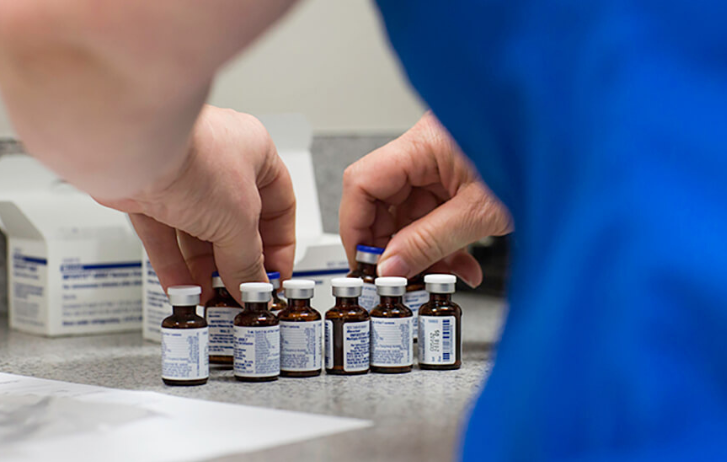
But healthcare organizations can’t do it alone. To control the spread of a viral outbreak, vaccines must be rapidly developed, tested, and distributed at scale. Crucially, they must be transported at precise temperatures to remain safe and effective. Smart healthcare supply chain management and reliable logistics are key to ensuring that lifesaving vaccines reach people on time and in optimal condition.
To be ready for the next pandemic, the logistics industry must develop sophisticated solutions that combine the power of physical infrastructure with the potential of digital innovation. These solutions must meet today’s needs, while remaining flexible enough to tackle the challenges of future pandemics and other crises.
The race to deliver: Speed is not enough
If there’s a silver lining to decades of viral outbreaks, it’s that they have driven the logistics industry to build greater capability and capacity. During the COVID-19 crisis, logistics providers helped to deliver 15.2 billion vaccine doses worldwide. That includes FedEx, which leveraged its global network to transport millions of vaccines and support around 14,000 humanitarian relief shipments.
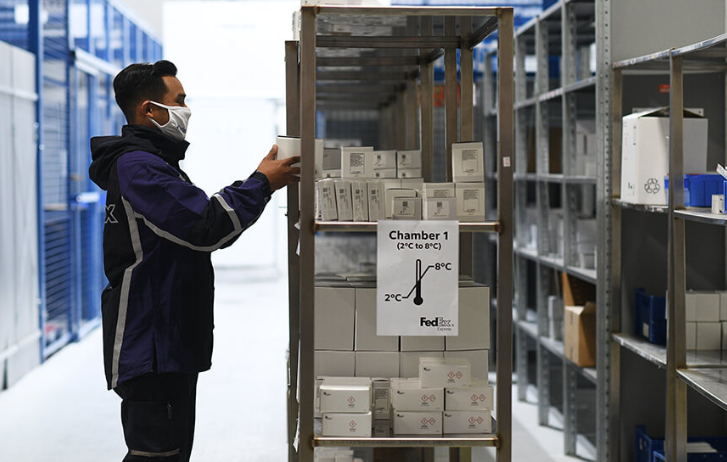
Protecting healthcare shipments over long distances presents many technical challenges. The slightest temperature change can compromise the integrity of temperature-sensitive pharmaceuticals like vaccines and flu medicine. What’s more, shipping delays increase the risk of temperature fluctuations and can disrupt critical treatment schedules.
The good news is that innovations in healthcare logistics are enabling providers to rise to the challenge. Leading players like FedEx are investing in advanced medical logistics technology that improves visibility and control of sensitive shipments – laying the foundation for a stronger, more agile healthcare supply chain ahead of the next pandemic.
1. Advanced cold chain solutions help to maintain precise temperature control
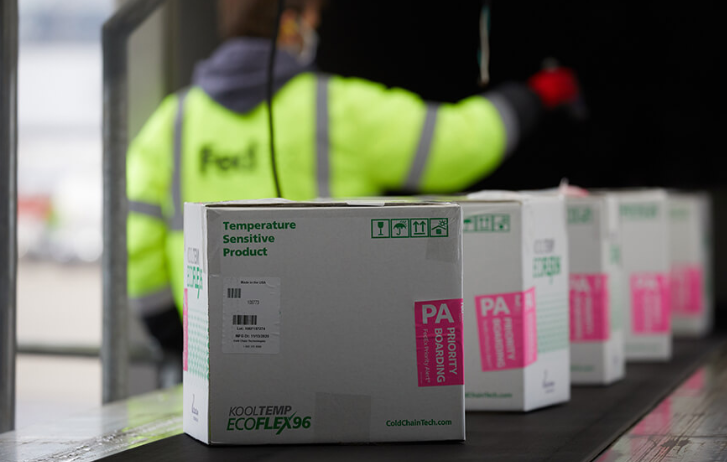
Protecting temperature-sensitive shipments has long been a complex challenge for logistics providers. Such shipments are typically tagged as priority items and precleared, allowing them to be transferred directly from a plane to waiting vans or trucks for immediate delivery.
But what happens when delays occur? To prevent spoilage, shipments must be stored in temperature-controlled facilities until they can continue their journey. FedEx has built a global network of over 130 cold-chain facilities to ensure continuous temperature control for sensitive cargo like pharmaceuticals.
To meet the specialized needs of healthcare logistics, we’ve also built Life Science Centers in key locations around the world, including Singapore, Japan, and South Korea. Designed to comply with market-specific quality and regulatory requirements, these facilities provide temperature-controlled storage and round-the-clock monitoring for critical healthcare shipments.
By investing in robust and scalable cold chain infrastructure, we strengthen our ability to respond quickly to large-scale demand for vaccine transport during a pandemic.
2. Near-real-time tracking supports healthcare planning
Today, e-commerce orders routinely come with shipment tracking, allowing consumers to monitor the status and location of their purchases. Healthcare shipping, however, demands a far higher level of tracking precision. Logistics companies must offer enhanced visibility into shipment location and conditions to enable healthcare organizations to coordinate treatment and distribution with confidence.
Next-generation logistics technologies are unlocking new levels of reliability and accuracy in shipment tracking. For example, FedEx Surround provides near-real-time monitoring of shipments. Certain tiers of the service also include the use of SenseAware ID, a lightweight sensor that transmits package location data every two seconds via Bluetooth Low Energy (BLE).
These near-real-time insights allow healthcare teams to plan ahead, prepare facilities, and schedule treatments more effectively. During a pandemic, when every hour counts, this level of visibility helps healthcare leaders to make faster decisions and provide patients with timely care.
3. Predictive analytics enable proactive intervention
Artificial intelligence and machine learning are creating new possibilities for healthcare logistics and supply chain management. For instance, AI-powered predictive analytics now enables logistics providers to anticipate disruptions and intervene before delays occur.
FedEx Surround leverages AI and machine learning to predict potential disruptions during shipping. With predictive delay alerts, healthcare leaders can quickly take action to expedite at-risk shipments or develop contingency plans. Depending on the service tier selected, FedEx can monitor mission-critical shipments 24/7 and provide proactive intervention when necessary.
This predictive capability is critical for pandemic preparedness. By proactively managing potential roadblocks, logistics providers can help healthcare teams deliver essential treatments, vaccines, and medical devices when they are needed most.
Navigating the next pandemic with smarter logistics
The next pandemic isn’t a question of ‘if’, but of ‘when’. As governments, researchers, and healthcare institutions prepare for future outbreaks, the logistics industry has a crucial part to play. Logistics innovation is essential to enhance the resilience of healthcare supply chains, ensuring lifesaving treatments reach people around the world in time.
At FedEx, we’ve spent decades working closely with healthcare organizations to safely transport critical shipments such as pharmaceuticals, seasonal flu vaccines, and medical devices. Drawing on these experiences, we are constantly innovating to tackle evolving healthcare challenges, from robust cold chain infrastructure to AI-powered solutions. Such logistics innovations create a stronger foundation for supporting public health systems when crises strike.
SHARE THIS STORY



Trending Topics
Most Popular
- 85% Of APAC Businesses Plan To Expand Into Europe, According To New FedEx Report
- Generative AI: A New Frontier
- How To Ship A Giant Panda
- The Rise Of Intra-Asia Trade: Opportunities In The China-Southeast Asia Corridor
- Where Do Old Planes Go When They Retire?
- What’s So Dangerous About Coconuts? Your Guide To Dangerous Goods Logistics

Sign up now and save on your shipping rates!
Sign up now and earn discounts by shipping instantly with FedEx Ship ManagerTM at fedex.com.
Recommended For You

The Challenges Of Biological Sample Logistics And How To Conquer Them
Shipping biological samples requires speed, precision, and temperature control. Learn how FedEx helps ensure safe and compliant delivery every time.
Read More
Stem Cell Shipping: The Logistics Behind Life-Saving Medical Deliveries
Stem cells need to be shipped globally at precise temperatures. Here’s a look at the logistics innovations that make this possible.
Read More
The Future Of Healthcare Supply Chains: Resilience, Innovation And Trust
Discover how you can reduce logistics risk and build a resilient, reliable healthcare supply chain in Asia Pacific..
Read More