
How Smart Does Our Future Look? 3 Technology Trends Powering Business Growth
By FedEx | First published: May 26, 2022 Updated: April 22, 2026
From AI-powered data analytics to robotics automation, today’s biggest technology trends are transforming how businesses operate. Here’s a closer look at the supply chain innovations driving smarter decisions, greater efficiency, and the future of logistics.
- A new wave of technology trends is rapidly redefining how businesses and supply chains operate.
- Combining AI and data analytics enables businesses to automate workflows, improve planning, and gain better insight into customer behavior.
- Meanwhile, robotics automation and autonomous mobility support faster, more flexible package handling and last-mile delivery.
Technology governs our existence: how we live, work, travel, and connect as humans. The most significant tech innovations of the last decade – including AI, autonomous systems, blockchain – continue to advance and become increasingly interconnected.
This seamless integration is set to transform every aspect of business, from infrastructure and inventory management to the way goods are moved. So, how smart does the future look? Let’s explore three key technology trends that are shaping tomorrow:
1. Smart tech is combining AI and data analytics
There was a time when ‘smart’ simply referred to devices that could connect or communicate with other devices via the internet: smartphones, smart cameras, smart sensors. Today, the term typically refers to devices powered by AI and data analytics.
This form of smart tech is becoming increasingly accessible to enterprises. SMEs can now use AI software to automate processes in manufacturing, warehouse operations, and inventory management, or even to organize employee schedules.
Such tools can also help businesses better understand their customers through intelligent algorithms that analyze massive amounts of buyer data and identify behavioral patterns.
The marriage of AI and data enables companies across industries to operate with greater sophistication and precision. At FedEx, our business is undergoing constant, rapid transformation, with supply chain innovation driven by these technologies.
For example, we’ve teamed up with ServiceNow to combine FedEx’s supply chain network data with the automation capabilities of their AI platform, delivering workflows that anticipate disruptions and optimize networks.
Through our data transformation efforts, we’re delivering an unprecedented level of insight and control over the global movement of goods for faster, more efficient deliveries. And this is just the beginning.

This new world of data means that businesses of any size can now digitize their supply chain by leveraging smart tools to simplify logistics management. This progress is shaping the next wave of logistics technology trends.
At FedEx, we have launched Customs AI in FedEx Ship Manager. This generative AI-powered interactive chatbot supports customers with creating specific item descriptions and selecting the correct HS codes for shipments to the US.
Another intelligent tool in FedEx Ship Manager is our AI-powered Harmonized Tariff Schedule (HTS) code lookup function. This feature is designed to help customers identify the appropriate HTS code to enable smoother US import clearance. This also reduces the risk of clearance issues and delays, especially in dynamic tariff environments.
2. AI is supercharging robotics automation
AI goes hand in hand with robotics – another technology trend that continues to gather pace. Robots have evolved from obscure, experimental tech into mainstream fixtures in the service industry.
We now see bots in our shopping malls, airports, and hospitals – so much so that in the most developed Asia Pacific (APAC) countries, we barely give them a second glance. In the healthcare industry, they can even help save lives.
The integration of AI – the ‘brain’ capable of learning algorithms and interpreting conditions – with automation is what has made robotics technology so effective. At FedEx, we’re already putting this innovation into practice.
Since 2022, we’ve been leveraging AI and robotics technology in our sorting operations. We have deployed AI-powered sorting robots at our China and Singapore facilities to handle the fast-growing volume of e-commerce shipments in the region. These robots have significantly enhanced our air cargo processing productivity, freeing up our team to focus on customer service and other tasks that require human expertise.
In the US, we have also partnered with Berkshire Grey, a SoftBank-owned robotics company, to develop autonomous robotic systems that can take on the unpredictable and physically demanding task of unloading large bulk packages from trucks. These bots are currently being piloted, with broader deployment planned for 2026.
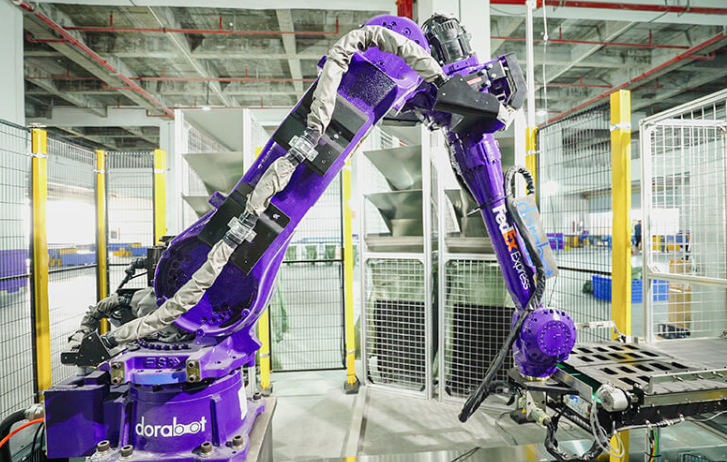
Our vision is to use these technologies to better serve our customers across APAC in the future – ultimately making life easier for small businesses.
3. Autonomous vehicles are steering the future of mobility
The future of mobility is one of the most closely watched technology trends today. Transportation is arguably undergoing the biggest shake-up since the introduction of the steam locomotive or the first passenger aircraft.
Future mobility solutions need to address three key pain points: safety, sustainability, and convenience. The new wave of urban transportation – from electric to autonomous vehicles – can help create a cleaner world with fewer emissions as we work globally toward net-zero.
Autonomous vehicles are driverless but have their own ‘brains’ and the ability to map and detect their environment through sensors, satellite technology, and other systems. This technology aims to ultimately eliminate human error, leading to greater safety on our roads and in our communities.
In logistics, these vehicles can help solve the challenges of last-mile delivery. Autonomous technology can enhance last-mile delivery speed and consistency while lowering energy consumption, which in turn improves urban air quality and reduces supply chain emissions.
Moving toward a more sustainable, intelligent era is the logical next step for the logistics industry. As early as 2021, FedEx began testing an autonomous delivery vehicle in Beijing, China, in collaboration with Neolix. This zero-emission, all-electric vehicle featured L4-level autonomous technology, enabling it to perform intelligent dispatching and navigate complex road conditions during deliveries.
In 2025, we also collaborated with QuikBot Technologies to introduce autonomous delivery robots at selected commercial buildings in Singapore. These agile robots can navigate lifts and access individual floors to complete secure, contactless deliveries without further human assistance.
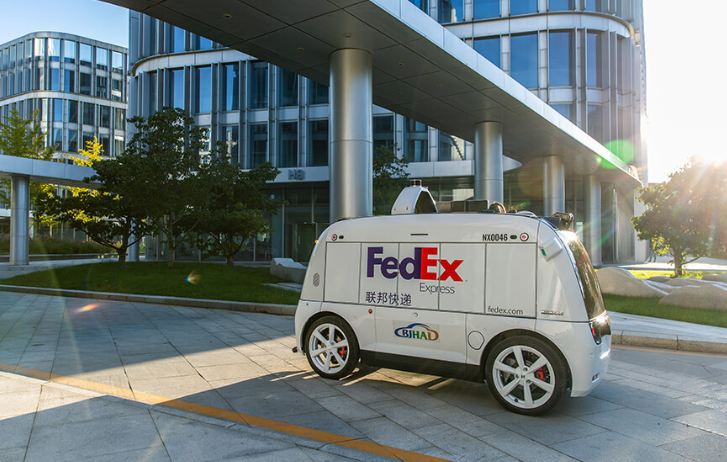
In the near future, the rapid growth of e-commerce will require ever more flexible and efficient logistics solutions to enhance last-mile delivery. Autonomous driving technology and delivery bots are just two logistics technology trends that can help transform how we move goods around the world, both within and beyond urban areas.
A brave new world
As we look ahead, we expect to see even greater opportunities at the intersection – and integration – of our digital and physical worlds. Online environments are increasingly mirroring the real world – whether through online shopping, immersive and experiential retail, or digital avatars used for everything from customer service to gaming.
Given the wide variety of intelligent tools available today, tech isn’t something that only large businesses can afford. Companies of all sizes can implement AI and data analytics in their daily workflows or work with supply chain partners that are adopting the latest technologies. By doing so, they can streamline processes, improve efficiency, and ultimately boost their bottom line.
SHARE THIS STORY



Trending Topics
Most Popular
- 85% Of APAC Businesses Plan To Expand Into Europe, According To New FedEx Report
- Generative AI: A New Frontier
- How To Ship A Giant Panda
- The Rise Of Intra-Asia Trade: Opportunities In The China-Southeast Asia Corridor
- Where Do Old Planes Go When They Retire?
- What’s So Dangerous About Coconuts? Your Guide To Dangerous Goods Logistics

Sign up now and save on your shipping rates!
Sign up now and earn discounts by shipping instantly with FedEx Ship ManagerTM at fedex.com.
Recommended For You

How Big Data Is Delivering The Future
As supply chains become smarter, our APAC president Kawal Preet examines how big data is transforming supply chain management and logistics.
Read More
Key Logistics Technology Trends That Can Boost Business Resilience
Stay ahead of supply chain disruptions with these logistics technology trends, from logistics data analytics to the rise of AI in supply chains.
Read More