Aether Fuels: The Startup Making Sustainable Fuels Affordable And Scalable
By FedEx | May 22, 2026
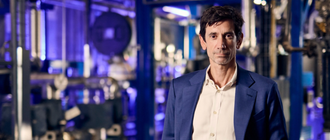
Aether Fuels is working to address the two biggest constraints in sustainable fuel production: cost and scale. Here, founder and CEO Conor Madigan shares his approach to building partnerships, scaling toward commercial deployment, and winning over business decision-makers.
While a range of low-emission alternatives to fossil fuels exist today, cost remains a major barrier to cleaner transport. Sustainable aviation fuel (SAF), for instance, currently costs two to five times more than conventional jet fuel due to expensive feedstocks and complex conversion processes. Even for businesses willing to pay a premium, supply remains limited. In 2025, SAF production accounted for only 0.6% of total jet fuel consumption in the aviation industry.
In response to these challenges, Aether Fuels is pioneering a solution to produce sustainable fuels at higher volumes and lower costs. The Singapore- and Chicago-based startup’s Aurora technology can create fuel from any feedstock that can be converted to carbon dioxide, carbon monoxide, hydrogen, or hydrocarbons. Examples include biogas, captured carbon dioxide, green hydrogen, industrial waste gas, and gasified waste biomass.
Typically, converting waste carbon into liquid fuel requires companies to invest in complex and expensive facilities. Unlike conventional technologies, Aether Aurora promises to reduce capital expenditure by 50% while increasing yield by 20%.
This solution is set to make waves in Asia Pacific (APAC). Aether has partnered with Aster, a leading energy and chemical solutions provider, to develop a commercial-scale SAF production facility in Singapore. The facility is expected to produce up to 50 barrels of fuel per day while cutting greenhouse gas emissions by more than 70% compared to conventional jet fuel.
Aether’s impact was recently recognized at the 2026 FedEx Small Business Grant Contest, and its momentum is only just beginning. We spoke with Conor Madigan, the founder and CEO of Aether Fuels, about what’s next for Aether, as well as his insights on overcoming roadblocks to decarbonization and the future of SAF production.
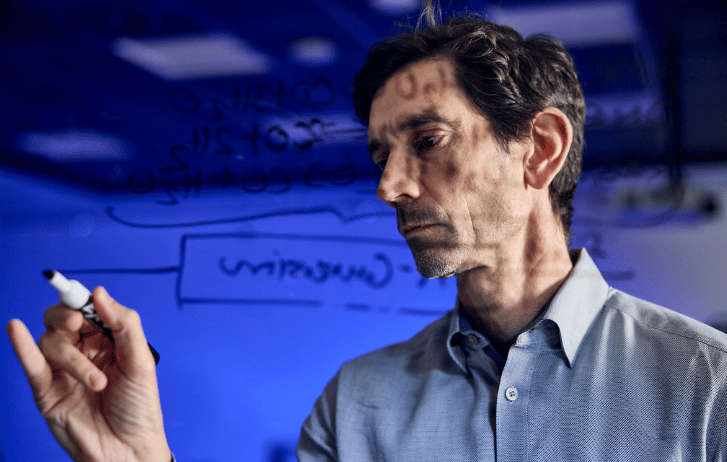
Before you founded Aether Fuels, you were the CEO and co-founder of Kateeva. What inspired you to make the jump from the OLED display manufacturing industry to climate tech?
Conor Madigan: At Kateeva, we developed advanced manufacturing systems that helped enable the large-scale production of OLED displays. Over more than a decade of successfully building that company, I learned how to scale deep tech innovations from the lab to the real world, how to raise capital and build teams, and how to deploy large-scale manufacturing tech cost-effectively. In 2020, I decided to use these learnings to build a new company – one that would make a big and lasting positive impact on society while being profitable.
Climate change is a massive existential challenge that must be faced. Leveraging my experience at Kateeva, I wanted to tackle this problem by bringing deep tech innovations to market at scale. In the beginning, I didn’t know what aspect of sustainability I wanted to work on, but after exploring and discarding many ideas for about a year, I settled on sustainable drop-in fuels for aviation and shipping.
Both industries are essential to connecting the world and are key carbon emitters, accounting for 6% of global CO2e emissions annually.
These industries fundamentally depend on energy-dense liquid fuels and can’t electrify their way to net zero with batteries, which leaves sustainable fuels as the only realistic solution. Today’s methods of producing sustainable fuels cannot scale to meet long-term demand due to cost and feedstock limitations, but at the same time, there is increasing policy pressure on those industries to decarbonize.
Recent geopolitical tensions have also disrupted energy supply chains, further strengthening the case for sustainable fuels as diversification away from fossil fuels enhances energy security. All these factors have created a significant market opportunity that calls for a disruptive solution. Aether was founded to deliver this solution.
Since its launch, how much has Aether Fuels grown?
Since launching in 2022, Aether has grown from an idea into a well-funded sector leader with over 25 employees and principal operations in both the US and Singapore. We’ve advanced our proprietary Aether Aurora platform from the R&D scale to pilot scale, and now, to demo scale.
Our current focus is on commercial deployment, beginning with Project Beacon – our first commercial plant that we’re building in Singapore. Project Beacon will start production in 2028 and produce roughly 2,000 metric tons of sustainable fuels per year, enabling customers to abate about 6,000 metric tons of CO2e annually.
We’ve also recently started developing a pipeline of large commercial projects, each expected to produce more than USD 100 million worth of product annually and enable customers to abate more than 120,000 metric tons of CO2e per year.
Along the way, we’ve built partnerships with leading investors, industrial collaborators, and aviation stakeholders across North America, Europe, and Asia. Most importantly, we’re moving sustainable fuels closer to economic viability at scale. That’s what ultimately determines whether this industry succeeds, and which technology within the industry will be the most successful.
What is the biggest barrier for businesses to commit to sustainability or net zero?
At the highest level, the primary barrier is the implementation of policies that price in the real costs of climate change. Without such policies, new clean technologies will always have a structural disadvantage over incumbent polluting technologies.
Fortunately, many countries and regulators are implementing policies that enable sustainable solutions to get a toehold in the market, so that they can achieve scale and cost reduction. In the SAF industry, we need consistent policies that create a level playing field and provide an economic incentive for airlines to decarbonize. More and more supportive policies are being enacted around the world, and this needs to continue.
Such policies, however, are just the beginning. The SAF industry also urgently needs to tackle the dual challenges of scalability and cost. If policies require the use of increasing amounts of SAF, there must be sufficient production capacity to meet that demand. SAF costs must also come steadily down over time, so that aviation remains affordable.
As recent mandates in the EU and UK have gone into effect, we are seeing a transition from aspiration to execution. However, existing SAF production approaches are insufficient and next-generation solutions like Aether’s are essential to achieving meaningful scale and bringing costs down.
What are your thoughts on the future outlook of APAC’s low-emission fuel market?
We’re bullish on the production of SAF in APAC due to the region’s abundant waste carbon resources and the relative affordability of project execution and plant operations. In our view, APAC can become one of the world’s leading sustainable fuel production hubs.
On the demand side, the biggest SAF consumers in the near term will be the EU, UK, China, Japan, and the US. However, we are seeing progress around SAF policies in APAC. Singapore, for instance, has been particularly creative in structuring a pragmatic and disciplined approach to introducing SAF uptake.
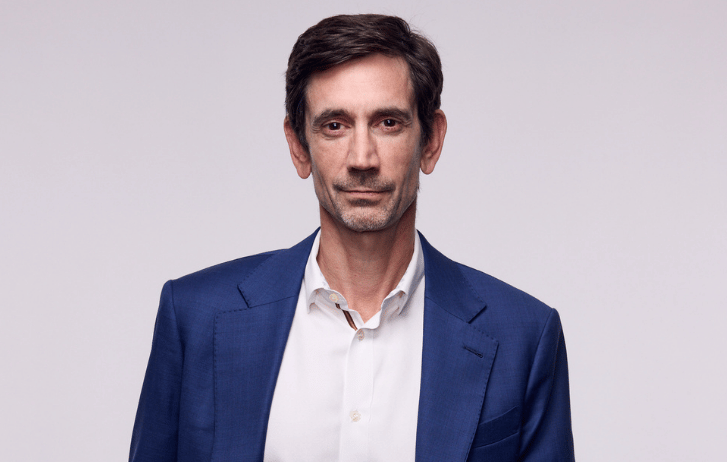
What is one belief you hold that other business leaders might disagree with?
There’s a perception that sustainable fuels cannot be a cost-competitive path to decarbonization, primarily because today’s SAF is so expensive. The implied cost of CO2 abatement when buying SAF today is between USD 450 and 700 per metric ton (depending on market conditions).
With our solution, SAF can be produced much more economically and at scale. We can already see a clear path to making SAF profitable with an implied CO2 abatement cost of USD 300 per metric ton, without making any speculative assumptions about the future costs of renewable power and H2.
If renewable power and H2 costs come down significantly – as we believe they will over the long term – we can bring the CO2 abatement cost down to below USD 150 per metric ton, and potentially even achieve fossil parity. At these prices, SAF would be one of the most cost-efficient ways to decarbonize any hard-to-abate industry.
What is your greatest business failure that you treasure the most?
Early in my career, I learned that having the most economic and high-performing product or solution is not enough to win customers.
At Kateeva, we had just one customer for a number of years after launching our first product. The customer was an industry leader and we achieved our first breakthrough success by convincing them to adopt our solution. That early adoption was driven entirely by exceptional technical execution. We showed, for the first time, that it was possible to solve the problem they were facing, after years of struggle with other bigger companies.
We thought that continuing to deliver at that level would be enough to keep winning their business. But suddenly, after a few orders, we started losing business to a domestic competitor with a significantly worse product offering. We eventually realized that for the key decision-maker, it was a bigger win for him to develop a local alternative than to buy our solution, even though we offered the best combination of performance and cost.
Since then, I have always emphasized to my team that individuals – not spreadsheets – make the most critical business decisions at companies. If we want to win market share, we need to make sure our offering is something individual decision-makers want. Sometimes it’s about building a personal relationship; sometimes it’s about identifying how the decision can become a win for them. But it always requires more than just building the best business case.
This focus on the human element is often a challenge for tech companies. Good salespeople know this, but technical engineering teams often struggle to accept that the best product routinely doesn’t win because the decision-makers just don’t want it enough. At Aether, this lesson applies to how we approach investors, vendors, partners, and customers.
What’s been the most surprising part of your CEO journey so far?
At Aether, I’ve been pleasantly surprised by how collaborative the sustainable fuels ecosystem has been.
In my previous company, the industry was intensely competitive with a lot of zero-sum thinking. Sustainable fuels is a fundamentally different market environment, where demand is projected to drastically exceed supply and the biggest challenges lie in building enough capacity and creating early successes so that the industry as a whole can grow.
There’s a strong appreciation in this industry that success will require constructive cooperation between governments, infrastructure providers, airlines, technology developers, and investors. It’s also encouraging how quickly collaboration is taking shape in APAC. It gives me confidence that this transition can happen faster than many people assume.
SHARE THIS STORY



Trending Topics
Most Popular
- 85% Of APAC Businesses Plan To Expand Into Europe, According To New FedEx Report
- Generative AI: A New Frontier
- How To Ship A Giant Panda
- The Rise Of Intra-Asia Trade: Opportunities In The China-Southeast Asia Corridor
- Where Do Old Planes Go When They Retire?
- What’s So Dangerous About Coconuts? Your Guide To Dangerous Goods Logistics

Sign up now and save on your shipping rates!
Sign up now and earn discounts by shipping instantly with FedEx Ship ManagerTM at fedex.com.
Recommended For You

How EVs Are Driving Towards A More Sustainable Future
Driving towards our goal of achieving carbon neutral operations by 2040, we’ve been busy testing and deploying zero-emission electric vehicles.
Read More
From Fried Chicken To Jet Fuel: The Future Of Sustainable Aviation
Your used fried chicken oil might be powering greener aviation. Here’s a look at what sustainable jet fuel is and how it can help us reach net-zero.
Read More
The Singaporean CEO Helping Companies Reach Net Zero With Cleantech AI Solutions
Discover how Evercomm uses cleantech AI to build solutions that optimize energy logistics and support companies on their journey to net zero.
Read More