
How Businesses Can Start To Build Circular Supply Chains With Smarter Logistics
By FedEx | August 17, 2026
As businesses across APAC accelerate their sustainability efforts, circular supply chains are becoming essential to help reduce waste, improve resilience, and keep pace with customer expectations. Here’s how SMEs can start to tackle the unique challenges of circular logistics.
- Circular supply chains keep products and materials in use through repair, refurbishment, resale, and recycling, but require robust reverse logistics to manage complex product flows.
- Smarter logistics solutions, including predictive analytics and end-to-end returns management, can help SMEs improve supply chain visibility and streamline circular operations.
- The circular supply chain opportunity is significant: 84% of APAC consumers want more eco-friendly online shopping options, while a fully circular economy could boost APAC GDP by USD 339.6 billion.
For decades, businesses have relied on supply chains built on the linear logic of “take, make, dispose.” But as sustainability becomes vital for responsible growth, circular supply chains can help SMEs rethink how they minimize waste and maximize the use of resources.
Across Asia Pacific (APAC), businesses face tightening environmental regulations and rising material costs. At the same time, consumers are demanding more products with lower environmental impact. A 2026 FedEx survey found that 84% of APAC consumers want businesses to develop eco-friendly online shopping options, with environmental responsibility becoming a key differentiator in purchasing decisions.
In the face of these factors, linear supply chains are becoming less viable for businesses facing tighter environmental requirements and rising material costs. The future lies in a more circular approach, where products and materials are reused, repaired, remanufactured, or recycled rather than discarded. This circularity localizes material loops, reduces reliance on scarce resources, and enhances regulatory compliance – all of which help businesses to build resilience in an era of rising volatility.
However, the shift from traditional to circular practices comes with new logistical challenges. To break the linear mold and build scalable circular supply chains, SMEs will need smarter logistics.
How does a circular supply chain work?
A linear supply chain follows a straightforward path: raw materials are extracted, processed into products, and distributed. Customers then consume the product and often discard it after use.
In contrast, a circular supply chain doesn’t end with product delivery. It creates multiple product life cycles through activities such as:
- Product returns
- Repairs and refurbishment
- Parts harvesting
- Recycling
- Resale
- Redistribution
Instead of ending up in landfills as waste, valuable products and materials continuously flow back into the supply chain and are repurposed.
Understanding the logistical challenges of circular supply chains
While the concept sounds simple, circular product loops come with complex operational challenges. For instance, how can companies efficiently move products back through the supply chain for repair or reuse?
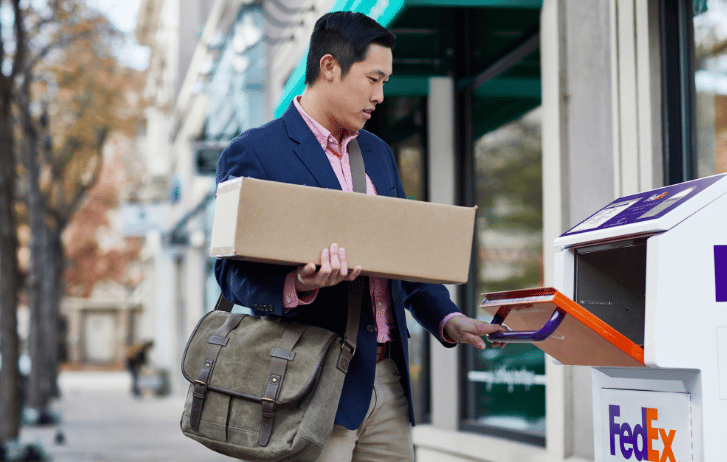
In a global survey of executives across manufacturing-centric industries, complex reverse logistics emerged as one of the top barriers preventing organizations from scaling circular initiatives. For SMEs to embrace circularity effectively, they will need to tackle three key logistical challenges.
1. Moving products in multiple directions
Traditional logistics solutions are designed for one-way movement – from production to delivery, from warehouses to consumers. But in circular supply chains, products can move forward and backward along different paths.
An item may travel from one customer back to a collection point, then to a repair or refurbishment facility before being redistributed to another customer. Items that cannot be reused may need to be transported to specialized recycling providers. This creates a complex web of reverse and forward flows that businesses must coordinate.
Managing these flows can be challenging for SMEs with limited manpower and resources. Without the right logistics support, circular initiatives can quickly become costly and inefficient. That means SMEs need to work with logistics providers to determine the most efficient routes for returned products and consolidate shipments to keep transportation costs manageable.
2. Lack of supply chain visibility
Product returns are only the beginning of a circular journey. Once an item is returned, it may be:
- Restocked
- Repaired
- Refurbished
- Recycled
- Responsibly disposed
With no one-size-fits all product pathway, it can be difficult to keep track of inventory. Many businesses lack the real-time visibility needed to inspect product conditions, consider different transit times and component availabilities, and make informed decisions about what happens next. As a result, they may face inefficiencies such as unnecessary transportation and delays in processing returns.
For circular operations to succeed at scale, SMEs need end-to-end supply chain visibility to keep products moving efficiently through the loop.
3. Meeting customer expectations around convenience
While customers increasingly favor business with sustainable practices, they also expect returns to be convenient. As circular models rely heavily on reverse logistics to collect used goods, customers may be less willing to participate if they have to pay for return shipping, travel long distances to drop off products, or navigate complicated return procedures.
Globally, studies show that convenience dictates consumer loyalty. According to a survey by Blue Yonder, 84% of consumers say they would stop shopping at their favorite retailer if stricter returns policies were introduced. What’s more, half of all respondents identified returns fees as the most inconvenient part of new returns policies.
SMEs that embrace circularity face the challenge of designing a convenient reverse logistics experience for customers – without creating unsustainable costs for the business.

Strategies for SMEs to build circular supply chains
Circular logistics may present new challenges, but SMEs can successfully overcome them with the right technology, processes, and logistics support. Here are three smart strategies that businesses can adopt.
1. Build reverse logistics visibility into your supply chain
Many SMEs treat reverse logistics as an afterthought. However, reverse logistics is the unseen enabler behind the reuse, refurbishment, and recycling of returned products and packaging. Businesses need to build reverse logistics into their routine operations, leveraging smart solutions to enhance visibility and streamline the bi-directional flow of goods.
Cutting-edge technologies such as blockchain records and Internet-of-Things (IoT) smart tags enable companies to securely track a product’s journey through the supply chain. With greater visibility, businesses can process returns more efficiently, improve circular supply chain management, and make faster decisions about product recovery.
2. Choose a logistics provider that offers greater control over returns
Seamless returns management is key for successful circular supply chains. Working with a logistics provider that offers end-to-end returns management can help businesses gain greater control over these processes.
From coordinating product collection to tracking return shipments, the right logistics support can reduce SMEs’ operational burden while creating a smoother returns experience for customers.
Look for logistics providers that offer:
- Flexible returns options. Providers with strong local networks and customizable returns options can help streamline the customer experience. For example, FedEx Global Returns enables customers to send return labels for outbound shipments in three different forms: printed, emailed, or editable labels. Customers can then conveniently request a pickup or drop off their return shipments at the nearest FedEx location.
- End-to-end tracking. With visibility into returns, your team can better forecast inventory and make more informed decisions about the next steps for returned products. Solutions like FedEx Global Returns help simplify tracking by linking returns to customers’ original shipments.
3. Use data analytics to streamline circular flows
Data is critical in helping businesses recover and manage products and materials more efficiently. For instance, predictive analytics tools can simplify inventory management by analyzing historical returns and forecasting future trends across multiple inventory sources: new, reused, refurbished, recycled, and more.
When it comes to logistics, data enables SMEs to identify opportunities to drive efficiency as well as support efforts to reduce emissions. Logistics providers like FedEx use real-time data on cargo volume to support consolidated shipping and smarter routing.
One example is FedEx’s AI-powered Stops Sequencing tool, which intelligently helps optimize delivery routes in real-time based on package volume and customer requests. This can help reduce the total mileage traveled, contributing to reductions in fuel and energy consumption as well as carbon emissions. Ultimately, this helps streamline both forward and reverse flows in circular supply chains.
Rethinking logistics to close the loop
The case for circularity is compelling. If a circular economy were fully applied in APAC today, it would boost the region’s gross domestic product by USD 339.6 billion and reduce carbon emissions by 7.2%, according to PwC.
For SMEs, circularity has tangible benefits as well. Circular supply chains can translate to lower waste, higher resource efficiency, and greater resilience for a net-zero future. While the shift from linear to circular can be challenging, a logistics provider with sustainability-centric tools and expertise can make your transition easier.
At FedEx, we’re stepping up to meet the growing demand for logistics solutions that help support efforts to reduce emissions. Our investments in technologies and infrastructure are designed to improve operational efficiency and support efforts to reduce emissions across our operations.
As we advance toward our goal of achieving carbon-neutral operations by 2040, we strive to support businesses embracing smarter and more sustainable ways of working.
***
Find out how our sustainability initiatives can support your journey toward a circular supply chain.
SHARE THIS STORY



Trending Topics
Most Popular
- 85% Of APAC Businesses Plan To Expand Into Europe, According To New FedEx Report
- Generative AI: A New Frontier
- How To Ship A Giant Panda
- The Rise Of Intra-Asia Trade: Opportunities In The China-Southeast Asia Corridor
- Where Do Old Planes Go When They Retire?
- What’s So Dangerous About Coconuts? Your Guide To Dangerous Goods Logistics

Sign up now and save on your shipping rates!
Sign up now and earn discounts by shipping instantly with FedEx Ship ManagerTM at fedex.com.
Recommended For You

Has Your Business Found The Link Between Sustainability And Innovation?
When it comes to business and economic growth, sustainability and innovation go hand in hand.
Read More
5 Key Tips To Optimize Your Reverse Logistics Strategy
Your reverse logistics strategy can have a huge impact on your customer experience and bottom line. Here’s how you can optimize your parcel returns.
Read More
Why Sustainable Trade Is Essential For Asian Exporters To Europe
Unlock growth in Europe by aligning with sustainable trade rules. Learn how Asian exporters can meet EU standards and gain long-term advantage.
Read More