
Powering Asia’s AI Supply Chain: Hong Kong’s “Super Connector” Role And ASEAN’s Manufacturing Capabilities
By FedEx | June 9, 2026
AI demand is transforming Asia’s electronics trade. Hong Kong’s role as a regional connector, combined with ASEAN’s manufacturing strength, is creating a faster, smarter trade corridor for high-value shipments across the AI supply chain.
- AI demand is placing new pressure on Asia’s electronics industry to move chips, servers, circuit boards, and other high-value components quickly and reliably across borders.
- Hong Kong’s “super connector” role and ASEAN’s manufacturing capabilities are converging to create a resilient regional trade corridor for AI-related electronics and the semiconductor supply chain.
- Smart logistics hubs, express customs clearance, and digital shipment visibility are becoming essential for businesses managing high-value electronics shipments.
Artificial intelligence (AI) may be digital, but every breakthrough relies on physical parts: chips, servers, circuit boards, and other high-value components that must be moved quickly and reliably across borders.
As the sector evolves, the importance of effective AI supply chain strategies is becoming increasingly clear. To thrive, businesses across Asia’s fast-growing semiconductor supply chain will need to navigate the challenges of time-critical logistics and the transportation of high-value shipments.
Hong Kong: The “super connector” for Asia’s AI supply chain
One of the most significant developments in this space is the growth of bilateral electronics trade between the Association of Southeast Asian Nations (ASEAN) and Hong Kong. Total merchandise trade between the two markets reached HKD 1,668.5 billion in 2025, reflecting an annual average growth rate of 7.6% from 2021 to 2025. Over half (53.2%) of Hong Kong exporters identified the rising demand for AI and new technology-related consumer electronics as their primary growth engine in 2026.
Hong Kong is often described as Asia’s premier "super-connector" – the gateway that bridges manufacturers, suppliers, investors, and international markets. Its zero-tariff environment and certificate-of-origin protocols help facilitate high-value transshipments. In addition, its seamless integration with the Greater Bay Area (GBA) and key free trade agreements (FTAs) reduces dwell times and operational costs for AI components.
Together with ASEAN’s growing manufacturing base, Hong Kong’s strategic position is reinforcing the region’s trade corridor for AI-related electronics. This multimodal ecosystem enables businesses to ship high-value or time-sensitive components with greater efficiency, building a more connected and frictionless AI supply chain across the region.
How smart logistics hubs are supporting high-tech trade
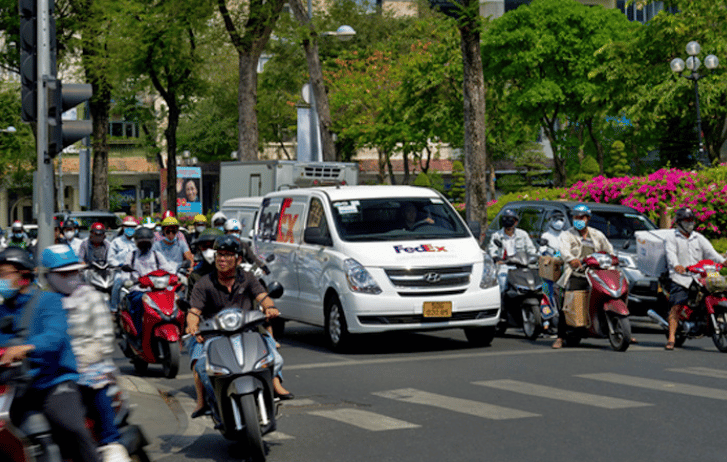
As electronics supply chains become more time-sensitive, traditional logistics hubs are evolving to keep pace. Many global logistics innovators now deploy real-time tracking, AI-driven customs brokerage, and dedicated cargo networks to mitigate common cross-border bottlenecks.
These next-generation logistics hubs are often called “SuperPorts”. In simple terms, a SuperPort is a smart logistics hub that connects different transport modes, using digital technology to move goods with fewer delays and better visibility.
SuperPorts typically integrate AI-enabled document validation, risk-based security screening, and predictive transport planning. As demand for high-value and time-sensitive electronics grows, these hubs are becoming increasingly important for connecting ASEAN production centers with Hong Kong’s transshipment and certification capabilities.
One example is the Vietnam SuperPort™ – an 83-hectare AI-powered multimodal hub connecting 20 industrial parks in Northern Vietnam to major seaports and airports, including Hai Phong and Nội Bài. Its location also supports trade flows to Yunnan and Kunming in China, enabling high‑value, advanced electronics to move efficiently into Hong Kong and the GBA via rail and sea.
This connectivity supports the ASEAN Smart Logistics Network, providing Vietnam-manufactured semiconductors with access to Hong Kong for seamless certification and global re-export.
FedEx supports this regional connectivity through an extensive cargo network and digital logistics solutions. For instance, FedEx operates nonstop cargo flights between Guangzhou, the GBA's manufacturing heart, and Penang, a key ASEAN semiconductor hub and the site of an RM 46 million logistics park. Sophisticated tools such as FedEx Surround provide predictive tracking for sensitive AI hardware, ensuring regional high-tech supply chains meet rigorous timelines.
Why Hong Kong matters to high-value electronics trade
While ASEAN serves as a manufacturing base for electronics, Hong Kong has evolved into a critical gateway for businesses connecting to international markets.
For technology firms, Hong Kong offers access to a wide range of services: financing, legal support, intellectual property expertise, testing, certification, and trade solutions. These services help businesses manage cross-border requirements and prepare electronic products for export, especially as ASEAN trade becomes more closely linked to AI-related manufacturing.
The ASEAN-Hong Kong FTA further supports the flow of goods by eliminating tariffs on ASEAN electronics exports, easing trade between the two markets. In 2025, Hong Kong’s domestic exports to ASEAN reached HKD 11.5 billion, accounting for 17.4% of total domestic exports. Electronics remains central to this growth, with semiconductors and telecommunications equipment accounting for a large share of exports.
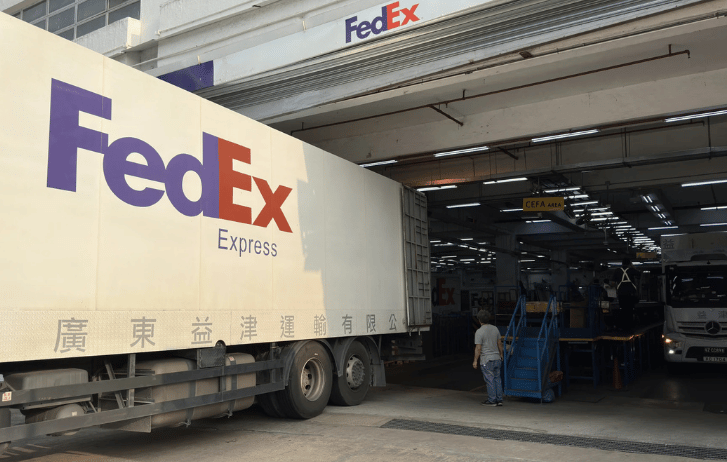
Hong Kong’s links with mainland China add another layer of value. The Cross-Boundary Express Cargo Clearance Facilitation Arrangement (CEFA), for example, allows express customs clearance for eligible shipments moving from the mainland into Hong Kong. Through this streamlined connection to the mainland, Hong Kong in turn strengthens its role as a gateway for manufacturing and logistics flows into Southeast Asia.
This enables GBA companies to bypass traditional border bottlenecks for high-value shipments, with AI-driven customs brokerage further reducing delays across ASEAN markets.
FedEx is the first logistics firm to adopt CEFA protocols. By embedding them into its networks, FedEx gains access to express customs clearance, enabling the rapid movement of electronics from GBA factories through Hong Kong’s logistics hub to ASEAN SuperPorts. This pioneering move illustrates how Hong Kong’s regulatory framework, when paired with industry expertise, can support the smart logistics needed for global AI supply chains.
Building a stronger AI supply chain in Asia
The growth of AI is changing the way electronics supply chains are built. As ASEAN expands its manufacturing strength and Hong Kong deepens its role as a regional connector in the AI supply chain, businesses have new opportunities to build more reliable and resilient supply chains.
For electronics businesses, this means looking beyond production alone. The next stage of growth will depend on a more integrated high-tech ecosystem, one built on smart logistics hubs, reliable clearance processes, digital shipment visibility, and regional networks that can keep goods moving as demand rises.
SHARE THIS STORY



Trending Topics
Most Popular
- 85% Of APAC Businesses Plan To Expand Into Europe, According To New FedEx Report
- Generative AI: A New Frontier
- How To Ship A Giant Panda
- The Rise Of Intra-Asia Trade: Opportunities In The China-Southeast Asia Corridor
- Where Do Old Planes Go When They Retire?
- What’s So Dangerous About Coconuts? Your Guide To Dangerous Goods Logistics

Sign up now and save on your shipping rates!
Sign up now and earn discounts by shipping instantly with FedEx Ship ManagerTM at fedex.com.
Recommended For You

From Taiwan To The World: The Critical Role Of Supply Chain Logistics In The Semiconductor Industry
With the growth of production in Taiwan, Taiwanese chip exports are critical to the global semiconductor industry, supported by smart supply chains.
Read More
Inside China’s Booming Greater Bay Area
One area of potential in China's supply chain is the Greater Bay Area, where a powerful geographic bloc is driving trade and export opportunities.
Read More
How APAC Can Sharpen Its Edge In The Global Semiconductor Supply Chain
Maintaining APAC’s edge in global semiconductor supply chains takes more than manufacturing power. Here’s what will shape its next phase of growth.
Read More