
From Semiconductors To Data Centers: How Vietnam Is Moving Up Asia’s AI Value Chain
By Ee-Hui Tan| October 30, 2026
As Asia’s AI race accelerates, Vietnam has an opportunity to build a specialized role in the region’s AI and semiconductor supply chains. Here’s what it will take to turn that opportunity into sustained growth.
- Vietnam is expanding its role in Asia’s AI value chain, building on its electronics manufacturing base and growing capabilities in semiconductors, AI research, and data centers.
- As Vietnam becomes more integrated into regional AI supply chains, its success will increasingly depend on its ability to move high-value, time-sensitive equipment and components efficiently across borders – from hardware imports for data center construction to AI and semiconductor exports.
- Reliable data center and semiconductor logistics, advanced shipment visibility, and tailored support can enable Vietnam-based businesses to drive AI growth and strengthen their regional competitiveness.
The rise of AI is often discussed in terms of technology, but it’s also transforming global trade. Across Asia, trade in AI-related products – semiconductors, advanced chips, memory, servers, networking equipment, and more – is driving strong export growth. The region currently accounts for 65% of global AI-related exports, led by key hubs such as Taiwan, China, and Hong Kong.
Within this shifting landscape, Vietnam has emerged as a key player in the region. The country recorded the world's largest increase in its share of global AI-related equipment trade, surging from just 1.2% in 2015 to 12.4% in 2025. By combining its electronics manufacturing base with growing capabilities in semiconductor engineering, AI research, cloud computing, and data centers, Vietnam is moving quickly up the AI value chain.
Today’s AI value chain is more distributed and interconnected than ever, with different markets developing specialized capabilities that are linked together across borders. Taiwan, for instance, dominates advanced chip production, Malaysia has carved out a niche in advanced chip packaging, and China leads in data center development. As regional players continue to build on their established strengths, Vietnam has the opportunity to become a dependable link in Asia’s AI ecosystem.
What’s clear is that as these links deepen, Vietnam’s success will depend on more than developing the right AI infrastructure and capabilities. As the country becomes more deeply integrated into regional AI supply chains, its competitiveness will hinge on how efficiently and reliably it can move components across borders.
Vietnam’s AI infrastructure landscape is taking shape
By 2030, Vietnam aims to rank among Southeast Asia’s top three countries for AI research and development. The government’s National AI Strategy sets out nine strategic pillars to drive nationwide AI transformation, with the target of growing exports of AI products, services, and solutions to approximately USD 5 billion.
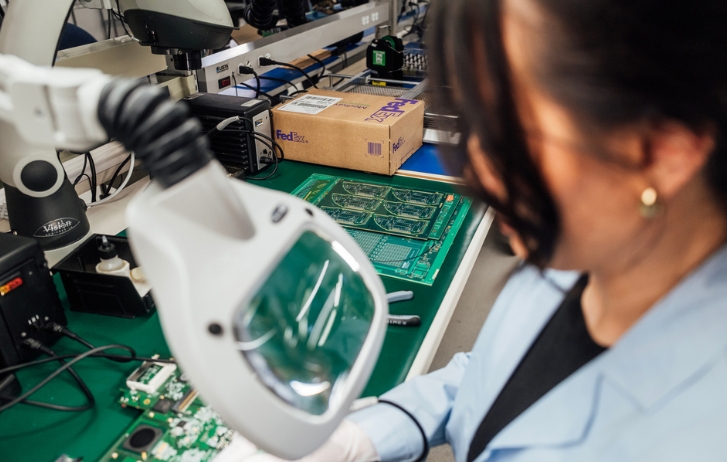
These ambitious goals are increasingly being supported by physical investment in AI data centers, cloud computing infrastructure, and semiconductor production facilities – the foundations of the country’s AI development. An August 2025 market assessment identified 41 active data centers in Vietnam, alongside a growing pipeline of hyperscale and AI-ready projects.
Promisingly, local companies are taking the lead in driving Vietnam’s AI data center market. Information service technology company FPT has invested USD 200 million in building the country’s first AI factory, which ranks among the world’s top 40 supercomputers. Vietnam’s second-largest technology corporation, CMC, has secured approval for a hyperscale data center worth over USD 250 million. Meanwhile, telecommunications enterprise Viettel has broken ground on a 140-megawatt, 10,000-rack facility that is set to become one of Southeast Asia’s largest data centers.
At the same time, global firms are strengthening the country’s semiconductor design, assembly, and packaging capabilities. Marvell, a leading provider of data infrastructure semiconductor solutions, has grown its Vietnamese workforce to more than 500 engineers, making Vietnam its third-largest R&D hub globally and supporting chip design for AI data center infrastructure.
Samsung Electro-Mechanics has announced a planned investment of USD 1.84 billion in its Vietnamese facility, which will increase production capacity of FCBGA – a key semiconductor packaging substrate – for the AI server market. Tech giants such as LG and Intel are also expanding semiconductor assembly and packaging activities in Vietnam.
These developments do not yet constitute a fully developed AI infrastructure ecosystem, but they show how Vietnam’s role is broadening from electronics manufacturing toward computing infrastructure, semiconductor engineering, research, and technology design.
The physical supply chain behind AI growth
As Vietnam rapidly scales its AI infrastructure, its supply chain networks and logistics connectivity must keep pace to support this growth.
Building an AI data center requires both large-scale infrastructure and advanced technology. Heavy and bulky equipment such as cooling systems, generators, and cabling need to be shipped to construction sites in precise sequences – arriving just in time for installation without clogging up storage space.
Meanwhile, high-value and time-sensitive components, including processors, memory, storage, and networking equipment, require real-time monitoring and specialized handling to minimize damage or delays.
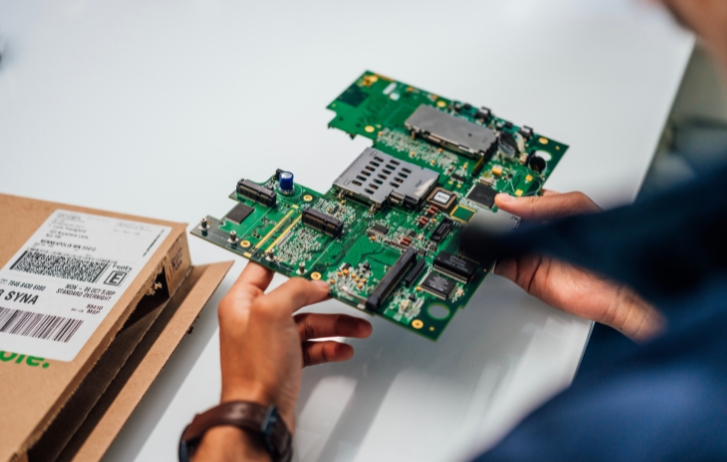
Reliable semiconductor logistics connectivity is just as critical. A chip can be fabricated in one market, transported to Vietnam for assembly, packaging, or testing, then shipped to data centers or electronics manufacturers in other countries. In these complex cross-border supply chains, a minor disruption could quickly snowball into costly production delays.
Precision logistics is therefore essential throughout the AI value chain, from data center construction to semiconductor exports. At FedEx, we see data center logistics and semiconductor logistics as key enablers of competitiveness.
Dependable cross-border shipping networks, customs clearance support, advanced shipment monitoring, and specialized handling solutions can help technology companies manage complex AI supply chains and connect their operations more efficiently with regional and global markets.
For Vietnam, enhanced logistics connectivity should therefore develop alongside data center infrastructure, semiconductor capabilities, regulatory frameworks, and talent upskilling as part of the broader environment needed to attract and scale high-value AI investment. FedEx is already developing end-to-end solutions to support critical AI shipments with capabilities such as customized air freight services, near-real-time shipment visibility, and 24/7 assistance from dedicated teams.
Positioning Vietnam for success in Asia’s AI economy
Vietnam’s journey in AI innovation is only just gaining momentum. Progress will require sustained investment and long-term efforts to address gaps in talent, infrastructure, and technical capability. But Vietnam enters this next phase as a rising data center hub in Asia with an established manufacturing base, a growing technology ecosystem, and increasingly clear ambitions for its semiconductor sector.
The countries that succeed in the next phase of AI and semiconductor growth will not necessarily be those that master every part of the value chain. They will be those that know where they can create the most value, build the capabilities to deliver it consistently, and connect those capabilities effectively with the wider regional ecosystem.
By keeping critical components and equipment moving reliably into Vietnam while enabling prototypes and locally developed products to reach other markets efficiently, logistics can help convert AI capabilities into a lasting competitive edge. This is where FedEx is ready to contribute: connecting Vietnam’s AI ambitions with the regional and global networks on which success will depend.
SHARE THIS STORY



Trending Topics
Most Popular
- 85% Of APAC Businesses Plan To Expand Into Europe, According To New FedEx Report
- Generative AI: A New Frontier
- How To Ship A Giant Panda
- The Rise Of Intra-Asia Trade: Opportunities In The China-Southeast Asia Corridor
- Where Do Old Planes Go When They Retire?
- What’s So Dangerous About Coconuts? Your Guide To Dangerous Goods Logistics

Sign up now and save on your shipping rates!
Sign up now and earn discounts by shipping instantly with FedEx Ship ManagerTM at fedex.com.
Recommended For You

Vietnam’s Air Cargo Growth: Opportunities For Exporters And Manufacturers
With new airport infrastructure, better connectivity, and digital logistics tools, Vietnam's SMEs are increasingly using air cargo to expand globally.
Read More
How Vietnam Can Rise In The Global Clean Energy And Lithium Battery Value Chain
Discover how Vietnam is rising in the clean energy economy with lithium battery exports, EV supply chains, and smart logistics enabling global trade.
Read More
From Korea To Vietnam: Why The AI Supply Chain Is Increasingly Intra-Asian
Intra-Asia trade is reshaping the global AI supply chain. Here’s what AI and semiconductor businesses in Asia need to drive the next phase of growth.
Read More