
How Clinical Trial Logistics Keeps Asia Pacific’s Research On Track
By FedEx | First published: March 23, 2020 Updated: January 29, 2026
Asia Pacific is playing a bigger role in global clinical research, with trials spanning more sites and markets than ever before. Here’s how reliable clinical trial logistics helps organizations to maintain consistency, control, and speed as research scales.
- APAC has become a leading region for clinical trial activity, spreading beyond major cities into emerging markets.
- This geographic spread creates supply chain risks and increases the need for reliable, cross-border clinical trial logistics.
- FedEx supports the complex demands of healthcare shipments with dedicated transportation, validated cold-chain packaging, and near-real-time monitoring.
Clinical trials today look very different from just a few years ago. Research is more global, timelines are tighter, and expectations around data integrity and patient safety are higher than ever. For pharmaceutical companies and clinical research organizations, logistics has become a core enabler of successful trials.
Nowhere is this more evident than in Asia Pacific (APAC). The region has become one of the world’s most active clinical research hubs, driven by diverse patient populations, expanding healthcare infrastructure, and growing investment in both established and emerging markets. As trial activity spreads across borders and into less central locations, clinical trial logistics has become a defining factor in whether studies stay on track – or fall behind.
APAC’s growing role in global clinical research
APAC continues to lead the world in clinical research activity, particularly active control studies. Trial numbers across the region have risen steadily since 2021, with APAC now accounting for a major share of global active control trials – ahead of Europe and other regions. In fact, APAC’s clinical trial activity is rising two to three times faster than Europe, and this trend will accelerate over the next decade.
China remains the largest contributor by volume, accounting for 42.4% of all regional studies. The country’s regulatory efficiency, government support, and fast-growing pharmaceutical and biotech base are spurring its strong clinical trial activity.
But China is by no means the only center of gravity. Countries such as South Korea, Singapore, Thailand, and Australia are growing players in the sector, supported by regulatory reform, strong hospital networks, and access to diverse patient pools.
While this geographic spread creates opportunities, it also introduces complexities and exposes critical vulnerabilities in the commercial supply chain. For one, trial sponsors are managing more sites, more cross-border movements, and more temperature-sensitive shipments than ever before. In the coming years, APAC is predicted to host 50,000 clinical trials, requiring over 20,000 individual registered product types.
Supply chains have not quite caught up to this rapid growth. The region’s clinical trials continue to face operational challenges, including fragmented regulations and documentation requirements across different countries. This is where robust clinical research logistics becomes mission-critical.
When trial sites move beyond major cities
In APAC, clinical trial sites are increasingly located outside first-tier cities. Recruitment is often faster in regional areas, and costs can be lower. But these advantages come with logistical challenges.
Clinical trial materials still need to move quickly and safely, often across borders and through varying customs controls. Transit delays, documentation gaps, or temperature changes can compromise irreplaceable materials and disrupt research timelines.
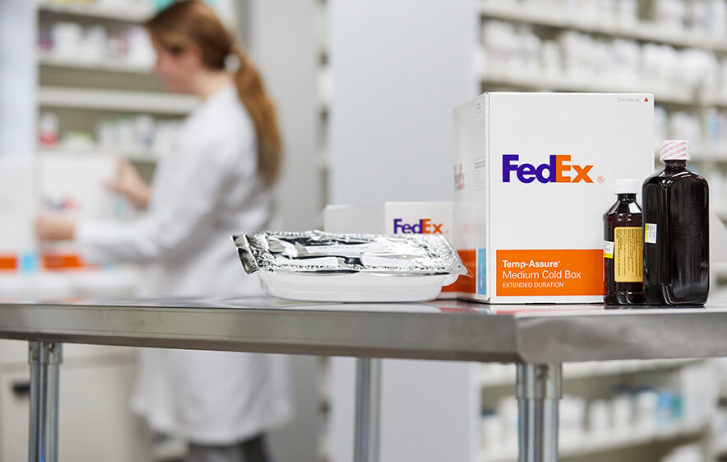
For trial sponsors, this raises a critical question: how do you maintain consistency and control as your network of sites expands? The answer lies in logistics that combine reach, visibility, and local expertise – especially for healthcare shipping, where precise timing and handling are non-negotiable.
What modern clinical trial logistics must deliver
Modern clinical trial logistics must do more than move shipments from one site to another. It needs to support trials end-to-end, enabling sponsors, clinical research organizations, and study teams to maintain consistency, control, and compliance for studies spanning multiple locations.
At its core is reliable cold chain management. Clinical materials such as biosamples, kits, and investigational medicinal products (IMPs) need to be transported in validated packaging that maintains ambient, chilled, frozen, or deep-frozen temperatures. Even minor temperature deviations can impact sample integrity or delay analysis.
Another important feature is near-real-time shipment monitoring, which allows teams to track location and environmental conditions throughout transit. This supports better decision-making in healthcare shipping, especially when materials move across borders or into more remote trial sites.
Medical supply shipping for clinical trials often involves complex documentation and strict handling requirements, particularly for biological materials. Logistics providers can provide regulatory and customs support to help trial teams navigate local regulations and red tape, reducing delays and administrative hassle.
Finally, effective clinical trial logistics also depends on strong local execution. This includes trained drivers, site-ready packaging, and flexible pickup options that align with how each trial site operates. When these elements work together, logistics becomes a stabilizing force that helps trials stay on schedule.
How FedEx supports clinical trial logistics in APAC
To support the complex demands of clinical research logistics in APAC, we’ve developed FedEx Clinical Care. It combines FedEx’s global network with specialized services for time- and temperature-sensitive materials.
This solution includes dedicated transportation to and from hospitals and research sites, along with IATA-compliant, validated packaging that supports a range of temperature requirements. Shipments are also monitored using SenseAware ID, a lightweight device that transmits near-real-time location data every two seconds. This allows teams to stay informed and respond quickly to potential disruptions.
FedEx Clinical Care can support laboratories, sponsors, and clinical research organizations managing multi-country trials. Our end-to-end solution helps to reduce risk at each stage of the clinical supply chain, even as trials become more distributed.
Local solutions for market-specific needs
As clinical research doesn’t operate the same way in every country, FedEx has also developed market-specific solutions. One example is our team of 500 drivers pre-approved to enter hospitals in Japan. This on-site support means our customers can adhere to stringent protocols while performing pickups from clinical trial logistics providers. These trained, certified drivers provide specialized white-glove services unique to Japan, from sample packing to document preparation.
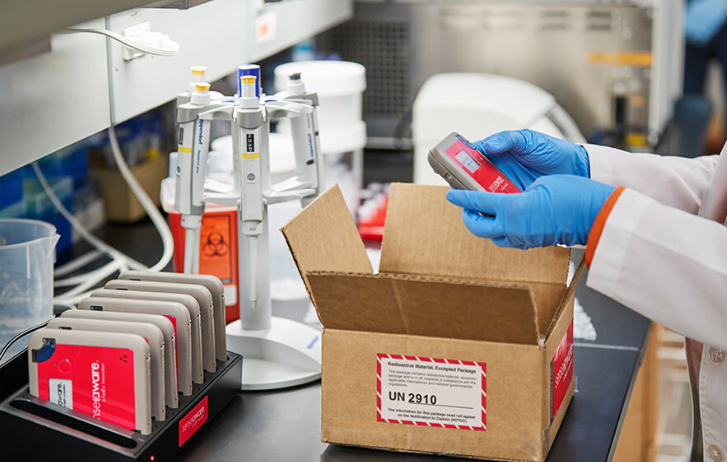
Sites in Australia, however, need the flexibility to order packaging supplies at the time of booking rather than in advance. In response, we’ve set up a dedicated customer service desk to manage these requests. Our fleet of 300 drivers brings packaging supplies and dry ice to the sites during pickup.
Medical trials in Japan and Korea are dominated by small- to mid-sized local pharma players that require local drug storage centers. FedEx’s Life Science Center (LSC) in Tokyo features smarter bulk storage systems for clinical trial test drugs and is compliant with the latest earthquake-resistance standards.
We also have LSCs in Seoul and Singapore. These temperature-controlled storage facilities store clinical trial materials with round-the-clock temperature monitoring and deliver to all major hospitals. By reducing costs and clearance time, LSCs can achieve economies of scale, making them an important value-added service for customers.
Expertise and innovative technology at the core
The global cold chain storage market is set to grow at 8.8% CAGR over the next 10 years. That means logistics service providers need to keep innovating to improve the reliability of cold chain solutions.
Packaging innovations like the FedEx Medpak VI°C shipping box are made from high-grade Vacuum Insulated Material (VIP) fitted with Phase Change Material (PCM), which can maintain temperatures between 2°C and 8°C or under -20°C for up to 96 hours. The VIP boxes and PCM panels are reusable, making them cost-effective and environmentally friendly.
In the event of transit delays, storage facilities allow these packages to ‘hibernate’ temporarily while maintaining their temperature integrity. This solution can be coupled with FedEx’s proprietary SenseAware ID, providing near-real-time location tracking and visibility throughout a shipment’s journey.
Logistics: Shaping the future of clinical trials in APAC
APAC’s role in global clinical research will continue to expand as countries invest in the infrastructure and talent to support increasingly sophisticated trials. In this fast-growing landscape, clinical trial logistics can help reduce risk, shorten timelines, and support better outcomes for patients and sponsors alike.
By combining global reach with local execution and purpose-built solutions like FedEx Clinical Care, logistics providers can play a meaningful role in keeping clinical research moving reliably and at scale.
***
SHARE THIS STORY



Trending Topics
Most Popular
- 85% Of APAC Businesses Plan To Expand Into Europe, According To New FedEx Report
- Generative AI: A New Frontier
- How To Ship A Giant Panda
- The Rise Of Intra-Asia Trade: Opportunities In The China-Southeast Asia Corridor
- Where Do Old Planes Go When They Retire?
- What’s So Dangerous About Coconuts? Your Guide To Dangerous Goods Logistics

Sign up now and save on your shipping rates!
Sign up now and earn discounts by shipping instantly with FedEx Ship ManagerTM at fedex.com.
Recommended For You

Managing Healthcare Supply Chain Risk In A World Of Constant Disruption
From extreme weather to geopolitical events, healthcare firms face an evolving set of supply chain risks. Here's how you can get ahead of them.
Read More
Four Ways Generative AI Is Transforming Healthcare Beyond 2025
Explore AI’s impact on healthcare, from predictive diagnostics to pharma supply chains, and how it is improving patient care.
Read More
What Does The Future Of Cold Chain Shipping Look Like?
Post-COVID-19, logistics and cold-chain technologies are essential for the future of healthcare.
Read More