
Inside Japan’s Next Wave of Healthcare Innovations And Eldercare Technologies
By FedEx | May 21, 2026
As Japan responds to the realities of an aging society, its healthcare innovators are developing eldercare technologies with relevance far beyond its borders. From healthcare robotics to regenerative medicine, these solutions highlight how demographic pressure can catalyze global business opportunities.
- The pressing needs of Japan’s aging society are accelerating healthcare innovation, from eldercare technology and AI-powered monitoring to healthcare robotics.
- The solutions developed to address Japan’s aging population problem could create new opportunities in global healthcare markets.
- Reliable logistics will be key to scaling Japan’s healthcare innovations internationally, helping businesses move sensitive shipments safely and efficiently.
With nearly 30% of its population aged 65 or older, Japan’s aging society is placing pressure on healthcare systems, labor supply, and social infrastructure in ways that few other economies have yet experienced at scale.
But another narrative is emerging alongside the nation’s aging population problem: the rise of healthcare innovation in the age-tech sector.
Age-tech refers to the wide range of technologies designed to enhance older adults’ quality of life, from AI-assisted diagnostics and medical support systems to smart home devices. Japan’s elderly care services market is projected to reach USD 18.17 billion by 2030, as advancements in eldercare technology and digital solutions enable more efficient and personalized care.
As companies respond to rising demand for eldercare, medical support, and independent living solutions, they are developing technologies that could help other countries navigate similar demographic transitions. In this sense, Japan is helping define how societies around the world may address aging populations.
Innovation driven by immediate needs
Many of Japan’s most promising healthcare innovations are rooted in pressing needs rather than abstract research goals. Labor shortages in caregiving, rising healthcare costs, and the desire to maintain quality of life for older adults are shaping a new generation of eldercare technology designed for usability and scalability.
For example, the number of caregiving personnel needed to support Japan’s aging population is expected to reach 2.72 million by 2040, with a projected shortfall of 570,000 workers. To help bridge this gap, care providers are turning to innovative technologies.
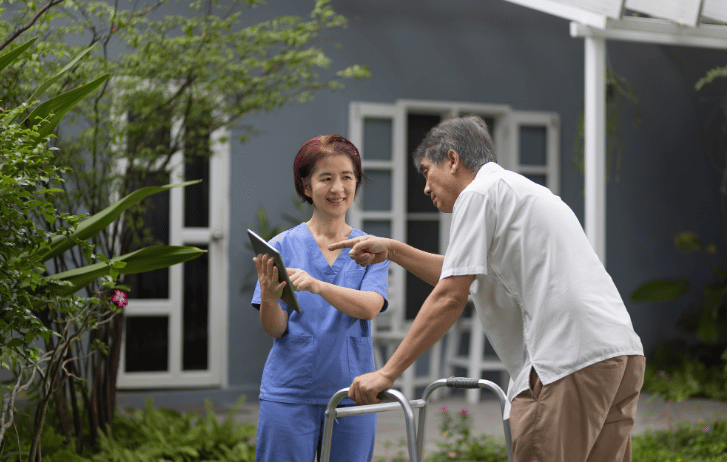
Healthcare robotics is one innovation gaining increasing attention. Japan has been advancing AI-enabled robotic systems that assist caregivers with physically demanding tasks such as repositioning patients, supporting mobility, and monitoring daily activities. Rather than replacing human care, these technologies help expand the capacity of an increasingly constrained workforce.
The broader significance lies in how these systems combine robotics, sensors, and data analytics to support more sustainable care models. Similar workforce shortages are emerging across developed economies, particularly in Europe and parts of Asia, suggesting that these technologies could have relevance far beyond Japan.
Innovation is also taking place in less visible but equally important areas. New caregiving tools designed to improve personal hygiene assistance, such as robotic toileting aids, help address one of the most challenging aspects of eldercare. By prioritizing both caregiver safety and patient dignity, these solutions demonstrate how incremental improvements in care processes can deliver meaningful social impact.
Emerging technologies such as IoT sensors are also reshaping caregiving capabilities. Through connected sensors, healthcare providers can monitor patient conditions in real time and receive notifications when changes occur, such as when a patient wakes up or gets out of bed. These systems support more personalized care while improving staff efficiency.
Together, these developments reflect an important shift: technological innovation is increasingly being translated into practical solutions that can be integrated into real-world care environments.
From Japan’s aging society to a global opportunity
By the late 2070s, the global population of people aged 65 and older will reach 2.2 billion, outnumbering children under 18. As aging societies become a global phenomenon, technologies originally developed to address Japan’s domestic needs are gaining increasing international relevance.
Countries such as South Korea, Italy, Germany, and China are experiencing significant population aging, while Southeast Asian economies are beginning to see similar long-term demographic trends. This is creating growing demand for technologies that can support healthcare systems facing rising patient volumes and workforce shortages.
Areas attracting international attention include rehabilitation devices, fall-prevention monitoring systems, mobility equipment, and wearable health-monitoring technologies. Many of these products address universal healthcare challenges, making them well-suited for adaptation across different regulatory and care environments.
For Japanese companies, this presents a strategic opportunity. While growth in the domestic healthcare market is expected to remain relatively steady, it’s also likely to be constrained by demographic realities. International expansion, therefore, represents a natural next step for companies seeking to scale Japan’s healthcare innovations beyond the domestic economy.
The next frontier of Japan’s healthcare innovation
Beyond devices and care technologies, Japan is also advancing next-generation medical treatments.
Recent developments in regenerative medicine, particularly therapies derived from induced pluripotent stem (iPS) cells, demonstrate how the country is moving cutting-edge research toward commercial and clinical application. While still in the early stages of global adoption, these therapies represent an important step toward more personalized and potentially transformative forms of treatment.
In early 2026, a new treatment for Parkinson’s disease received conditional approval in Japan. The therapy involves transplanting iPS-derived cells into the brain to help replace damaged neurons, with hospitals preparing to introduce the treatment on a limited basis.
During the same period, an innovative iPS cell-based treatment for severe heart disease was also approved. This approach transplants lab-grown heart cells onto damaged areas of the heart to help support cardiac function, representing another example of regenerative medicine beginning to move into clinical use.
Japan as a preview of the future
Japan’s demographic reality may be unique in its speed and scale, but not in its direction. Many economies are moving towards similar population structures, even if at different paces.
This positions Japan as a preview of the future, where solutions developed to address the country’s aging population problem may offer insights for other markets facing similar pressures. Social challenges can often become sources of competitive advantage when addressed effectively. In Japan’s case, demographic pressures are helping to create expertise with growing global relevance.
As Japanese healthcare innovators look outward, the conversation is shifting from whether to expand internationally to how to do so effectively. Alongside product differentiation, things like operational readiness, regulatory understanding, and supply chain resilience are becoming increasingly important for global growth. Success will depend on companies that combine innovation with a broad vision, building both meaningful solutions and the capabilities needed to deliver them internationally.
Japan’s experience suggests that innovation doesn’t happen in isolation, but through interconnected ecosystems of research institutions, manufacturers, service providers, and logistics networks.

Logistics as an enabler of healthcare globalization
The globalization of healthcare innovation depends on more than technological breakthroughs. It also requires the ability to move products, components, and materials safely and reliably across borders.
Healthcare exporters must often balance speed with compliance, particularly when handling regulated products or sensitive materials. Even relatively straightforward assistive technologies may face different regulatory classifications across markets, requiring careful preparation and documentation.
At the same time, as medical technology becomes more sophisticated, the ecosystem needed to support it is also becoming more complex. This includes research and clinical capabilities, as well as the logistics infrastructure required for safe and reliable distribution. The strength of these ecosystems may increasingly influence how successfully new ideas evolve from local solutions into global applications.
This is where logistics becomes strategically important. Reliable cross-border transportation networks help companies maintain operational stability as they scale globally. Shipment visibility, predictable delivery timelines, and familiarity with regulatory environments all help reduce risk as companies enter new markets.
For healthcare innovators, the stakes are often higher than in other sectors. Product integrity, delivery reliability, and traceability can directly affect patient safety and customer trust. As a result, working with experienced global logistics providers is key to successful international expansion.
Bringing Japan’s healthcare innovations to the world
For Japanese healthcare innovators, the next stage of growth lies in global expansion. Whether companies are exporting assistive devices, medical technologies, healthcare robotics, or temperature-sensitive clinical materials, they need logistics networks that can support speed, visibility, and compliance across borders.
FedEx helps healthcare businesses move sensitive shipments with specialized solutions built for complex supply chains. Our end-to-end FedEx Clinical Care solution combines expediting shipping and intervention services with near-real-time monitoring capabilities and cold chain packaging options, ensuring that healthcare materials arrive on time and in the right condition.
As demand for eldercare technology grows, logistics will play a critical role in helping Japan’s healthcare innovations reach international markets. With the right logistics provider, companies can scale their innovations from local care environments to global markets with greater confidence – supporting healthcare systems, caregivers, and aging populations around the world.
SHARE THIS STORY



Trending Topics
Most Popular
- 85% Of APAC Businesses Plan To Expand Into Europe, According To New FedEx Report
- Generative AI: A New Frontier
- How To Ship A Giant Panda
- The Rise Of Intra-Asia Trade: Opportunities In The China-Southeast Asia Corridor
- Where Do Old Planes Go When They Retire?
- What’s So Dangerous About Coconuts? Your Guide To Dangerous Goods Logistics

Sign up now and save on your shipping rates!
Sign up now and earn discounts by shipping instantly with FedEx Ship ManagerTM at fedex.com.
Recommended For You
How Technology Is Shaping The Future Of Healthcare Logistics
From real-time data to predictive analytics, our digital technologies streamline the process of moving medical supplies and healthcare products.
Read More
Unlocking The Potential Of APAC’s Silver Economy
As Asia’s population ages, businesses are waking up to the purchasing power of the silver economy.
Read More
How Aire’s Nivedita Venkateish Is Building A Brand For Seniors, With Seniors
Nivedita Venkateish founded Aire to design incontinence products that empower seniors. Discover her insights on building a brand for silver consumers.
Read More