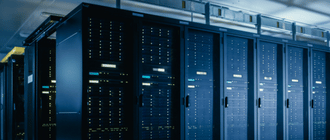
Inside The AI Data Center Supply Chain: From Chips To Precision Logistics
By FedEx | July 29, 2026
Behind every AI model is an AI data center – and behind every data center is a global supply chain moving thousands of high-value components to bring it to life. Here’s what it takes to keep these billion-dollar projects running smoothly.
- AI data center construction requires developers to coordinate complex global supply chains and keep critical equipment moving on schedule.
- Precision logistics is key to protecting high-value AI hardware and preventing costly disruptions during construction.
- Cross-border shipping tools and specialized customs expertise can help data center developers navigate regulatory requirements and reduce clearance delays.
If building a traditional data center is like operating a commercial flight, building an AI data center is closer to a moon landing. Both require engineering expertise – but AI data center construction demands a far greater level of coordination to bring hundreds of critical systems together with near-perfect precision.
In Asia Pacific (APAC), widespread AI adoption is driving growing demand for data centers. By 2030, the region could account for an estimated 34% of global data center demand. This rising need for data center construction requires unprecedented levels of hardware sourcing, supply chain management, and logistics coordination.
With billions of dollars at stake in every project, the AI data center supply chain leaves little room for error. Delays can quickly drive up project costs by millions, while damage to sensitive components during transport can render them unusable. Developers need a highly specialized supply chain strategy – that is, precision logistics – to keep high-value equipment moving on schedule and in compliance with regulatory requirements.
The complex supply chains behind AI data centers
Unlike traditional enterprise data centers, AI data centers are designed to train and run large AI models. Supporting these AI workloads requires purpose-built hardware and infrastructure, creating a supply chain that is far more capital-intensive and globally interconnected.
To build an AI data center, developers must source and import a wide range of IT and industrial assets – each with its own unique logistics challenges.
Semiconductors, GPU clusters, AI accelerators, and server racks
Each AI data center contains High-Bandwidth Memory (HBM) and AI accelerators such as Graphics Processing Units (GPUs), Tensor Processing Units (TPUs), and Neural Processing Units (NPUs). Housed within server racks, these components provide the compute power for AI training and inference.
Chip manufacturing is concentrated in key hubs such as Taiwan, South Korea, and the US. Meanwhile, the steel frames and fiber-optic cabling used in AI server racks are sourced from reliable providers worldwide. Developers must manage multiple cross-border shipments to secure these critical hardware components.
Given their sensitive nature, specialized logistics is essential. GPUs, for example, contain densely packed components that can be damaged by a single jolt. To protect some of the most valuable equipment in the AI data center supply chain, developers need specialist teams to move shipments from aircraft to trucks and finally into the data hall without damage.
Cooling infrastructure
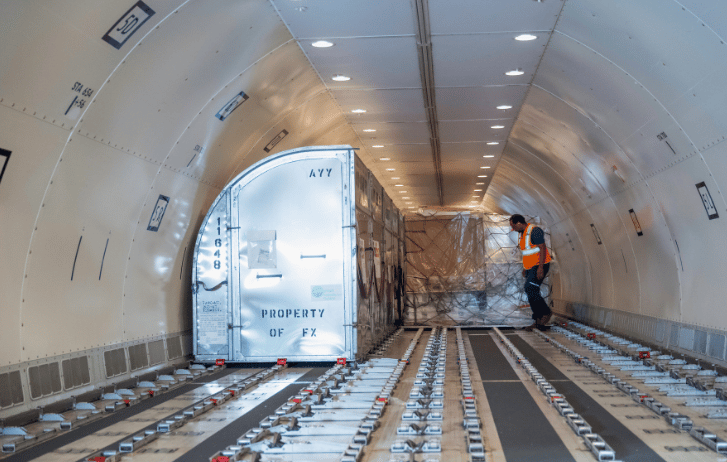
AI data centers demand purpose-built components to dissipate the heat produced by AI servers. These include liquid cooling modules, Coolant Distribution Units (CDUs), Thermal Management Units (TMUs), and hydronic skids.
The physical characteristics of these components make them among the most challenging hardware infrastructure to transport. For instance, some cooling systems contain liquids and battery packs that may be classified as dangerous goods. Developers may need cross-border logistics support to ensure compliance with dangerous goods regulations across different markets.
In addition, cooling modules and industrial generators are often oversized, requiring specialized logistics solutions such as flatbed or step-deck capacity for last-mile delivery, as well as crane operators to support site unloading.
Power distribution and management systems
AI data centers require medium- and low-voltage power distribution modules, industrial generators, and intelligent busway systems to support modern GPUs and maintain reliable power delivery within the facility.
Because these systems form the backbone of the facility, they play a critical role in shaping data center construction schedules. Deliveries of key components must follow a carefully coordinated sequence aligned with project timelines. For example, power distribution modules typically need to be installed before server racks can be delivered.
Precision logistics: Turning complexity into coordination
During AI data center construction, developers need to ship massive volumes of high-value, sensitive components across borders – all within tight delivery windows. Standard logistics solutions often lack the level of control and coordination required to meet these complex demands.
Precision logistics is the strategic supply chain approach that helps enable AI data center development. It acts as a mission-critical enabler by ensuring that high-density infrastructure arrives in the right sequence and on schedule.
The crucial role of precision logistics extends well beyond initial data center construction too. Previously spanning five to seven years, AI hardware refresh cycles are shrinking to as little as 18 to 36 months. As AI data centers undergo more frequent expansions and upgrades, they will require ongoing logistics support throughout their lifecycles.
Here’s how precision logistics can help keep AI data center supply chains on track.
1. Precisely synchronized delivery sequences
AI data center construction projects involve an immense volume of inbound materials, often ranging from 500 to 1,000 deliveries per day. Because specialized crews – such as electricians and IT specialists – operate on tight schedules, a single late delivery can leave workers idle and cost companies thousands of dollars per hour. To prevent these costly delays, every component, from structural steel and liquid cooling modules to million-dollar GPU racks, must arrive in a strict, sequential order.
Managing this complexity requires logistics solutions that combine flexibility with precision. Compared to commercial air freight, logistics providers with their own networks offer the agility and control needed to meet strict construction timelines.
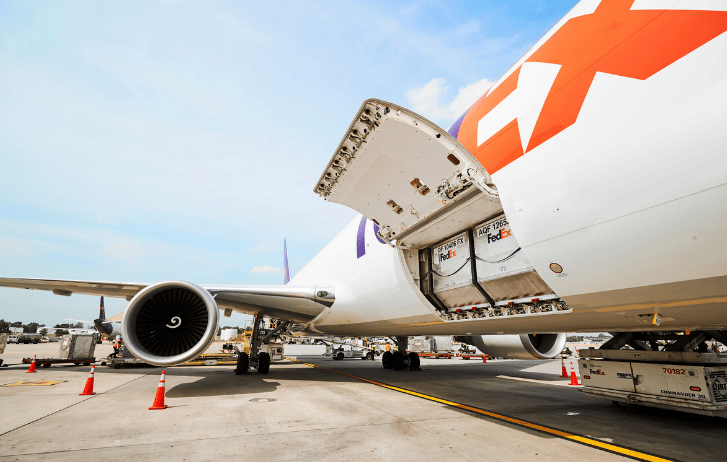
For example, FedEx owns and operates an integrated global network of aircraft and vehicles, with strong intra-Asia and Asia-US connectivity. Solutions such as FedEx International Priority Freight, FedEx Customized Freight, and charter flight options offer scalable and tailored support for time-sensitive shipments.
2. Safeguarding mission-critical assets
AI hardware is both valuable and highly vulnerable to shock, vibration, and temperature fluctuations. Moving these delicate components safely requires precision logistics backed by cutting-edge monitoring technology.
Today, IoT-enabled sensors provide new levels of visibility in logistics. FedEx’s SenseAware ID, for instance, transmits precise package location data every two seconds. Available in the Premium tier of FedEx Surround, this capability enhances shipment security and provides teams with the near-real-time insights needed to manage delays.
Beyond location tracking, it’s important to protect fragile equipment with end-to-end shock monitoring as well. FedEx’s tailored freight services feature air-ride precision handling and integrated tilt and shock monitoring to detect issues during transit.
Finally, specialized handling is a must. Even minor mishandling during cargo loading or handovers can compromise hardware integrity. That’s why FedEx Special Services provides white-glove handling and hazmat-capable operations for sensitive cargo, with dedicated 24/7 support from origin to final delivery.
3. Seamless cross-border compliance
AI data center supply chains operate on a global scale, resulting in complex cross-border logistics requirements. To source hardware components, hyperscalers and infrastructure developers in APAC must navigate import regulations, customs clearance rules, trade policies, and tariffs that vary from market to market.
Given this complexity, developers need proactive customs brokerage and regulatory compliance expertise to prevent costly border holds. One-stop logistics solutions such as FedEx Ancillary Services help to streamline these intricate requirements, offering support for everything from documentation and packaging to customs clearance and specialized handling.
As managing the paperwork for potentially thousands of simultaneous shipments can overwhelm project teams, using digital tools can help minimize manual errors. For example:
-
FedEx Electronic Trade Documents enables businesses to generate and upload customs documentation electronically, minimizing paperwork errors and accelerating cross-border clearance.
-
FedEx Import Tool simplifies import clearance management, from checking shipment statuses to paying duties and taxes.
-
FedEx Global Trade Manager helps shippers find tariff classifications and estimate duties and taxes early to avoid unexpected issues.
Keeping the AI data center supply chain on track
AI may be digital, but its foundations are physical. Every AI model depends on an AI data center; in turn, the AI data center supply chain depends on thousands of components arriving at the right place, in the right condition, at exactly the right time.
As AI data centers grow in size and complexity, precision logistics is the enabler that turns global supply chains into operational computing power. A logistics provider with expertise in complex infrastructure projects can help keep AI data center construction projects on schedule, giving companies the capabilities to operate more efficiently and compete more effectively.
SHARE THIS STORY



Trending Topics
Most Popular
- 85% Of APAC Businesses Plan To Expand Into Europe, According To New FedEx Report
- Generative AI: A New Frontier
- How To Ship A Giant Panda
- The Rise Of Intra-Asia Trade: Opportunities In The China-Southeast Asia Corridor
- Where Do Old Planes Go When They Retire?
- What’s So Dangerous About Coconuts? Your Guide To Dangerous Goods Logistics

Sign up now and save on your shipping rates!
Sign up now and earn discounts by shipping instantly with FedEx Ship ManagerTM at fedex.com.
Recommended For You

Mastering Customs Clearance In Asia Pacific: Why Agility And Accuracy Are The New Trade Imperatives
Learn how to clear customs seamlessly and understand current regulations with our comprehensive customs compliance guide.
Read More
How To Manage Logistics Challenges In AI Data Center Construction
AI data center construction requires thousands of high-value components to arrive on time. Learn how smart logistics solutions can help reduce delays.
Read More
How APAC Can Sharpen Its Edge In The Global Semiconductor Supply Chain
Maintaining APAC’s edge in global semiconductor supply chains takes more than manufacturing power. Here’s what will shape its next phase of growth.
Read More