
Why AI Factories Could Accelerate The Rise Of APAC’s Secondary Industrial Cities
By Salil Chari | August 4, 2026
As AI factories move from concept to core business infrastructure, they could reshape where innovation takes root across APAC. Secondary industrial cities with the right power, land, connectivity, and logistics networks may become the region’s next AI growth hubs.
- By 2028, 65% of Asia-based Top 2000 enterprises are predicted to operate AI factories as core infrastructure, moving AI from pilots into everyday business operations.
- Secondary industrial cities with reliable power, available land, fiber connectivity, and room to expand could emerge as APAC’s next AI hubs.
- Building and operating AI factories will depend on tightly coordinated data center logistics, including specialized handling, customs compliance, shipment visibility, and time-critical delivery.
The word “factory” may bring to mind machines, production lines, workers, and finished goods. But the next generation of factories could look very different. They may sit inside highly secure data centers, run on electricity rather than raw materials, and produce something less visible yet valuable – artificial intelligence (AI).
These are AI factories: specialized computing facilities designed to train, fine-tune, deploy, and operate AI at scale. Rather than producing cars or electronics, they turn data and computing power into business decisions.
In Asia Pacific (APAC), the emergence of these AI factories could redraw the region’s innovation map. Enterprises have long clustered digital operations in major cities. However, AI factories place new demands on infrastructure: reliable power, advanced cooling, secure land, fiber connectivity, and cross-border supply chains capable of moving high-value equipment.
That could shift AI growth beyond today’s traditional hubs, toward secondary industrial cities with the space, energy, and connectivity to support it at scale.
From AI pilots to production lines
Many companies have spent the past few years experimenting with or piloting AI in at least one business function. But pilots alone aren’t the end goal. The competitive edge comes when enterprises can operationalize AI consistently. Many are already moving from experiments to repeatable systems that support multiple teams and workflows.
AI factories make that shift possible, bringing together computing infrastructure, chips, data pipelines, models, monitoring, and governance into one centralized operating model.
By 2028, 65% of Asia-based Top 2000 (A2000) enterprises are predicted to operate AI factories as core infrastructure. This shift will move AI from the innovation budget into the operating backbone of businesses. Once that happens, companies will need the infrastructure to deploy AI models reliably at scale.
Why the next AI capitals may not be capital cities
The power-intensive nature of AI poses a practical challenge. AI factories require significant physical infrastructure, often at a scale that major metropolitan areas may struggle to accommodate.
Compared with traditional data centers, AI factories add more complexity. For one, their high-density GPU racks can generate far more heat and require more power. They also require advanced cooling systems, electrical equipment, networking hardware, servers, and semiconductors to work together seamlessly.
In large metropolitan areas, land, energy, and construction resources can be harder to secure. In some markets, grid congestion and limited utility access are already influencing where data center developers choose to build. These challenges are prompting them to look beyond established capitals toward locations that offer space, energy access, and regional connectivity.
Against this backdrop, secondary industrial cities are emerging as the new AI capitals. Locations such as Malaysia’s Johor Bahru are increasingly part of this conversation, offering more room, access to power, and proximity to established hubs like Singapore.
Johor is also set to host Southeast Asia’s first large-scale AI factory campus, with four facilities designed to support successive generations of high-density computing equipment. These facilities will allow companies to gradually add computing capacity or upgrade their systems as AI technology improves, rather than having to relocate to a different site each time they need to scale up.
Australia is seeing similar interest outside its largest city centers. Projects planned in Tasmania and Western Australia illustrate how access to land and renewable energy may influence where future AI infrastructure is built.
Capital cities will still be part of the picture, but we may see a more distributed model. Major city centers will remain important for decision-making and customer access, while secondary industrial cities can serve as specialized AI infrastructure nodes for training, inference, disaster recovery, and workload balancing.
The hidden supply chain inside AI factories
Every AI data center or factory depends on an intricate physical supply chain. Specialized components – including GPUs, servers, racks, cooling units, power systems, and networking devices – must be sourced and shipped across borders. Many are high-value, sensitive, and time-critical; others are heavy and oversized. Some also need special handling to reduce shock, tilt, and vibration.
Amid this complexity, timing matters just as much as transport. A rack delivered too early can crowd a construction site, whereas a cooling component that arrives late can delay installation. Shipments held up at customs can also affect commissioning schedules.
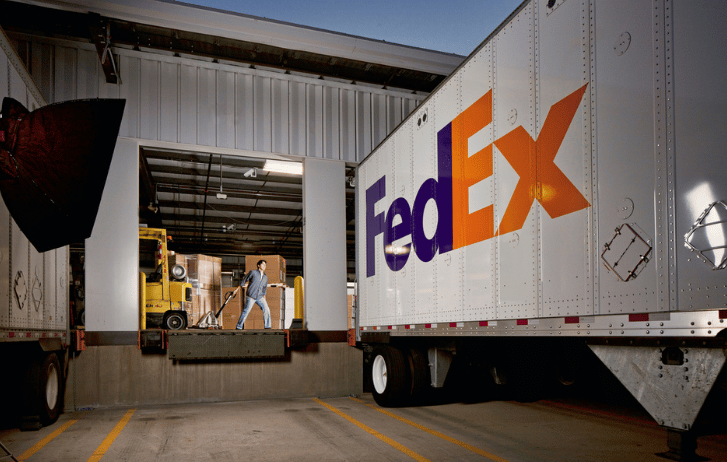
Time-critical logistics must therefore be part of the AI infrastructure blueprint. How can enterprises synchronize global supply chains with the construction, installation, testing, and upgrading processes AI factories demand?
Just as importantly, enterprises need visibility that extends beyond tracking where a shipment is. AI factory projects often involve hundreds of interdependent components arriving from multiple countries, each tied to installation schedules, contractor availability, and commissioning timelines.
A delay affecting a single shipment may create downstream impacts across the project. Near-real-time visibility, predictive delay alerts, and proactive exception management can help teams identify risks earlier and make adjustments before disruptions affect deployment schedules.
At FedEx, our view of AI infrastructure comes from moving the technology that enables it. We see how a GPU shipment from one market, a networking device from another, and specialized equipment from a third must arrive in the right sequence.
Business leaders must factor data center logistics into the design of AI factories early on. Beyond power and fiber, site selection must consider airport access, customs readiness, road conditions, secure storage, delivery sequencing, and contingency options.
As more enterprises consider AI factories, location decisions will become more strategic:
- Can the site support both construction and continuous upgrades?
- Can sensitive equipment move securely from origin to destination?
- Do teams have access to near-real-time shipment visibility, predictive delay alerts, and 24/7 monitoring?
Enterprises should also assess how easily a location connects to regional and global supply chains. Semiconductor manufacturing, server assembly, equipment production, and cloud deployment often sit across different markets.
This supply chain must also support AI factories throughout their lifecycle, not just during their initial builds. After all, servers, chips, and networking equipment will require continuous replacements and updates as AI technology advances.
Building a smarter AI infrastructure network in APAC
The APAC region is already at the heart of the global semiconductor supply chain, with advanced electronics, fast-growing digital economies, and ambitious enterprise AI adoption. AI factories can connect these strengths in new ways.
For secondary industrial cities, AI factories could attract new investment and strengthen their roles in regional value chains. For enterprises, it could offer more options for scaling AI infrastructure closer to customers, suppliers, and data sources.
But AI factories are not just data centers with more powerful chips. They are complex operating environments that integrate energy, technology, construction, compliance, and logistics. The next AI capitals will be built by cities and enterprises that understand this full picture.
As AI factories rise across APAC, the region’s AI ambitions will depend on the physical networks that keep intelligence moving – from the chips and servers that power it, to the logistics systems that bring it all together.
SHARE THIS STORY



Trending Topics
Most Popular
- 85% Of APAC Businesses Plan To Expand Into Europe, According To New FedEx Report
- Generative AI: A New Frontier
- How To Ship A Giant Panda
- The Rise Of Intra-Asia Trade: Opportunities In The China-Southeast Asia Corridor
- Where Do Old Planes Go When They Retire?
- What’s So Dangerous About Coconuts? Your Guide To Dangerous Goods Logistics

Sign up now and save on your shipping rates!
Sign up now and earn discounts by shipping instantly with FedEx Ship ManagerTM at fedex.com.
Recommended For You
How APAC Can Sharpen Its Edge In The Global Semiconductor Supply Chain
Maintaining APAC’s edge in global semiconductor supply chains takes more than manufacturing power. Here’s what will shape its next phase of growth.
Read More
How Semiconductor Supply Chains Are Strengthening Resilience
Multi-hub production networks, integrated security, and ecosystem collaboration – we unpack the latest trends reshaping semiconductor supply chains.
Read More
Inside The AI Data Center Supply Chain: From Chips To Precision Logistics
Learn how precision logistics can keep your AI data center supply chain on schedule and protect high-value equipment during cross-border shipping.
Read More