
The Logistics Behind Hyperscaler Speed: Air Freight For AI Infrastructure
By FedEx | September 18, 2026
For a hyperscaler, moving AI hardware quickly is only part of the challenge. Here’s how the right air freight approach helps coordinate sensitive equipment, precise delivery sequences, and cross-border handoffs.
- Air freight shortens transit times for high-value AI hardware, helping hyperscalers bring new computing capacity online faster.
- High-touch logistics helps coordinate every step, from planning and packaging to cross-border handoffs and delivery timing.
- The right logistics provider helps hyperscalers align shipping with deployment, so sensitive equipment arrives at the right place, at the right time, and in the right sequence.
In artificial intelligence (AI) infrastructure, a late or poorly coordinated shipment can have a bigger impact than simply delaying delivery. It can disrupt an installation window, push back testing, or delay when computing capacity comes online.
Servers, graphics processing units (GPUs), and networking equipment often need to arrive in a planned sequence. Installation, connection, testing, and commissioning may depend on the previous hardware being in place. For a hyperscaler racing to bring new AI capacity online across multiple markets, the time it takes to move critical hardware from a manufacturing hub in Asia Pacific (APAC) to an overseas project site can become an operational constraint on the build.
As demand for AI surges and project timelines compress, air freight is becoming a priority for keeping critical hardware and data center deployments on track.
What is a hyperscaler? Why does AI hardware call for high-touch logistics?
The term hyperscaler reflects an operational scale. Simply put, a hyperscaler is a massive cloud computing company that operates a global network of data centers. Building and expanding that network involves moving large volumes of high-value equipment, including GPU racks, servers, cooling systems, power modules, and networking hardware, from manufacturing hubs to markets worldwide.
Unlike traditional consumer electronics, AI infrastructure includes oversized, sensitive, or difficult-to-replace equipment. These components may have different packaging, handling, documentation, and site-delivery requirements. They form parts of a connected system rather than independent products.
Timing matters for the same reason. In this business context, speed-to-market is the time from when hardware is ready to ship to when usable computing capacity becomes available. Delivery delays can slow a build-out in the short term and affect longer-term business objectives. One component arriving outside its planned sequence may affect the next installation, testing, or commissioning activity.
In a typical logistics process, each shipment is treated as an individual, isolated consignment. But AI infrastructure does not move in isolation. A gap at any handoff – whether in information, handling, or timing – can affect the next planned step.
High-touch logistics, on the other hand, applies closer operational attention throughout the shipment journey. It includes advance planning, specialized packaging and handling, coordinated handoffs, near-real-time shipment visibility, and timely responses to exceptions.
When hyperscaler companies implement this approach for AI hardware shipments, each component can move through coordinated handoffs and reach the site within its planned installation window. This helps reduce the risk of disruptions affecting the overall deployment schedule.
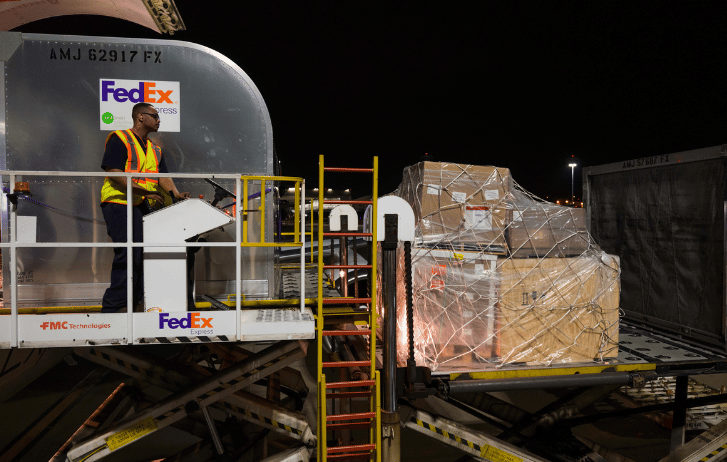
How air freight and high-touch logistics move high-value, time-sensitive equipment
High-touch logistics provides the level of coordination and care needed to manage complex shipments. Air freight provides the speed needed for compressed project timelines. Together, they can help ensure that critical equipment arrives at the project site in good condition and on time for its place in the deployment sequence.
Air freight compresses the transport stage
Data center expansion is contributing to demand for air cargo as companies seek faster ways to move AI hardware. In 2025, air cargo transported more than two-thirds of high-value, time-sensitive AI-related goods such as servers, data storage units, and memory chips.
Demand is particularly strong in APAC. The region’s airlines recorded 7.9% year-over-year growth in air cargo demand in June 2026, compared with a 4.3% rise in capacity. Asia-North America was the fastest-growing trade lane that month. These figures point to growing pressure on air networks serving urgent, high-value technology shipments.
Air freight can shorten the transport stage between manufacturing release and site delivery. FedEx International Priority Freight, for example, offers international delivery for heavier shipments within one to three business days. AI hyperscalers may consider this type of priority service when critical AI hardware needs to reach a project site within a compressed installation schedule.
Data center logistics keeps the movement coordinated
The mode of transport is only one part of the plan. Booking, capacity, documentation, customs clearance, airport handling, final-mile transport, and site readiness can all influence the total delivery time. High-touch logistics connects these stages into one coordinated journey.
Planning begins before the cargo reaches an aircraft. Shipment information, packaging, acceptance checks, compliance requirements, security screening, load planning, and handoffs all form part of the air cargo process. A flight schedule alone cannot define the full movement plan.
Packaging and handling should match the equipment’s physical characteristics and the selected service. Requirements will vary according to the manufacturer’s instructions, project needs, and logistics provider. Once the shipment is moving, coordinated handoffs can reduce the risk of information or responsibility being lost between origin facilities, airports, customs processes, and the delivery site.
When delivery windows are narrow and equipment is difficult to replace, having visibility into a shipment’s progress and potential disruptions becomes more valuable. This is where tools such as FedEx Surround can help, providing near-real-time shipment visibility and predictive insights, including alerts about potential delays. Depending on the service level, shippers can also access proactive monitoring and intervention to help mitigate risks and keep critical shipments on track.

The right logistics provider helps align hyperscaler shipments with deployment schedules
Moving AI hardware across borders requires more than a shipping label. A logistics provider’s role can span the entire journey, from coordinating transportation and customs requirements to managing handling, delivery timing, and project-site needs. The goal is to keep these moving parts aligned so critical AI hardware can reach the site as planned.
FedEx’s international freight services offer a range of capabilities to support cross-border freight shipments, including customs clearance, special handling, flexible pickup and delivery, and shipment tracking. For requirements beyond standard service parameters, FedEx Customized Freight offers tailored freight solutions with shipment monitoring, proactive intervention, and priority boarding on FedEx flights.
Moving hyperscaler AI infrastructure with speed and coordination
As AI demand grows, server racks, semiconductors, and other critical hardware are playing a larger role in air cargo flows. Hyperscalers have an opportunity to bring new capacity online faster, but doing so comes with the challenges of compressed timelines, sensitive equipment, cross-border requirements, and sequenced deliveries that need to be coordinated across the journey.
A hyperscaler needs two key factors to move AI infrastructure efficiently: air freight to reduce transit time and high-touch logistics to coordinate the stages around that journey.
A logistics provider who understands the urgency and operational details can help coordinate shipment readiness, handling, customs, visibility, exception response, and site delivery as part of the wider deployment plan. The result is a better-coordinated approach to moving high-value infrastructure with greater certainty.
***
Explore FedEx’s shipping services for moving high-value, time-sensitive AI hardware across borders.
SHARE THIS STORY



Trending Topics
Most Popular
- 85% Of APAC Businesses Plan To Expand Into Europe, According To New FedEx Report
- Generative AI: A New Frontier
- How To Ship A Giant Panda
- The Rise Of Intra-Asia Trade: Opportunities In The China-Southeast Asia Corridor
- Where Do Old Planes Go When They Retire?
- What’s So Dangerous About Coconuts? Your Guide To Dangerous Goods Logistics

Sign up now and save on your shipping rates!
Sign up now and earn discounts by shipping instantly with FedEx Ship ManagerTM at fedex.com.
Recommended For You

How To Manage Logistics Challenges In AI Data Center Construction
AI data center construction requires thousands of high-value components to arrive on time. Learn how smart logistics solutions can help reduce delays.
Read More
Inside The AI Data Center Supply Chain: From Chips To Precision Logistics
Learn how precision logistics can keep your AI data center supply chain on schedule and protect high-value equipment during cross-border shipping.
Read More
Why AI Factories Could Accelerate The Rise Of APAC’s Secondary Industrial Cities
Discover how AI factories are redrawing APAC’s innovation map, and why data center logistics will be crucial for building and operating them at scale.
Read More