
How Technology Can Drive Better Sustainability Decisions: Insights From The Nature Conservancy’s Tamara Singh
By FedEx | October 15, 2026
How can businesses close the gap between data and sustainable decisions? Tamara Singh, the managing director of The Nature Conservancy in Singapore, shares how leaders and entrepreneurs can harness technology to advance sustainability – and the pitfalls they should avoid along the way.
Today, businesses embracing sustainability have access to more data than ever. Smart sensors, digital twins, AI-powered insights, and other sophisticated technologies enable companies to track and measure their environmental footprint in increasing detail. Still, more information doesn’t translate automatically into more action. For leaders, the challenge remains the same: using sustainability data to make better decisions, weighing the trade-offs behind each decision, and turning these efforts into scalable change.
Taking sustainability efforts from idea to impact is a challenge that Tamara Singh continually grapples with. Tamara is the Singapore managing director of The Nature Conservancy (TNC) – a global non-profit dedicated to environmental conservation. By integrating traditional knowledge with technology, innovation, and science, TNC strives to shape better decisions for both people and the planet.
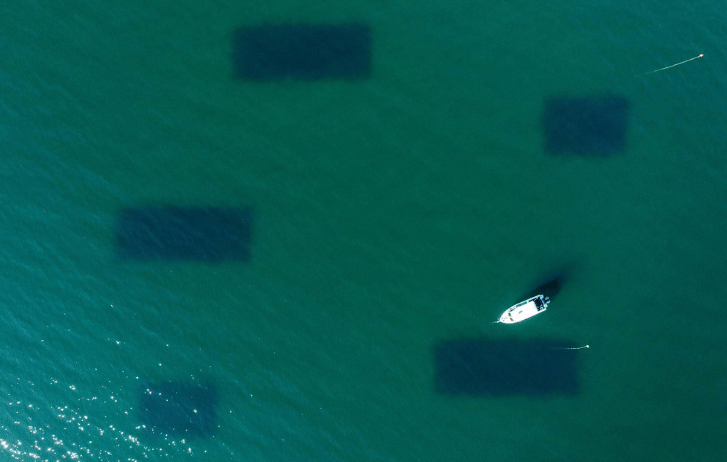
TNC’s Global Ocean Innovation Challenge offers a bold example of how data can be used in innovative ways. Timely data is critical to the management of marine protected areas and large-scale fisheries, allowing local communities to monitor activity and detect threats such as illegal fishing. But such monitoring is often labor-intensive and expensive.
To tackle this challenge, TNC and venture platform Newlab sourced data and monitoring solutions from technology startups worldwide, connecting them directly with coastal communities and conservation partners. This strategy enables startups to test their technologies in real-world conditions rather than developing them in isolation, while giving local authorities the means to protect vulnerable marine ecosystems at scale.
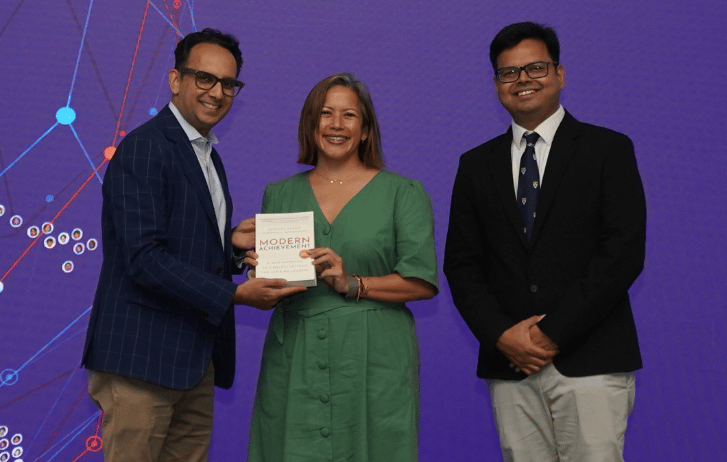
Such projects have given Tamara a unique perspective on technology and sustainability – one she recently brought to the judging panel at the 2026 FedEx/JA International Trade Challenge Asia Pacific finals. We spoke with her to uncover more insights on how entrepreneurs and leaders can make better sustainability decisions and build truly useful solutions.
Technology is opening up new possibilities for tackling environmental challenges, while also raising important questions about how we innovate sustainably and responsibly. How do you see these two ideas coming together?
Tamara Singh: I believe well-designed technologies can improve lives, expand inclusion, and support social mobility. The key is conscious design from the outset: being clear about what a technology is for, whose needs it serves, what risks it creates, and where human judgment remains.
At The Nature Conservancy, we’re interested in environmental technologies that turn science into action. That can include satellite monitoring, AI-assisted analysis, sensors, digital twins, traceability tools or other systems that help people understand nature more clearly and act earlier. But technology only matters if it improves human decisions such as where infrastructure should be built, how water and land should be managed, where communities are most exposed to risk, and how capital can be directed towards solutions that endure.
For me, responsible innovation means recognizing that sustainable technology does not sit outside nature. The infrastructure that powers our digital and economic future depends on water, land, energy, biodiversity, and resilient communities. If technology is designed without those dependencies in mind, we risk moving environmental costs from one place to another. If it is designed with nature from the outset, it can help us protect ecosystems, improve accountability, and build a future where people, prosperity, and nature reinforce one another.
That’s why initiatives such as our Global Ocean Innovation Challenge are exciting. They’re using frontier technologies to help solve practical conservation challenges in the real world, not just demonstrating what is technically possible.
What’s one sustainability trend that you think is overhyped?
I would say data and disclosure for their own sake. That may sound counterintuitive, because good reporting is important. Better disclosure has helped many companies understand their impact and dependencies on nature more clearly. But ultimately, the goal is not reporting. The goal is better decisions.
The danger is that we become very good at measuring, classifying, and communicating sustainability performance without changing the choices that actually matter: where we source from, where we build, how we allocate capital, how we manage water, how we treat communities, and how we price long-term risk.
To young people, I would say: do not mistake a dashboard for impact. For corporate leaders, my advice is: do not mistake compliance for resilience. Sustainability data should help us see clearly, act earlier, and take responsibility. It should be a pathway to action, not a substitute for it. The companies that will lead are those that use data to change strategy, investment, and operations, not those that simply become more sophisticated at reporting.
What’s one sustainability trend that you think isn’t getting enough attention?
Nature’s role as infrastructure. We often describe forests, wetlands, mangroves, rivers, and reefs as landscapes. In reality, they are working systems that economies and communities depend on to prosper. They cool cities, regulate water, reduce flood and coastal risk, sustain fisheries, support livelihoods, store carbon, and improve health and well-being.
This is especially relevant in Asia Pacific, where around 75% of GDP is directly or indirectly tied to natural ecosystems. When those systems are degraded, the costs show up across the economy: in insurance, food security, water stress, heat exposure, public health, infrastructure damage, and lost productivity.
Nature-based solutions are not a soft alternative to infrastructure. When properly designed, governed, and financed, they can be among the most practical and cost-effective forms of infrastructure we have in the right circumstances. I would like to see more business and policy conversations treat nature with the same gravitas we apply to roads, ports, energy systems, and digital networks – valued, maintained, and invested in for the long term.
If you were advising a young entrepreneur who wanted to build a business around sustainability and technology today, what problem would you tell them to tackle?
I would encourage them to build technology that helps people make better decisions. We now have an extraordinary ability to collect and process information, including environmental information. The hard part is turning that information into choices that are fair, practical, and accountable.
There is no shortage of data in the world. The challenge is that much of it does not reach decision-makers in a usable form. A young entrepreneur can make a real contribution by solving this translation problem.
How do we help a company understand the productivity cost of air pollution, so that investments in cleaner air are properly valued even when they don’t directly bring in cash flow? How do we help a city compare an appreciating mangrove or wetland solution with a depreciating hard infrastructure option? How do we help a business understand whether assumptions that guided past decisions still hold true in a hotter, more volatile world? How do we make monitoring affordable for local conservation organizations, small-scale fisheries, or frontline communities?
I would also encourage young entrepreneurs to ask why things are the way they are today. Most people do not set out to make poor decisions, but systems of incentives often produce the outcomes we see around us. Sustainable technology that only fixes a symptom may not solve the cause.
The most exciting opportunities don’t lie in building a clever product – though that is a lot of fun. They lie in building solutions that are technically robust, locally useful, financially durable, and trusted by the people who need to use them, so that they are adopted over time. For young founders, that means building with users, not just for them. For corporate leaders, it means backing solutions that can scale beyond pilots and become part of how decisions are made every day.
What do you think makes a technology genuinely transformative from a sustainability perspective?
A technology is transformative when it changes behavior and improves outcomes, not when it simply increases efficiency. From a sustainability perspective, this means helping people make better choices at scale: reducing harm, increasing resilience, improving transparency, advancing equity, protecting ecosystems, or unlocking new models of finance and stewardship.
I like to ask four questions. First, does it solve a real problem faced by communities, businesses, or governments at the root cause? Second, does it work in the conditions where it is needed, including places with limited connectivity, limited budgets, or complex governance? Third, does it produce information or outcomes that can be trusted? Fourth, can it be sustained beyond a pilot or grant cycle?
At TNC, our conservation work is grounded in both science and implementation. The same should be true of technology. A transformative solution is not only elegant in a lab or impressive in a pitch deck. It must be useful in the field, accountable in its outcomes, and capable of helping systems change over time.
For young people, this is also an invitation: do not be intimidated by the scale of the challenge. The most important environmental technologies will come from people who understand both the systemic challenges and the lived reality of the communities affected by it.
For a business that wants to become more sustainable, where can technology make the biggest practical difference?
Technology makes the biggest practical difference where it improves visibility, accountability, and decision-making across operations and value chains. Many businesses do not understand where their environmental risks and dependencies sit. They may understand the impact of their direct operations, but have less visibility on water exposure, land use, biodiversity, emissions, waste, or community impact across suppliers and logistics networks.
Digital tools can help businesses map these risks, monitor change, identify hotspots, and test different options before decisions are locked in. Better geospatial data can inform where infrastructure is built. Remote sensing can support land and ocean monitoring. Sensors and traceability tools can make resource use and supply chains more transparent. AI can process large volumes of information, provided it is governed responsibly. Digital twins can help leaders understand long-term consequences before committing capital.
But the practical difference comes when technology is connected to management decisions. Rather than asking, “What tool should we buy?” the better question is, “Which decisions do we need to improve to support our mission, reduce risk, and build resilience?” When businesses start there, technology becomes a lever for long-term value, not another layer of complexity.
What role does good data play in helping companies make better sustainability decisions?
Good, trusted data helps companies move from intention to action. It allows leaders to see what is happening, understand trade-offs, prioritize resources, and measure whether their efforts are working. Without good data, business sustainability can become a collection of commitments and isolated projects. With good data, it becomes a management discipline.
Data is not neutral by itself. Companies need to ask whether the data is reliable, relevant, timely, and decision-useful. They also need to recognize what may be missing, particularly local knowledge, community experience, and ecological complexity that may not fit neatly into a dashboard.
The best sustainability decisions combine scientific evidence, business judgment, and lived context. At TNC, good data matters because it helps us design interventions, monitor outcomes, and build confidence among partners, funders, and communities. But the purpose of data is not to admire the problem more precisely. It is to act with greater confidence and accountability.
For young people, this means learning to question data as well as use it. For corporate leaders, it means embedding nature and climate data into the decisions that shape strategy, capital allocation, and risk.
What should businesses be measuring to understand whether their sustainability efforts are actually working?
Businesses should measure outcomes, not only activities. It is useful to know how much money was spent, how many projects were launched, or how many suppliers were engaged, but those are inputs. The more important question is whether anything meaningful changed.
A few measures matter:
- First, environmental outcomes: emissions reduced or avoided, water saved or replenished, hectares protected or restored, biodiversity indicators improved, waste reduced, or pollution prevented.
- Second, resilience outcomes: reduced exposure to floods, heat, water stress, supply disruption, or regulatory risk.
- Third, social and livelihood outcomes: whether communities benefit, whether workers and suppliers are supported, and whether local stewards have the capacity and authority to sustain the work.
- Fourth, financial and operational durability: whether the model can survive beyond a pilot and improve long-term business resilience.
I would also encourage businesses to measure unintended consequences. A solution that reduces emissions but increases water stress, or protects one ecosystem while shifting pressure to another, is not a successful sustainability strategy. The strongest efforts are measurable, equitable, durable, and honest about trade-offs.
Technology has made this easier than it used to be. Sensors, remote monitoring, and better analytics can reveal impacts we previously struggled to see. But the leadership question remains the same: once we can see more clearly, are we prepared to act differently?
SHARE THIS STORY



Trending Topics
Most Popular
- 85% Of APAC Businesses Plan To Expand Into Europe, According To New FedEx Report
- Generative AI: A New Frontier
- How To Ship A Giant Panda
- The Rise Of Intra-Asia Trade: Opportunities In The China-Southeast Asia Corridor
- Where Do Old Planes Go When They Retire?
- What’s So Dangerous About Coconuts? Your Guide To Dangerous Goods Logistics

Sign up now and save on your shipping rates!
Sign up now and earn discounts by shipping instantly with FedEx Ship ManagerTM at fedex.com.
Recommended For You

The Singaporean CEO Helping Companies Reach Net Zero With Cleantech AI Solutions
Discover how Evercomm uses cleantech AI to build solutions that optimize energy logistics and support companies on their journey to net zero.
Read More
Has Your Business Found The Link Between Sustainability And Innovation?
When it comes to business and economic growth, sustainability and innovation go hand in hand.
Read More
How To Get Greater Visibility Into Supply Chain Sustainability
FedEx Sustainability Insights helps businesses track emissions and measure logistics impact for more sustainable supply chain management.
Read More