
How A Fashion Manufacturer Scaled Globally With Cross-Border Logistics Support
By FedEx | February 23, 2026
Tariffs and global disruption are putting strain on supply chains. A Guangzhou-based manufacturer demonstrates how tailored and integrated logistics solutions can reduce costs, speed up material flow, and drive growth across borders.
- Amid tariff changes and rising costs, a Guangzhou-based manufacturer in the fashion accessories sector decided to establish new production lines in Thailand to create a more agile, resilient supply chain.
- However, the manufacturer also faced complex logistics hurdles such as exporting raw materials to Thailand at scale and navigating customs delays.
- FedEx delivered end-to-end logistics support ranging from the consolidation of bulk cargo to streamlined customs clearance, paving the way for the manufacturer to expand into new markets.
Fashion has always been an exercise in coordination – bringing together fabrics, accessories, and ideas into one effortless look. Today, fashion brands face a similar challenge behind the scenes: diversifying and aligning sourcing, production, and logistics to keep pace with shifting markets and unpredictable costs.
That task has become more difficult in recent years, with shifting trade policies, fluctuating tariffs, and rising costs. For many fashion executives, supply chains have become a central concern.
In industry surveys like the annual Business of Fashion-McKinsey State of Fashion report, global leaders frequently describe the 2026 operating environment as “challenging”, with tariffs cited as their main hurdle. To stay competitive, companies are rethinking where they manufacture, how they move goods, and how quickly they can respond to change.
One leading fashion accessories manufacturer based in Guangzhou has responded by reshaping its production footprint to build greater resilience into its supply chain. Having previously relied on China-based manufacturing, the company recently expanded operations into Thailand, adding new production lines to diversify risk and maintain access to key overseas markets. The move was designed to provide more flexibility, but it also introduced new logistical complexities.
Building an agile supply chain with tailored logistics support
With production split across countries, the manufacturer now needed to move raw materials daily from China while shipping finished accessories from Thailand to markets around the world. In fashion, where demand can shift quickly and product cycles are short, even minor shipping delays can ripple through the entire operation and cause disruptions.
To manage that complexity, the manufacturer worked with FedEx to design a cross-border logistics flow that’s aligned with its production schedule and business needs. The goal was not just speed, but also reliability. Raw materials needed to arrive quickly and consistently to keep assembly lines running, while outbound shipments had to meet tight delivery windows abroad.
Through coordinated pickup, air transport, customs clearance, and delivery, shipments of raw materials could reach the Thai factory in less than a day. Using FedEx International Priority, shipments picked up at 6:00 PM in China could reach Thailand by 2:00 PM the following day.

Much of this efficiency depended on coordination across borders. FedEx’s ground teams in China and Thailand worked together with the FedEx Asia Pacific (APAC) hub at Guangzhou Baiyun International Airport to consolidate the manufacturer’s bulk cargo onto pallets for same-flight transportation. This allowed entire batches of raw materials to arrive together at the Thai factory, helping to improve efficiency and maintain production continuity.
Streamlining customs clearance and optimizing costs
For manufacturers expanding a supply chain across borders, customs clearance can present another obstacle. Shipments moving from China to Thailand can take up to 72 hours to clear customs, slowing production and typing up inventory.
To address this bottleneck, the manufacturer drew on FedEx’s deep customs expertise and cutting-edge digital tools. Tools like FedEx Electronic Trade Documents allowed the company to submit customs paperwork digitally, reducing processing time and printing costs. Meanwhile, FedEx’s teams in China and Thailand collaborated closely to facilitate pre-clearance, helping to reduce the risk of customs delays.
As a result, shipments could move more smoothly through customs and connect to outbound flights worldwide on the same day they arrive.
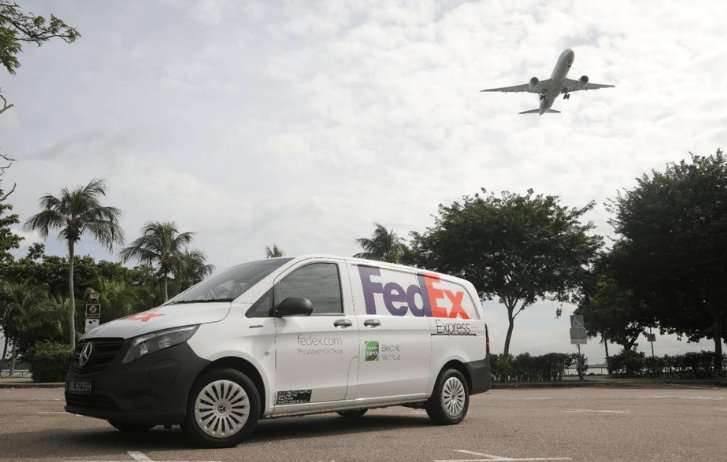
Beyond customs clearance, FedEx also supported the manufacturer with customized settlement solutions. These solutions are designed to help optimize logistics costs and streamline financial workflows, enhancing the efficiency of global operations.
Driving global growth with reliable cross-border logistics
From timely shipping to smarter customs solutions, FedEx’s integrated logistics solutions have enabled the manufacturer to diversify its production base and strengthen supply chain resilience in a challenging landscape.
This collaboration has established a reliable logistics route between China and Thailand, ensuring the steady flow of thousands of packages to the US market. It has also empowered the manufacturer to pursue new growth frontiers across Europe, APAC, the Middle East, and Africa.
As our customers’ shipping needs grow, we at FedEx are continually enhancing our network to support faster and more scalable cross-border logistics. Recently, for example, we enhanced connectivity between China and Thailand by adding five weekly flights between our APAC hub in Guangzhou and Bangkok’s Suvarnabhumi Airport. These enhancements provide ambitious businesses and manufacturers with the logistics infrastructure needed to scale efficiently and remain prepared for future global opportunities.
***
Looking to build reliable supply chains across borders? Reach out to us for customized logistics support.
SHARE THIS STORY



Trending Topics
Most Popular
- 85% Of APAC Businesses Plan To Expand Into Europe, According To New FedEx Report
- Generative AI: A New Frontier
- How To Ship A Giant Panda
- The Rise Of Intra-Asia Trade: Opportunities In The China-Southeast Asia Corridor
- Where Do Old Planes Go When They Retire?
- What’s So Dangerous About Coconuts? Your Guide To Dangerous Goods Logistics

Sign up now and save on your shipping rates!
Sign up now and earn discounts by shipping instantly with FedEx Ship ManagerTM at fedex.com.
Recommended For You

3 Strategies To Achieve Supply Chain Resilience Amid Uncertainty
Unprecedented disruptions in global trade have made supply chain resilience more critical. Here’s how businesses can build lasting resilience.
Read More
How Musashi Sold Traditional Japanese Knives In Over 166 Countries – And Counting
Explore how Musashi Japan crafts artisanal Japanese knives by blending traditional techniques with modern design, reaching 150,000 customers globally.
Read More
How A Chinese E-Commerce Exporter Cut Shipping Costs By 40% Amid Rising Tariffs
Amid rising tariffs, e-commerce exporters can manage costs and keep delivery on track with the right cross-border logistics solutions. Here’s how.
Read More