
How Semiconductor Supply Chains Are Strengthening Resilience
By Paul Sousa | February 6, 2026
As new demands and risks put pressure on semiconductor supply chains, efficiency alone is no longer enough. Here’s how the semiconductor industry is reconfiguring for resilience.
- Semiconductor players are shifting toward multi-center global production networks to strengthen resilience and reduce regional risk.
- Supply chain competitiveness now hinges on security, transparency, and traceability across the supply chain.
- As ecosystem collaboration accelerates, seamless semiconductor logistics will be essential to support next-level innovation.
The global semiconductor industry is undergoing a profound shift. The rise of artificial intelligence has driven explosive demand for faster and more innovative semiconductors that can handle AI workloads. At the same time, semiconductor supply chains are facing greater uncertainty due to geopolitical tensions, trade policy changes, and climate volatility.
In the face of these new challenges, chip makers can no longer lean solely on just-in-time efficiency. To navigate this volatile landscape, they must build resilient and cooperative ecosystems capable of weathering disruptions.
Two interlocking trends are reshaping the industry. Firstly, semiconductor firms are moving toward systemic resilience via multi-center coordination and supply chain security. Secondly, upstream, midstream, and downstream players across the supply chain are deepening collaboration to enable innovation.
A prime example is Taiwan’s semiconductor supply chain, which contributes 60% of the global foundry market and produces over 90% of advanced chips. The industry expects closer alignment between the US and Taiwan, which will be paramount as the newly announced trade deal between the two countries advances deeper cross-border integration in manufacturing, technology, and supply assurance.
Amid these changes, logistics providers play an increasingly central role – connecting multi-hub manufacturing networks, safeguarding material flows, and supporting the dynamic collaboration that semiconductor innovation now demands. Here, we unpack what’s fueling these key trends, and how logistics players like FedEx are evolving in response.
From “just-in-time” to “just-in-case”: Multi-center coordination backed by supply chain security
The semiconductor industry’s traditional focus on minimal inventory and tight coordination has come under stress from supply shocks, natural disasters, and geopolitical pressures. Firms are increasingly reconsidering whether this pursuit of lean efficiency has left them vulnerable.
While geographic concentration is more efficient, companies risk costly delays if disruption strikes. As a result, semiconductor leaders are shifting from “just-in-time” to “just-in-case” supply chains and geographically diversifying to bolster resilience.
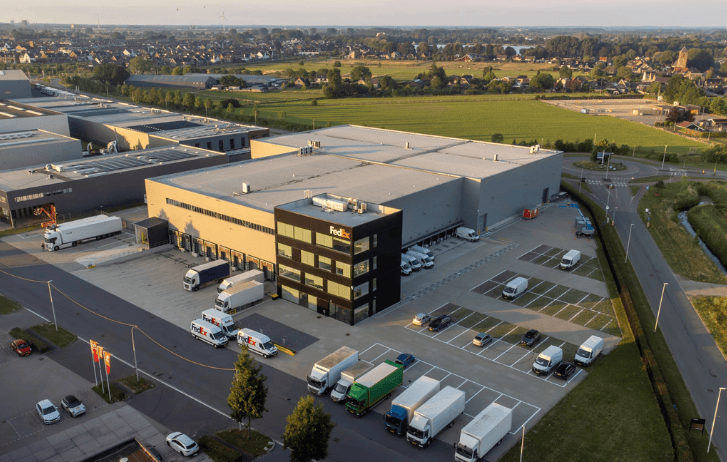
Multi-center coordination builds redundancy, not reliance
To reduce overreliance on any single region, semiconductor firms are expanding capacity across multiple locations – establishing new fabs, test or assembly sites, or packaging hubs in the US, Europe, Southeast Asia, and beyond. This multi-hub approach minimizes the impact of regional disruptions on a firm’s global operations.
For example, Taiwan-based semiconductor assembly and testing firm ASE is taking steps to strengthen its operations both at home and abroad. In February 2025, ASE officially launched its fifth packaging and testing plant in Penang, Malaysia, as part of a strategy to deepen its presence in Southeast Asia. The company also plans to invest USD 200 million to build its first large-size panel-level packaging facility in Kaohsiung, Taiwan.
Taiwan Semiconductor Manufacturing Company (TSMC) also exemplifies this transformation. The world’s largest chip maker has embarked on an unprecedented wave of investment spanning Asia, North America, and Europe. In Japan, its subsidiary Japan Advanced Semiconductor Manufacturing (JASM) in Kumamoto began production in late 2024, and a second fab targeting 6nm chips is under construction.
In Europe, TSMC has begun building its first facility in the region: a joint-venture fab in Dresden, Germany. In the US, TSMC’s Arizona project is evolving into a “gigafab” cluster producing 4 nm chips, with 3 nm and 2 nm nodes to follow.
The investments of these industry leaders across the US, Europe, and Asia are designed to increase resilience and regional balance in chip production. Distributed manufacturing makes perfect sense from a business perspective.
By setting up localized hubs, semiconductor companies can enhance supply chain assurance, shorten critical logistics routes, and adapt flexibly to sudden change. The multi-center model thus represents a strategic evolution – one where semiconductor production is no longer concentrated in certain regions but spread across a globally coordinated network of interdependent hubs.
Integrated security enables trusted supply chains
As the backbone of modern technology, semiconductors must be secure and verifiable in every component – from design to delivery. Supply chain security now goes beyond physical logistics to include the integrity, authenticity, and traceability of data, equipment, and materials across a distributed network of partners.

Leading manufacturers such as TSMC have worked to develop and increase awareness of cybersecurity standards for the global semiconductor industry. The company collaborates with suppliers to strengthen defenses and achieve compliance with industry standards, embedding cybersecurity requirements into its vendor audits and procurement process. This reflects a shift from internal protection to ecosystem-wide security integration, where every tier of the supply chain forms part of a shared trust framework.
Today, a rising number of semiconductor products are assembled from chiplets made by different vendors. To verify the provenance of components from wafer fabrication through to final assembly, chip makers are exploring measures such as authenticated chains of custody, digital certificates, and unique IDs.
As multi-vendor chiplet manufacturing grows, firms are building “trusted supply chains” – closed networks in which participants are verified and transactions are logged, sometimes through blockchain-based traceability systems.
These developments signal a new phase for the semiconductor ecosystem: resilience and trust are now inseparable. Physical redundancy through multi-hub manufacturing must be matched by digital transparency and accountability. In the decade ahead, security certifications, traceability protocols, and encrypted logistics data will be as vital to semiconductor competitiveness as nanometer scaling itself.
Deeper collaboration across semiconductor supply chains
As process nodes reach their physical limits and demand for heterogeneous integration, chiplets, and AI accelerators grows, no single company can manage every component alone. Materials, equipment, design, wafer manufacturing, packaging, and testing all require precise coordination.
To optimize efficiency throughout the semiconductor supply chain, requirements such as timing, interface compatibility, thermal management, test strategies, and technical standards must be collaboratively defined much earlier than before. The industry is moving from vertical integration – where one firm owns multiple stages of the production process – toward ecosystem collaboration, where partner firms co-design and co-validate products across stages.
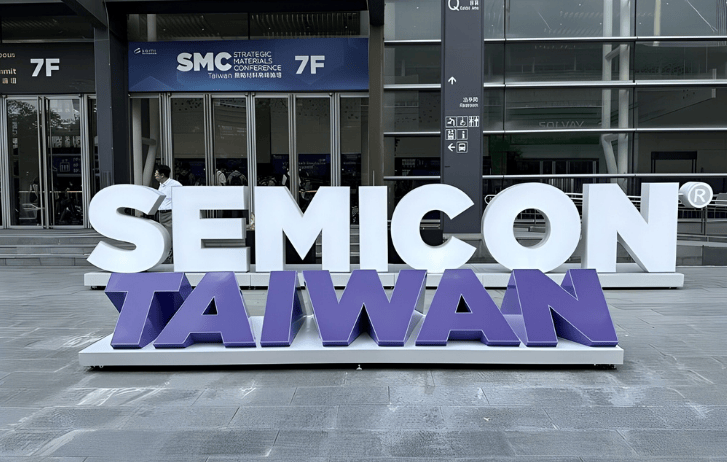
A clear sign of this rising trend is the 3DIC Advanced Manufacturing Alliance (3DIC AMA), which was announced at SEMICON Taiwan 2025. Co-chaired by TSMC and ASE, 3DICAMA brings together 37 leading companies, spanning the equipment, materials, packaging, and research domains. The alliance aims to enhance industry cooperation, strengthen supply chain resilience, establish technical standards, and accelerate technology upgrades and commercialization.
Close collaboration will only become more important as demand for advanced packaging rises. Advanced packaging allows companies to combine multiple chips or components in a single electronics package, unlocking new functionalities at a lower manufacturing cost.
By 2030, the global advanced packaging market is forecast to exceed USD 79.4 billion, driven by AI and high-performance demand. Collaboration has become an essential factor for success in advanced packaging, enabling companies to overcome its increasingly complex challenges and innovate faster.
Semiconductor logistics supports seamless collaboration
Looking ahead, it’s clear that collaboration will play a key role in the future of semiconductor manufacturing. Companies will need to coordinate operations across hubs in multiple regions while collaborating with upstream, midstream, and downstream firms to drive innovation. Such an interconnected ecosystem requires efficient logistics to ensure the seamless flow of goods and materials.
Logistics providers must support:
- Frequent, small-batch flows of wafers, modules, test vehicles, and materials between collaboration partners
- High-integrity transport that protects sensitive semiconductor components from vibrations, temperature deviations, and shock
- Real-time visibility and control to help collaboration partners align production timelines and plan around delays
- Shared data platforms or APIs with partners to synchronize logistics, manufacturing, and testing schedules
FedEx is working closely with semiconductor firms to build tailored logistics solutions for these growing needs. We’ve collaborated with Micron Technology to integrate digital intelligence into semiconductor supply chains, providing more accurate visibility of shipments in transit.
By deploying a combination of our smart tools – such as FedEx Surround and FedEx Sustainability Insights – our custom logistics solution improved recovery rates for Micron’s on-time shipments by 27% and reduced overall transit time by 16%.
The race to push the boundaries of semiconductor innovation is no longer just about scaling transistors or cutting nm – it’s about building resilient, cooperative ecosystems.
As firms expand globally, the tension between efficiency and resilience is resolved not by choosing one over the other, but by weaving together multi-center redundancy, secure information flows, and ecosystem collaboration. In this new era where innovation is co-created, logistics providers like FedEx are evolving to do the same.
SHARE THIS STORY



Trending Topics
Most Popular
- 85% Of APAC Businesses Plan To Expand Into Europe, According To New FedEx Report
- Generative AI: A New Frontier
- How To Ship A Giant Panda
- The Rise Of Intra-Asia Trade: Opportunities In The China-Southeast Asia Corridor
- Where Do Old Planes Go When They Retire?
- What’s So Dangerous About Coconuts? Your Guide To Dangerous Goods Logistics

Sign up now and save on your shipping rates!
Sign up now and earn discounts by shipping instantly with FedEx Ship ManagerTM at fedex.com.
Recommended For You

From Taiwan To The World: The Critical Role Of Supply Chain Logistics In The Semiconductor Industry
With the growth of production in Taiwan, Taiwanese chip exports are critical to the global semiconductor industry, supported by smart supply chains.
Read More
What Does It Take To Make Semiconductor Supply Chains More Sustainable?
Can green logistics benefit the semiconductor industry? Micron and FedEx China are collaborating to advance sustainable supply chain practices.
Read More
Enhancing Semiconductor Logistics With Digital Intelligence
FedEx worked with Micron to apply advanced data insights to semiconductor supply chains, transforming logistics in an industry that powers the world.
Read More